
Rajsamand Travel Guide: Nathdwara, Kumbhalgarh & 1-Day Trip from Udaipur
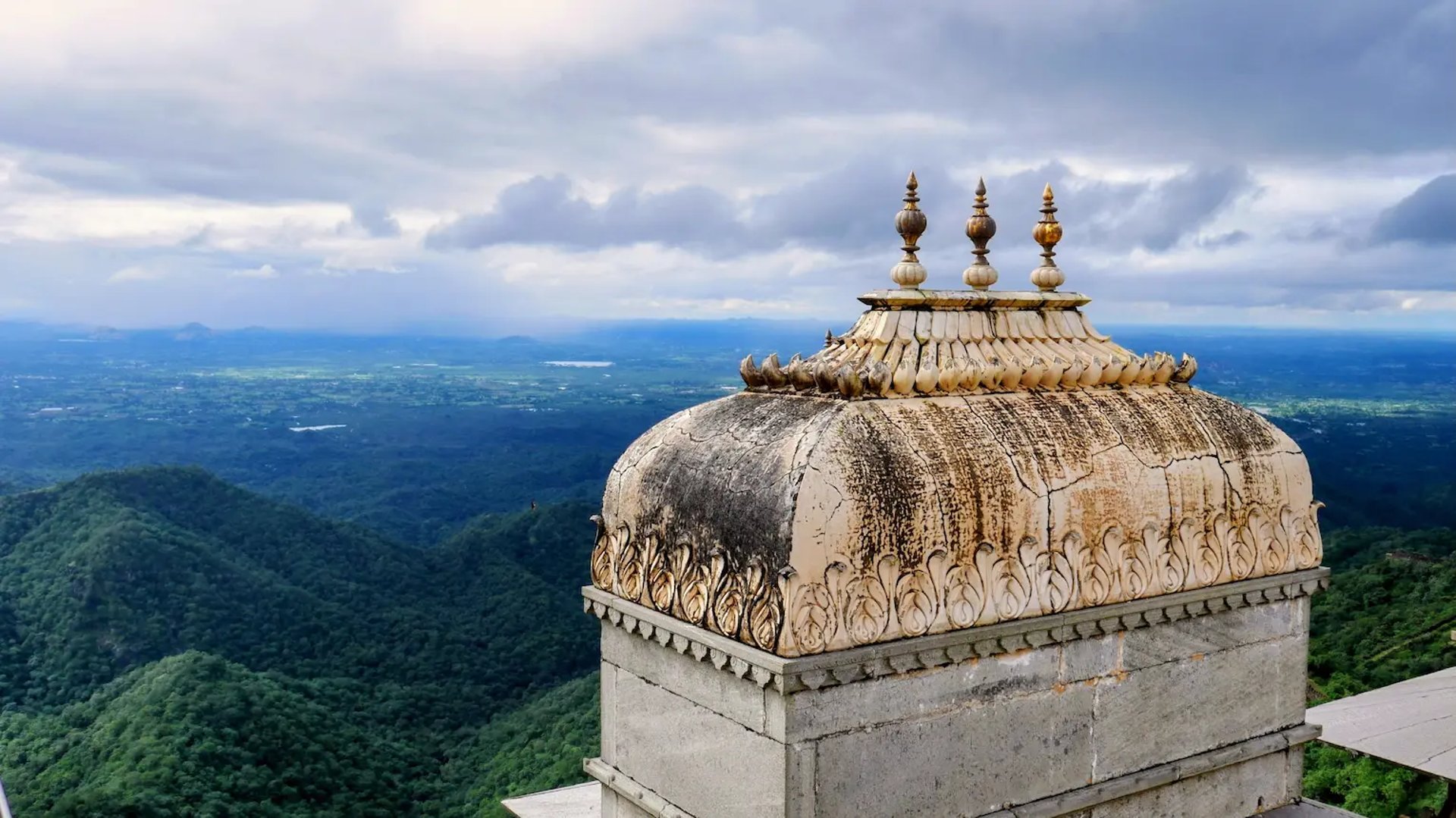
Rajsamand Travel Guide: Nathdwara, Kumbhalgarh & a Perfect 1-Day Trip from Udaipur
Explore temples, forts, and lakes on a seamless 1-day trip from Udaipur through Rajsamand.
Rajsamand Travel Guide: 1-Day Trip from Udaipur
Rajsamand is one of those places in Rajasthan that quietly slips under the radar. Most travellers pass through on their way to Udaipur or Kumbhalgarh, rarely realizing how much history, spirituality, and natural beauty this district holds.
This Rajsamand travel guide brings together the best places to visit in Rajsamand, including Nathdwara, Kumbhalgarh Fort, Haldighati, Rajsamand Lake, and several lesser-known gems that can easily be explored on a day trip from Udaipur.
The district is home to the mighty Kumbhalgarh Fort, famous for its massive wall winding across the Aravalli Hills. Nearby, the sacred town of Nathdwara draws devotees from across the country to the revered Shrinathji Temple, while Haldighati preserves the legacy of Maharana Pratap and one of Rajasthan’s most significant battles.
At the heart of the district lies Rajsamand Lake, the historic waterbody that gave the region its name. Around it, temples, marble towns, royal heritage, and quiet countryside come together to create a destination that feels both diverse and deeply rooted in tradition.
What makes Rajsamand special is how effortlessly it fits into an Udaipur itinerary. Whether you're searching for places to visit near Udaipur, planning a Udaipur to Kumbhalgarh road trip, or looking for an offbeat day excursion, Rajsamand offers a rewarding blend of forts, faith, history, and scenic landscapes.
In this guide, we'll explore the district's most memorable attractions and help you plan the perfect Rajsamand day trip from Udaipur.
Updated on: June' 2026
Explored on: June' 2025
Quick Travel Snapshot
Best time to visit: Oct to Mar
Duration: 1 Day (from Udaipur)
Entry Fee: Kumbhalgarh Fort ₹40 | Others free
Key Places: Nathdwara, Kumbhalgarh, Haldighati
Travel: Road Trip (cab/self-drive)
Nearest City: Udaipur
Planning your stay in Udaipur?
Most travellers explore Rajsamand, Nathdwara, and Kumbhalgarh Fort as a day trip from Udaipur. Staying here gives you the best flexibility and comfort.
Table of Content
Where to Stay in Rajsamand
If you’re planning a longer stay, you can also explore this detailed Udaipur itinerary to extend your journey.
Haldighati & Chetak Samadhi
How to Reach Rajsamand from Udaipur, Delhi & Jaipur
Reaching Rajsamand district is simple — and once you’re here, everything from forts to temples to hills feels within easy reach. With Udaipur as the closest major hub, the journey naturally flows into places like Kumbhalgarh Fort and Nathdwara without feeling like separate trips.
By Air
The nearest airport is Maharana Pratap Airport (Udaipur). From here, Rajsamand district opens up in different directions — whether you head towards Nathdwara, Kankroli, or further into Kumbhalgarh’s hills. A cab works best, especially if you’re planning a flexible Udaipur to Kumbhalgarh journey.
By Train
The closest railhead is Udaipur City Railway Station, well connected to Delhi, Jaipur, Mumbai, and Ahmedabad. From here, taxis and buses are easily available for routes like Udaipur to Nathdwara and Udaipur to Kumbhalgarh, making onward travel smooth and convenient.
By Road
This is the best way to experience Rajsamand. Well-connected roads link Udaipur with Nathdwara, Kankroli, Haldighati, and Kumbhalgarh. The drives are short, scenic, and perfect for a flexible itinerary — letting you move from temples to forts to lakes without rushing.
However you arrive, Rajsamand isn't a single stop — it's a spread-out experience. And the journey between its places is just as rewarding as the destinations themselves.
Places to Visit Near Udaipur
Kumbhalgarh Wildlife Sanctuary (90 km)
Best Time to Visit Rajsamand for a 1-Day Trip from Udaipur
Rajsamand district, with its mix of forts, temples, lakes, and hills, changes its mood beautifully with the seasons. The experience here isn’t just about where you go, but when you go.
Winter (Oct – Mar) – The Sweet Spot
This is when Rajsamand feels just right. It’s the best time to visit Kumbhalgarh Fort, the best time for darshan at Shrinathji Temple in Nathdwara, slow walks around Haldighati, and peaceful moments near Rajsamand Lake.
Summer (April – June) – Warm but Quiet
Summers can get intense during the day. But with early starts and relaxed evenings — especially around Nathdwara or lakeside stretches — it stays manageable. Fewer crowds, quieter moments, and a more personal offbeat Rajasthan travel feel.
Monsoon (July – Sept) – Monsoon Charm
If you enjoy a greener, more cinematic version of Rajasthan, the monsoon transforms Rajsamand completely. The Aravalli hills around Kumbhalgarh turn lush, the lake fills beautifully, and every drive feels like a slow scenic road trip in Rajasthan. Expect occasional rains — and a slightly softer pace.
In the end, Rajsamand doesn’t demand a perfect season — it adapts. But visit in winter, and everything feels a little more open, a little more comfortable, and a lot more memorable.
Planning your trip around peak season?
Places like Nathdwara & Kumbhalgarh get busy during winter and long weekends. Book your stay early to get the best option and prices.
Explore More
Udaipur Travel Guide
Jaipur Travel Guide


Jodhpur Travel Guide


Bikaner Travel Guide
Bundi Travel Guide
Even though Rajsamand district fits beautifully into a 1-day trip from Udaipur., if you ever decide to slow down, staying within the district changes the experience completely. From hilltop forts to temple towns to lakeside calm — where you stay shapes how you feel the place.
Where to Stay in Rajsamand: Best Hotels in Nathdwara & Kumbhalgarh
Near Kumbhalgarh Fort: For Views & Silence
Near Nathdwara Temple: For Temple & Town Energy
Kankaroli / Rajsamand: For Slow, Lakeside Calm
Rajsamand Travel Guide & 1-Day Itinerary from Udaipur
Rajsamand district isn’t a place you rush through — it’s one you move with. This Rajsamand travel guide maps a one-day trip from Udaipur to Nathdwara, then onward to Kumbhalgarh Fort, and back to Udaipur — but you can always slow it down. Spend more time in Nathdwara for devotion, or stay near Kumbhalgarh Fort for those hilltop sunsets. But if you have just one day, this one day Rajsamand itinerary lets you feel the rhythm without missing the essence.
Start early — before sunrise — with a quiet stop at Eklingji Temple and Sas-Bahu Temple. Move ahead for a Nathdwara temple darshan at Shrinathji Temple, then slow down by Rajsamand Lake via Kankroli, covering Dwarkadheesh Temple and Nau Chauki Pal. Continue towards Charbhuja Ji Temple, then head into the hills for an evening at Kumbhalgarh Fort.
On the way back, pause at Haldighati, where echoes of history still linger, and end your day at Statue of Belief with the light & sound show before returning.
It’s a full day, but it flows — from temples to lakes to forts — a seamless Udaipur to Kumbhalgarh road trip that gives you a glimpse of Rajsamand without breaking its rhythm.
Eklingji Temple Udaipur: Timings, History & Travel Tips
Start your day before sunrise and drive about 22 km from Udaipur towards Eklingji Temple — a place where early morning silence deepens the experience. Dedicated to Lord Shiva, this 8th-century temple holds strong roots in Mewar’s history, built under the Guhila dynasty and revered as the ruling deity (Kuldevata) of the region. It’s not just a spiritual stop — it quietly sets the tone for your Rajsamand itinerary.
As you arrive, the stone architecture begins to unfold — a cluster of temples, each carrying its own presence. Step inside, and the pace shifts. The air feels calmer, the rhythm slower, almost timeless. At the sanctum, the four-faced black marble idol of Eklingji stands adorned, symbolising a form that sees in all directions — powerful, yet still.
This isn’t just where the journey begins — it’s where it settles. A start that grounds your one day Udaipur to Kumbhalgarh road trip, easing you into the flow before the roads, forts, and stories unfold ahead.
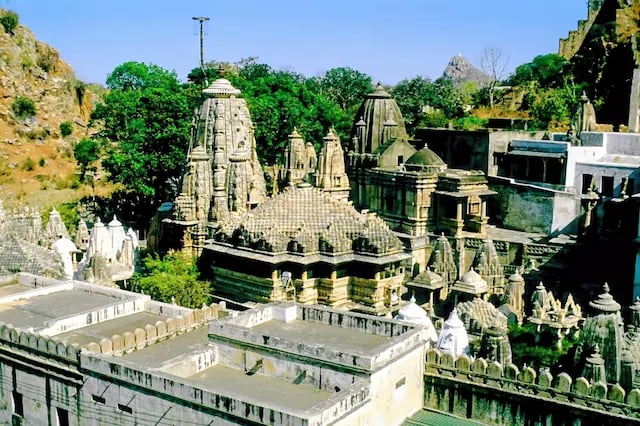
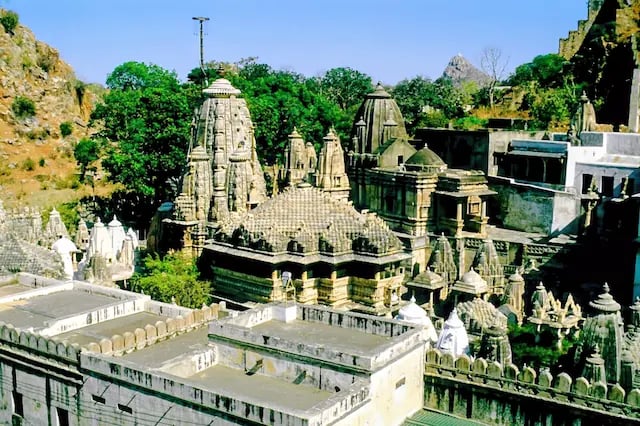
Centuries of faith carved into stone.
Image: LBM1948 / Wikimedia Commons, (CC BY-SA 4.0)
Sas Bahu Temple Nagda: Hidden Gem Near Udaipur with Stunning Carvings
Just a short drive from Eklingji Temple, tucked in the quiet village of Nagda, lies the beautiful Sas-Bahu Temple — where history feels gently preserved in stone. Once the first capital of Mewar, Nagda carries echoes of the past, and these 10th-century temples remain among its finest traces, making it one of those peaceful places in Rajasthan that still feels untouched.
Originally called Sahastrabahu, meaning “the one with a thousand arms” — a form of Lord Vishnu — the name slowly softened into “Sas Bahu,” giving it a more familiar touch. But beyond the name lies pure architectural detail. Two main temples — the larger Sas and the smaller Bahu — stand side by side, surrounded by smaller shrines, each carefully carved and placed.
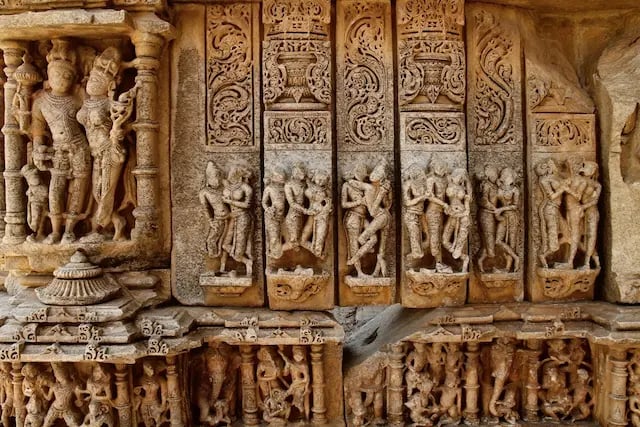
Walk through slowly, and the details begin to unfold. Pillars, ceilings, walls — all layered with fine carvings, geometric patterns, and mythological stories. The soft morning light filters through the stone, making it one of the most underrated photography spots near Udaipur, where every frame feels naturally composed. There’s no rush here, no crowd pulling you along — just space, light, and stillness.
It’s more than just a stop after Eklingji — it’s a soft shift in the journey. From devotion to discovery, from prayer to pattern — a quiet reminder of how Rajasthan offbeat destinations often hold the most depth.
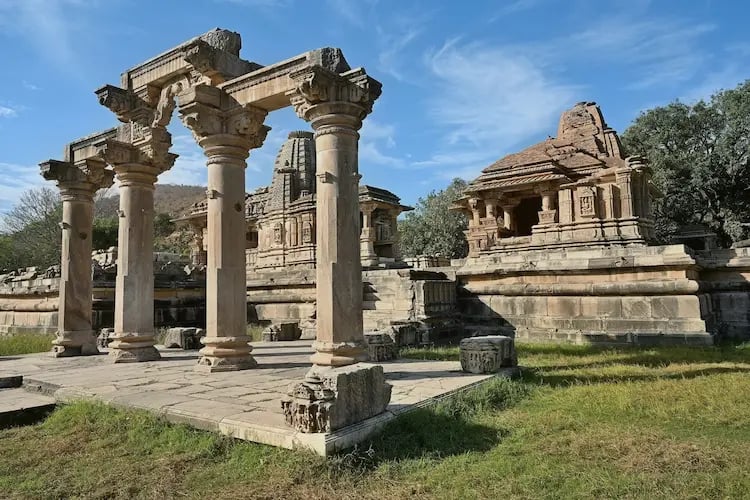
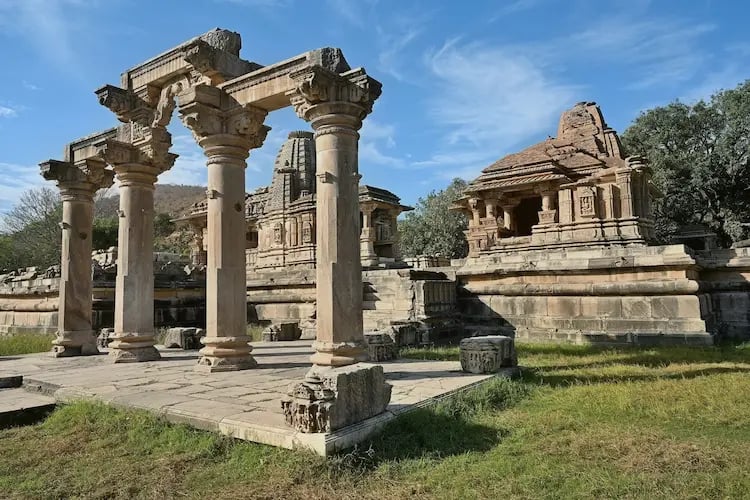
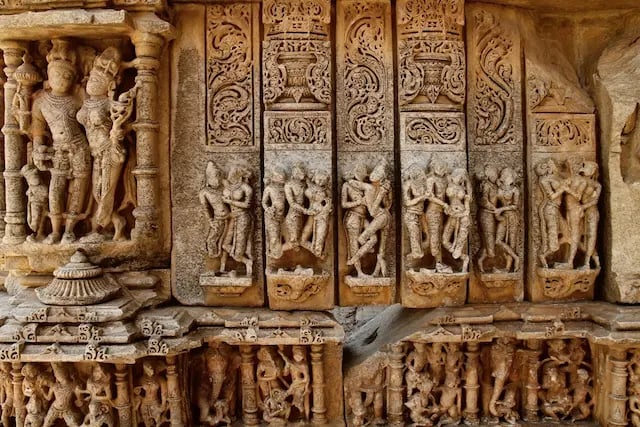
A timeless temple where history still feels close.
Image: Sharvarism / Wikimedia Commons, (CC BY-SA 4.0)
Every carving adds another layer to the story.
Image: TeshTesh / Wikimedia Commons, (CC BY-SA 4.0)
Shrinathji Temple Nathdwara: Darshan Timings, History & Travel Tips
From Nagda, the journey flows naturally towards Nathdwara — a town that doesn’t just host a temple, but lives and breathes devotion. At its heart lies Shrinathji Temple, dedicated to the child form of Lord Krishna. If you’re on a temple tour in Rajasthan, this is one stop that feels less like a visit and more like an experience you settle into.
The black marble idol of Shrinathji, depicting Krishna as a seven-year-old lifting Govardhan Hill, stands in a graceful, protective posture — one hand raised, the other at ease. Adorned with silk attire, jewels, and a crown, the deity reflects both innocence and royalty. The temple follows the Pushtimarg tradition founded by Vallabhacharya, where devotion is expressed through seva — rituals, care, and daily offerings that shape the rhythm of the place.
Beyond the sanctum, Nathdwara opens up in layers. Pichhwai paintings quietly narrate Krishna’s leelas, while narrow streets fill with Shrinathji prasad shops, sweets, and local flavours like thandai and lemongrass tea. It’s a town built around devotion, yet alive with culture — one of the most immersive spiritual stops in any Rajasthan journey.
Nathdwara Darshan Timings
What makes Shrinathji Temple unique is its eight daily darshans — each one offering a different glimpse, a different mood of Shrinathji, unfolding like moments in a day rather than rituals on a clock. And somewhere along the way, you realise it’s important to understand the Nathdwara darshan timings, because the experience here changes with every passing hour.
Mangala (5:15 AM – 6:00 AM) — The first awakening. Shrinathji is gently woken up, still in a simple form, creating a calm, almost intimate start to the day.
Shringar (7:15 AM – 7:45 AM) — The adornment. The Lord is dressed in fresh attire and jewels, revealing a more vibrant, royal presence.
Gwal (9:15 AM – 9:30 AM) — The playful moment. Symbolizing Krishna heading out with cows and friends, this darshan feels lighter and more lively.
Rajbhog (11:15 AM – 12:05 PM) — The grand offering. A lavish meal is presented, and the darshan reflects abundance, devotion, and celebration.
Uthapan (3:30 PM – 3:45 PM) — The gentle return. After a short rest, Shrinathji is awakened again, bringing back a soft, relaxed energy.
Bhog (4:45 PM – 5:00 PM) — The light offering. A quieter moment with simple offerings, easing into the evening.
Sandhya Aarti (5:15 PM – 6:00 PM) — The evening devotion. Lamps, chants, and incense fill the space, creating a deeply spiritual, immersive atmosphere.
Shayan (6:50 PM – 7:30 PM) — The final glimpse. The Lord is prepared for rest, with lullabies and a peaceful close to the day.
Nathdwara Temple Travel Tips
If you’re trying to avoid heavy rush, keeping an eye on Shrinathji temple darshan timing helps — early morning Mangala darshan or mid-day windows often feel more manageable compared to peak hours. For a smoother visit, Shrinathji Temple Nathdwara darshan booking is also available on the temple board website.
A visit here isn’t just about darshan — it’s about stepping into a rhythm where faith, art, and history move together, quietly drawing you in.
Nathdwara Temple History
Even Nathdwara Temple history moves with quiet strength. The idol was brought from Govardhan in the 17th century to protect it from Mughal destruction. While many rulers hesitated, Maharana Raj Singh I offered refuge. When the chariot carrying the deity halted here, it was seen as a divine sign — and over time, a temple, and then a town, grew around it.
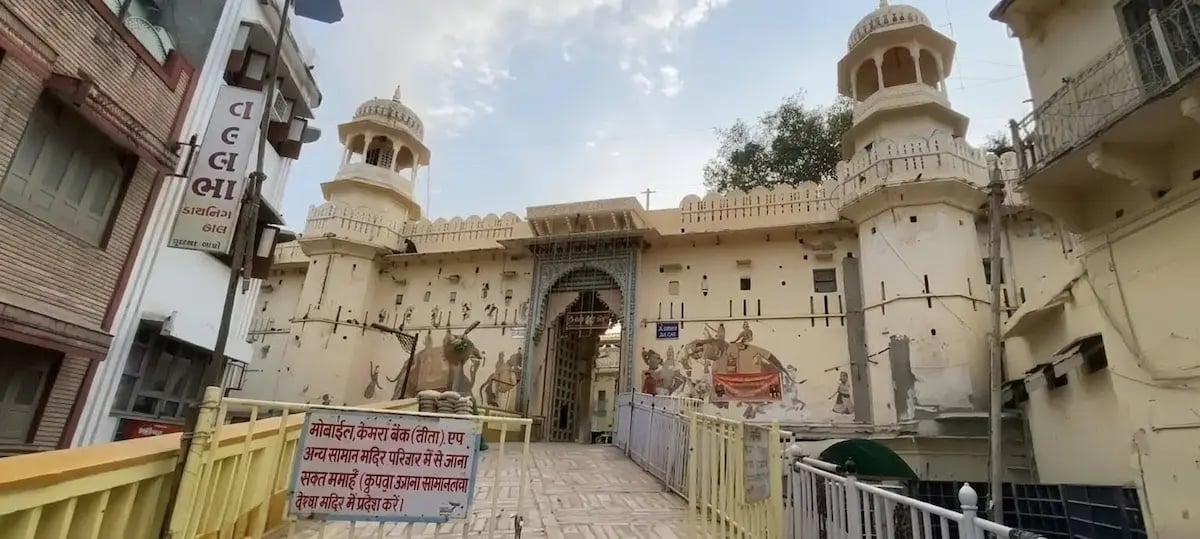
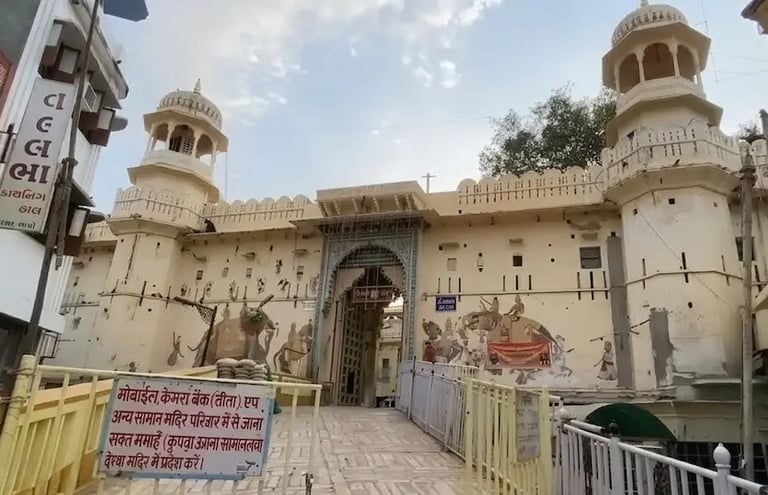
The gateway to devotion, movement, and tradition.
Dwarkadhish Temple Kankroli & Rajsamand Lake: History, Views & Things to Do
Continue your journey towards Kankroli, about 18 km from Nathdwara, where the pace softens, and the views begin to open up. Set along the southern banks of Rajsamand Lake, the serene Dwarkadheesh Temple stands quietly by the water — calm, less crowded, and deeply soothing, making it one of the more peaceful religious places in Rajasthan.
Rajsamand Lake: History, Boating & Things to Do in Rajsamand
Within the Dwarkadheesh Temple premises, a small passage leads you down towards Rajsamand Lake — a quiet corner where the temple opens into wide skies and still water. Right here, the experience slows down. It’s one of those quiet frames that slowly become a favourite for Udaipur photography — where reflections settle, light drifts gently, and silence does most of the talking. And without trying too hard, it finds its way into those softer places to visit near Nathdwara temple, where you don’t just stop, you linger a little longer.
The lake itself carries a deeper story. Built between 1662 and 1676 by Maharana Raj Singh I, it was created by damming the Gomati, Kelwa, and Tali rivers — not just as an architectural feat, but as a response to famine, providing work and sustaining life. Over time, it has seen many roles, even serving as a seaplane base during World War II.
Today, the mood shifts gently. Alongside its calm presence, experiences like Rajsamand Lake boating, jet-ski, and parasailing add a touch of movement — creating a balance between stillness and energy.
It’s a place where history, purpose, and present-day life come together quietly — and for a moment, you don’t move on, you just pause.
Dwarkadhish Temple: History, Darshan & Lakeside Views
Built by Maharana Raj Singh I, the temple is dedicated to Lord Krishna as Dwarkadhish — the King of Dwarka. Its history follows a familiar path of devotion and protection. During the Mughal era, the idol was moved from Gokul to Ahmedabad, and eventually brought here under Mewar’s care. First placed near the lake in the 18th century, the temple was later rebuilt on higher ground after floods, evolving into what you see today.
Designed in haveli-style architecture, it feels more like a residence than a shrine — simple, balanced, and quietly elegant. Like Nathdwara, it follows the rhythm of eight daily darshans, making it a natural extension if you’re exploring a temple tour in Rajasthan, but without the rush and crowd.
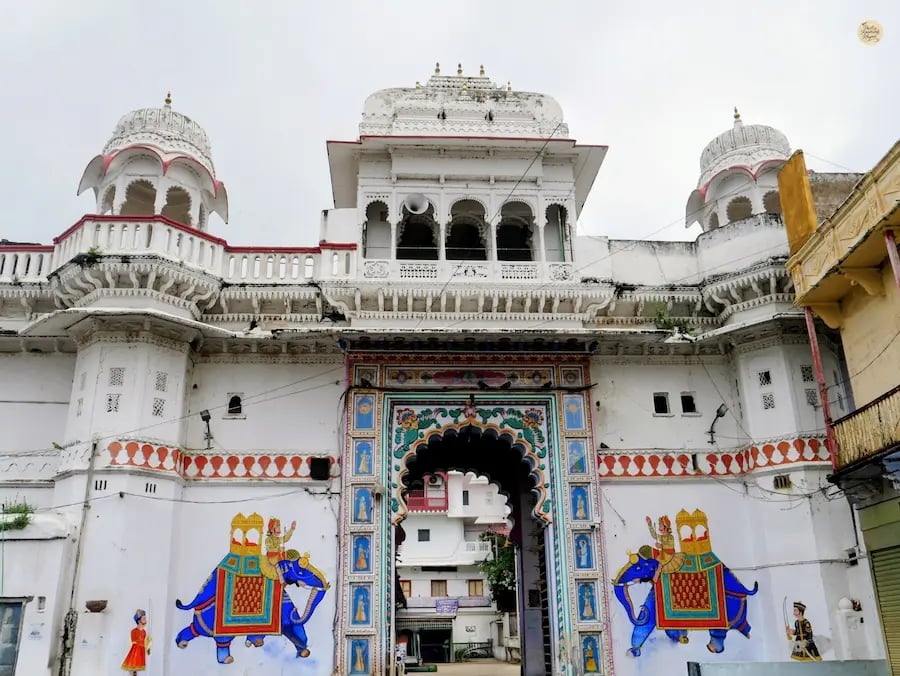
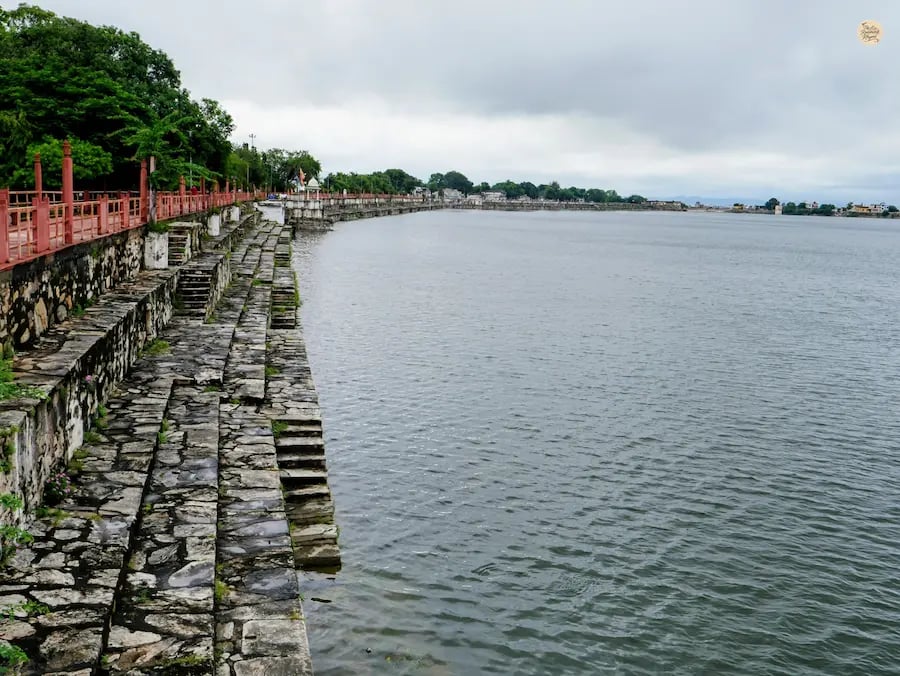
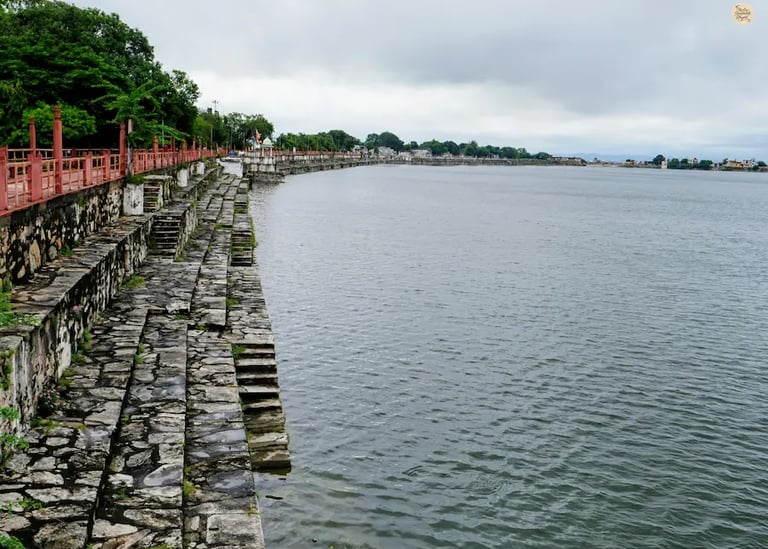
A quiet pause by the lake, where devotion meets stillness.
Morning light settles gently on still waters.
Nau Chauki Pal Rajsamand: Marble Ghat & Best Photography Spot
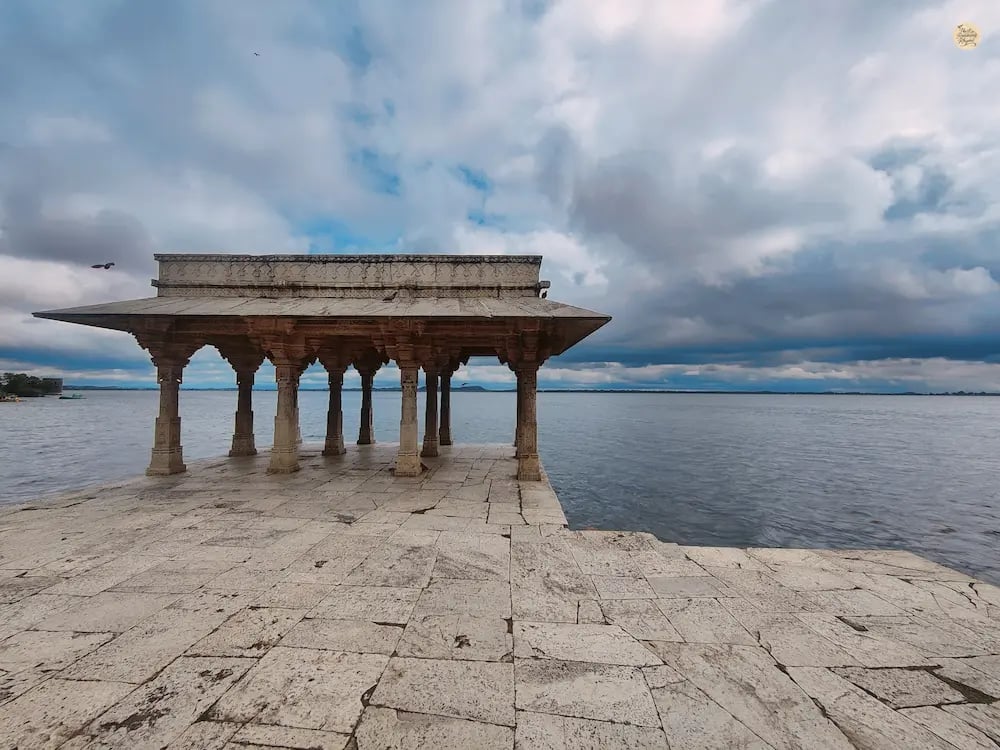
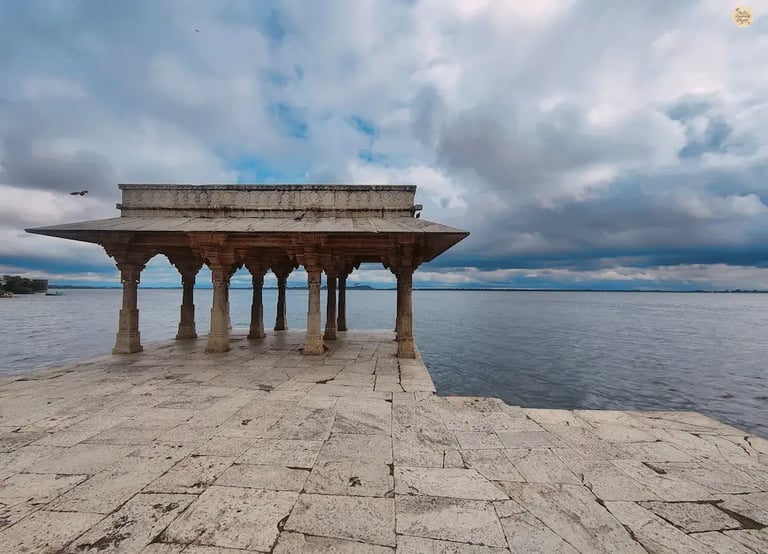
Just a short drive from Dwarkadheesh Temple Kankroli brings you to the southwestern edge of Rajsamand Lake — home to the striking Nau Chauki Pal. Often counted among the most elegant lakefront ghats in Rajasthan, it opens up in white marble — long terraces, layered steps, and wide views that feel both grand and quietly still.
What makes it stand apart is its design — shaped around the symbolism of the number nine. From proportions to layout, everything follows this idea: the length, the steps, the cenotaphs, even the angles — all gently aligned, giving the space a sense of balance you don’t immediately notice, but slowly feel.
Walk along the marble, pause by the steps, and the place begins to unfold differently. It’s the kind of setting that naturally fits into Udaipur photoshoot location, where every frame feels clean, minimal, and timeless. With its symmetry and open views, it also works beautifully for perfect pre-wedding shoot ideas in Udaipur, especially if you’re looking for something less crowded, more raw.
There’s a quiet charm here that doesn’t try too hard — making it feel like the most Instagrammable place in Udaipur, Rajasthan, yet without the usual noise. And maybe that’s what makes it special — it still holds the essence of an offbeat destination in Rajasthan, where you don’t just capture moments, you actually sit with them.
Just nearby, the Rajsamand Panorama adds another layer, offering a glimpse into the legacy of Maharana Raj Singh I and the story behind the lake.
It’s not just a viewpoint — it’s where structure, story, and stillness come together, right at the edge of the water.
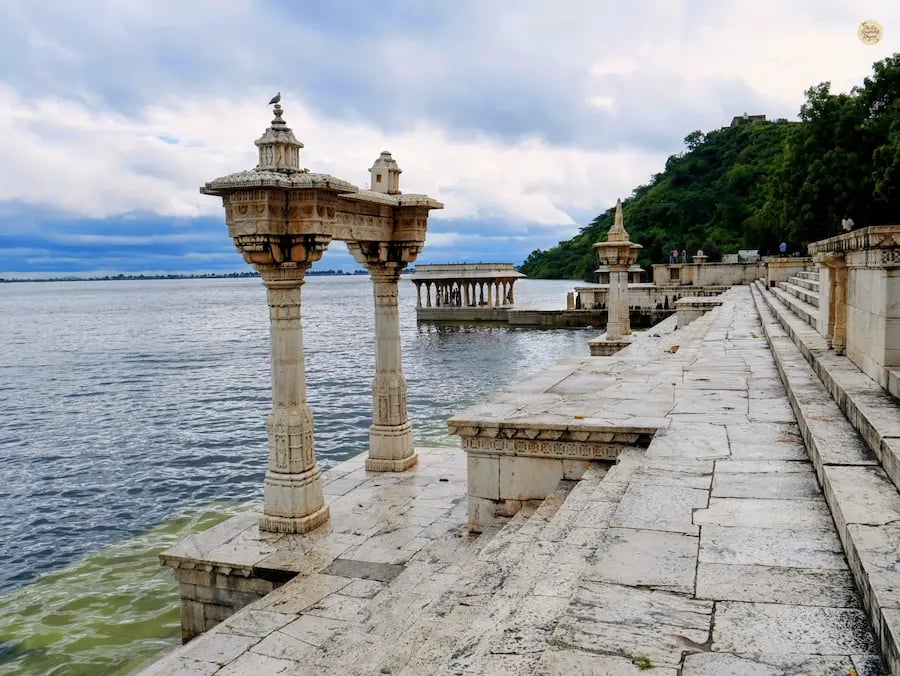
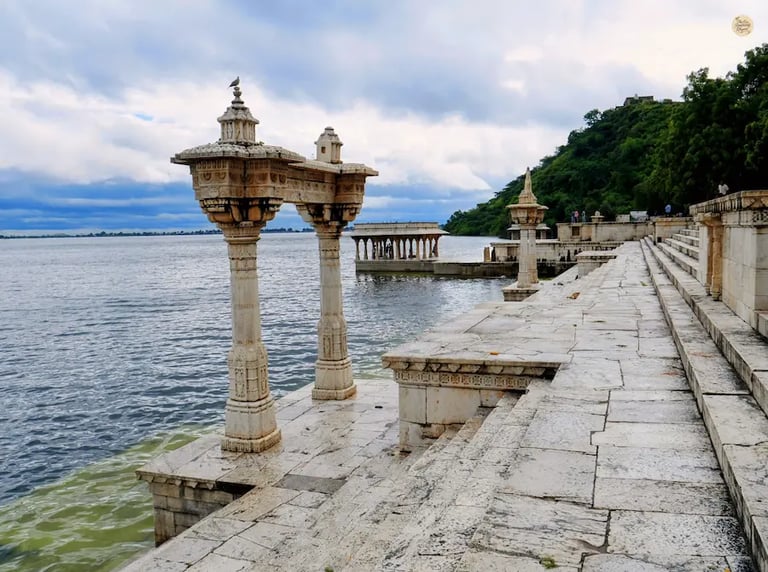
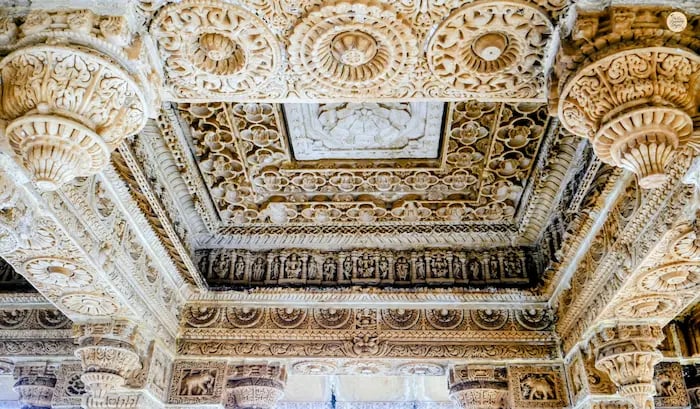
Stone steps meet the lake in quiet symmetry.
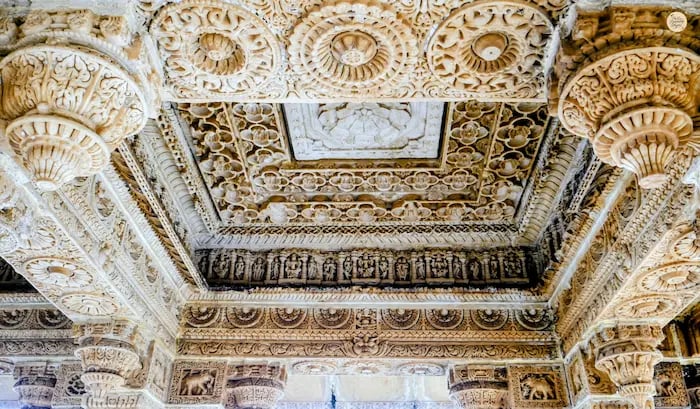
Intricate ceilings that quietly hold stories in stone.
A clean, open backdrop that makes every frame stand out.

Rajsamand waits, quite and wide,
Stories hidden, just off the guide.
Eklingji wakes in the morning charm,
Nagda's carvings hold their charm.
Nathdwara breathes in living prayer,
Shrinathji's gaze always feels there.
Dwarkadhish by the lake so still,
Nau chauki steps shape time at will.
Charbhuja rests along the way,
Faith walks softly through the day.
Kumbhalgarh walls rise vast and grand,
Echoes guarded in stone they stand.
Hammirpal stirs where waters play,
Haldighati hums of yesterday.
Shiva stands tall in twilight's glow,
Tracing the path unknown we go.
Charbhuja Ji Temple: Sacred Stop Near Kumbhalgarh Fort
From Kankroli, as you move towards Kumbhalgarh Fort, a quiet turn leads you to Charbhuja Ji Temple in Garbhor village — one of the most serene yet significant places to visit near Kumbhalgarh.. Dedicated to Lord Vishnu, the name Charbhuja means “the one with four arms,” and the 85 cm idol reflects this form, holding Shankh, Chakra, Gada, and Padma. In the outer courtyard, Garud ji stands in devotion, adding to the temple’s calm presence.
The temple carries layers of belief and legend. Its origins are often linked to the Dwapar era, with stories of the Pandavas woven into its past. Over centuries, it has become an important spiritual stop for Vaishnav devotees, making it a meaningful addition to any temple tour in Rajasthan. There are also tales of protection — of battles fought, and moments when the idol was hidden underwater to safeguard it from invaders. The present structure dates back to 1444 AD, built by Shri Gangdev after a divine vision guided him here.
What sets Charbhuja apart is its atmosphere. Despite its importance, it remains less crowded and more personal — ideal if you’re looking for peaceful temples in Rajasthan away from heavy tourist flow. It’s also a great spiritual pause on a Udaipur to Kumbhalgarh road trip, where the journey shifts from lakes to hills, from movement to stillness.
As the Aravalli hills begin to rise ahead, Charbhuja Temple becomes more than just a stop — it’s a quiet reset. A place where devotion feels simple, stories run deep, and the road ahead feels even more meaningful.
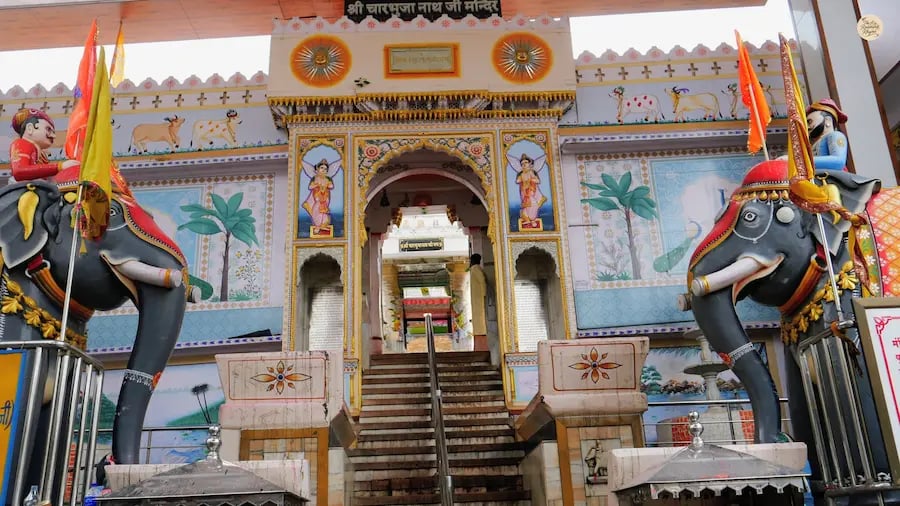
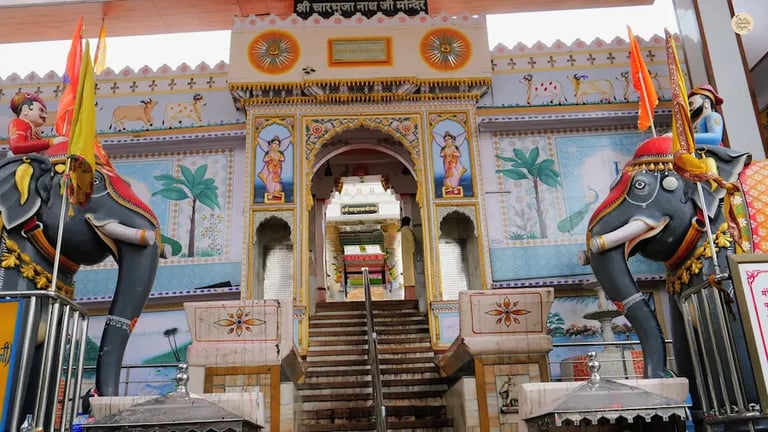
A sacred stop on the road through the hills.
Kumbhalgarh Fort: Timing, History & Travel Guide
Fuel up, because this is where the journey peaks — at the mighty Kumbhalgarh Fort. This part of the journey feels like stepping into a Kumbhalgarh Fort travel guide, where history, scale, and landscape come together seamlessly.
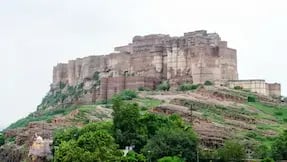
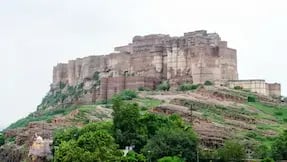
Rising high in the Aravalli hills, Kumbhalgarh Fort Rajasthan isn’t just a monument, it’s an experience that unfolds layer by layer. Counted among the UNESCO forts of Rajasthan, it carries both strength and silence. Built in the 15th century by Rana Kumbha, this place once stood as the refuge of Mewar rulers in times of war, and the birthplace of the legendary Maharana Pratap, making it one of the most powerful Mewar history sites.
What makes it unforgettable is its sheer scale. The fort’s massive wall stretches over 36 km — second only to the Great Wall of China — wide enough for eight horses to ride side by side. Seven massive gates guard its entrance, and the rugged terrain around it adds to its sense of invincibility. It was breached only once in history, and that too not by force, but due to scarcity of water.
Step inside, and the fort opens up like a hidden world. Over 360 temples — many of them Jain — lie scattered within, along with palaces, courtyards, and pathways that slowly lead you higher. As you walk through its layered gates, you’ll pass places like the serene Neelkanth Mahadev Temple, the historic Kumbha Palace, and further up, the Badal Mahal — the “Palace of Clouds” — where the views stretch endlessly across the hills.
There’s a certain feeling here — part awe, part stillness. Whether you’re walking along the walls, watching the hills fade into the horizon, or simply pausing at a quiet corner, Kumbhalgarh doesn’t rush you. It lets you take it in, at your own pace.
And if you stay a little longer, the experience deepens. The nearby Kumbhalgarh Wildlife Sanctuary offers a wilder side of the region, while the evening light and sound show brings the fort’s history alive in a way that feels almost cinematic.
This isn’t just the highlight of the itinerary — it’s the moment the journey stays with you.
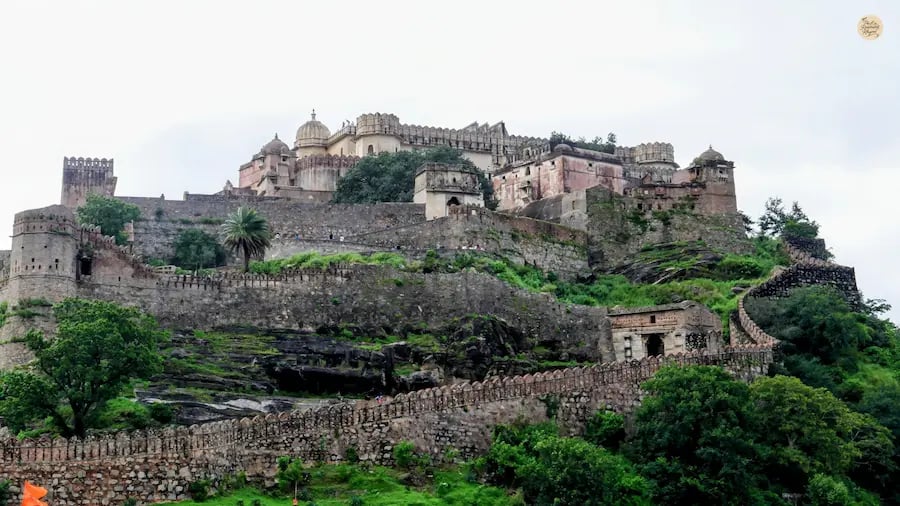
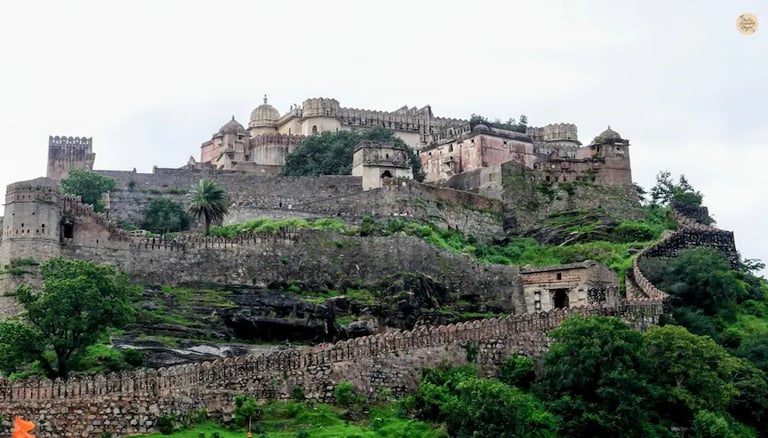
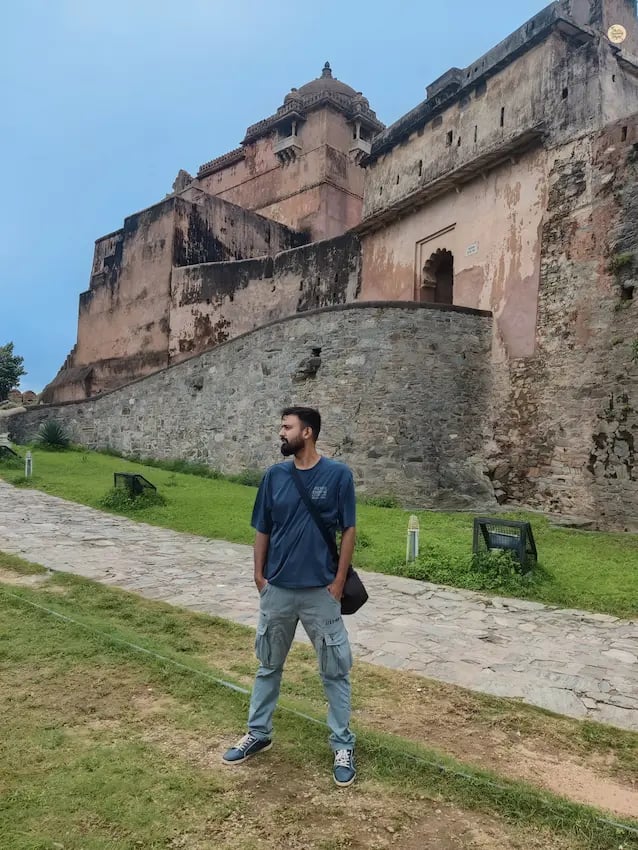
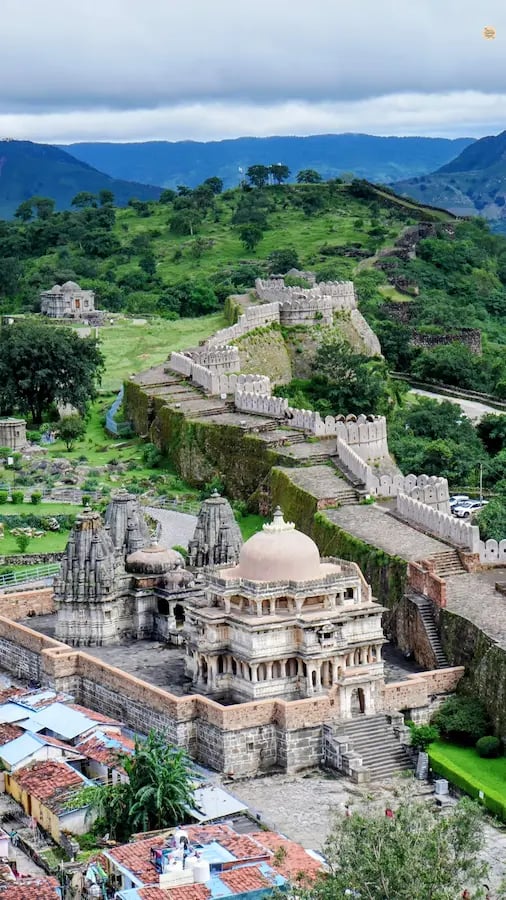
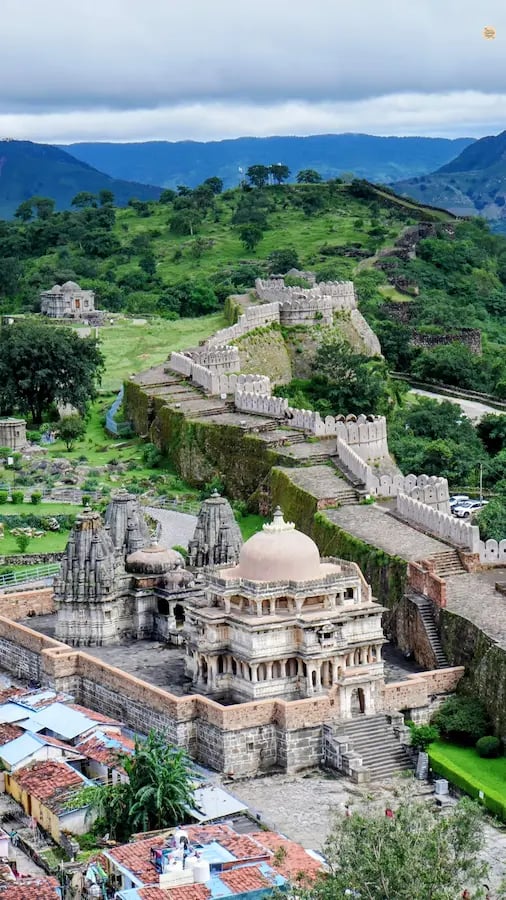
One of Rajasthan's most impressive hill forts.
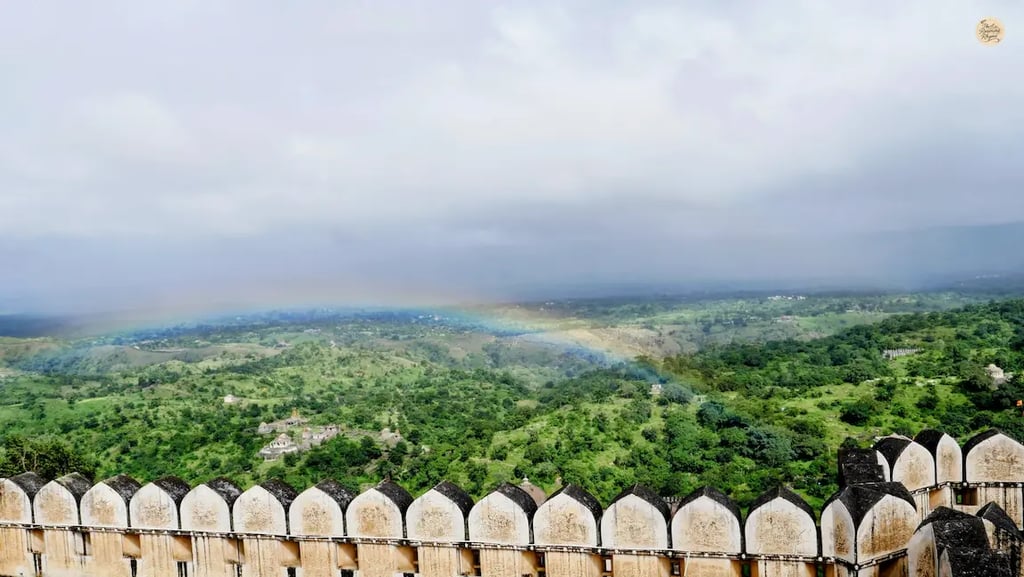
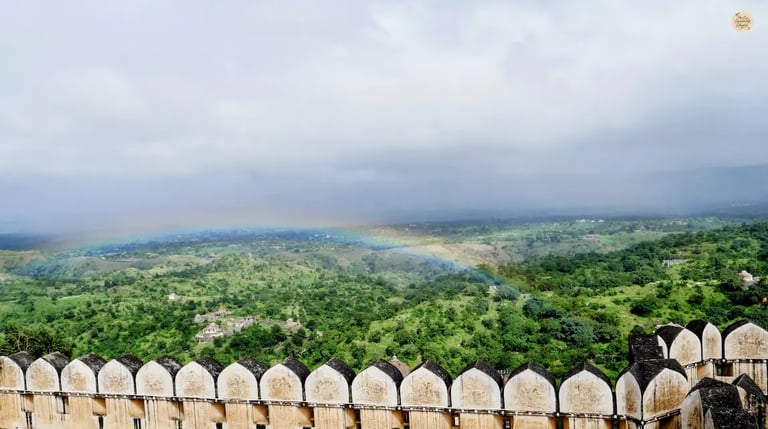
A rainbow crowns Kumbhalgarh Fort after the monsoon rains.
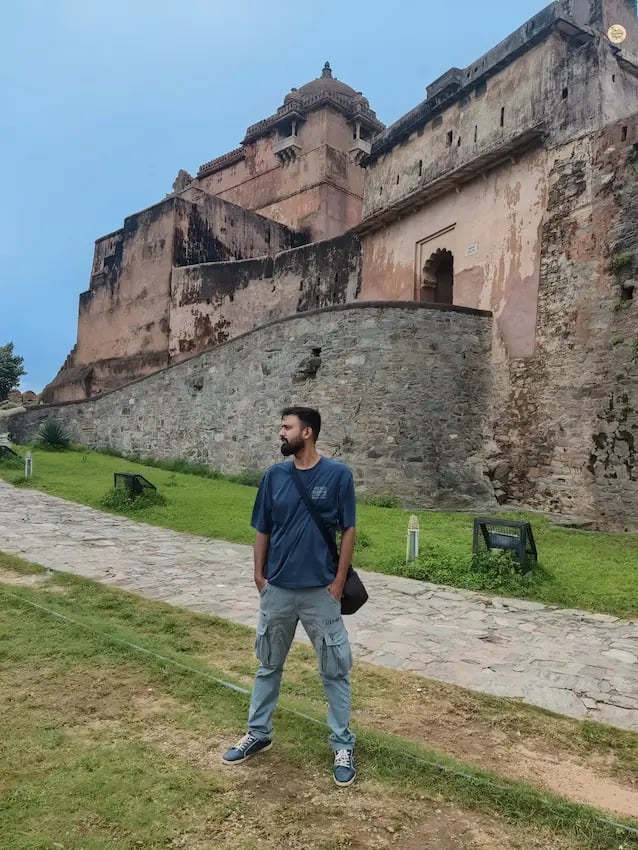
Standing where history still feels larger than life.
A wall that keeps unfolding beyond the horizon.

Hammirpal Lake Kumbhalgarh: Hidden Gem Near the Fort
Just about 10 minutes from Kumbhalgarh Fort, as you move deeper into the hills of Mewar near Taladri village, you’ll come across Hammirpal Lake — a quiet, almost hidden spot that feels far from the usual trail. Tucked quietly among the lesser-explored Kumbhalgarh Fort nearby places, this one doesn’t call out for attention — it simply waits to be noticed. Lush green hills, drifting clouds, a small temple by the ghat, and a wide stretch of still water that makes you pause without planning to.
But what makes Hammirpal truly popular isn’t just its scenery — it’s what happens when you walk closer to the steps. The water, so still from a distance, suddenly comes alive. Fish gather near the edges in surprising numbers, creating ripples and movement that instantly shift the mood of the place.
The reason behind this goes back a few years, when fish farming was introduced here and African catfish were brought into the lake. The plan didn’t last long, as locals stepped in to protect the ecosystem — but the catfish remained. Over time, they multiplied, and today, they’ve become an inseparable part of the lake’s identity. You can easily spot them near the ghats, even feed them, and watch the water respond in a way that feels both unexpected and fascinating.
Fishing is no longer allowed, preserving this delicate balance — a lake that looks peaceful at first glance, but quietly holds movement beneath. It’s this contrast that makes Hammirpal feel different — like one of those offbeat places to visit in Udaipur region, even though it sits just beyond the usual routes.
And somewhere between the still water and sudden ripples, it finds its place among those lesser-known Udaipur nearby tourist places — not crowded, not loud, just quietly memorable.
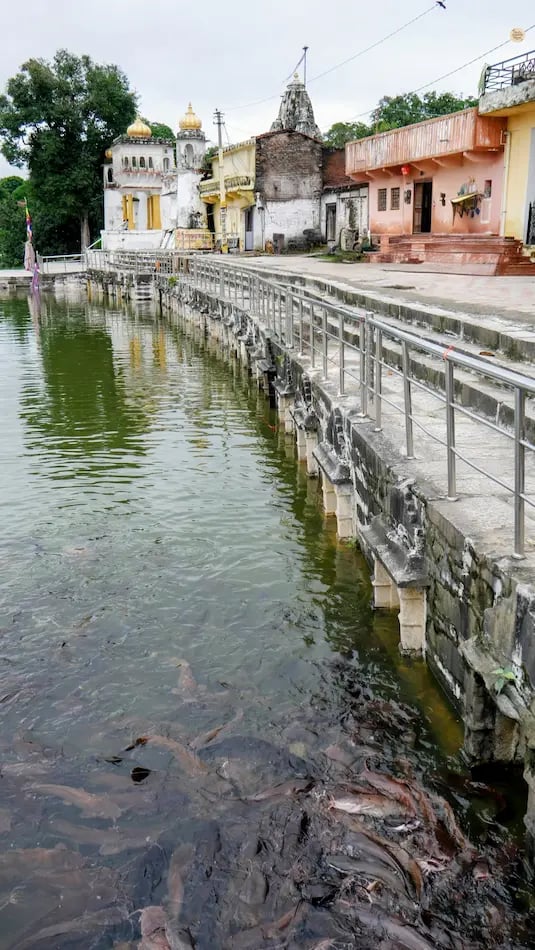
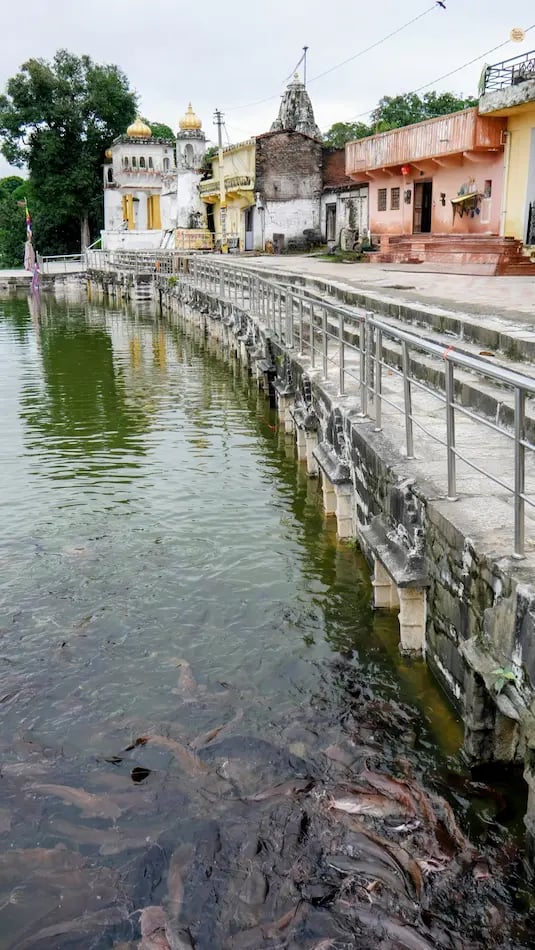
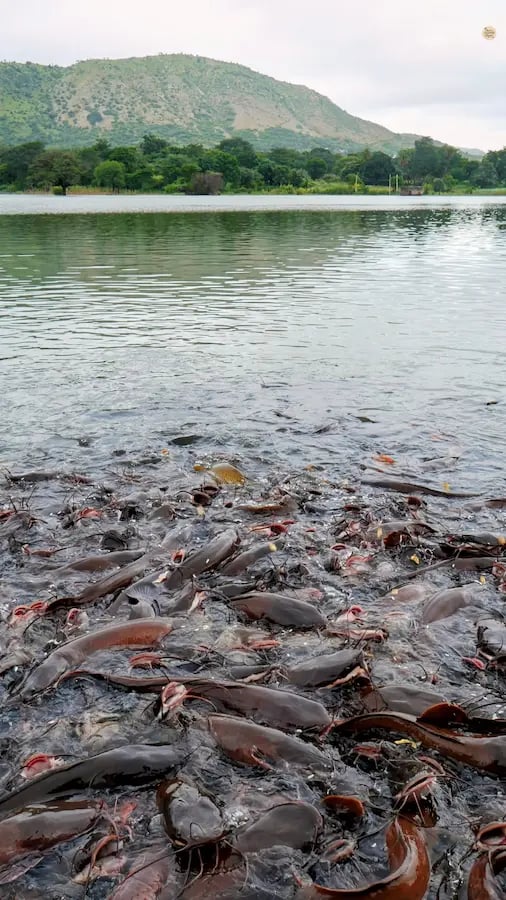
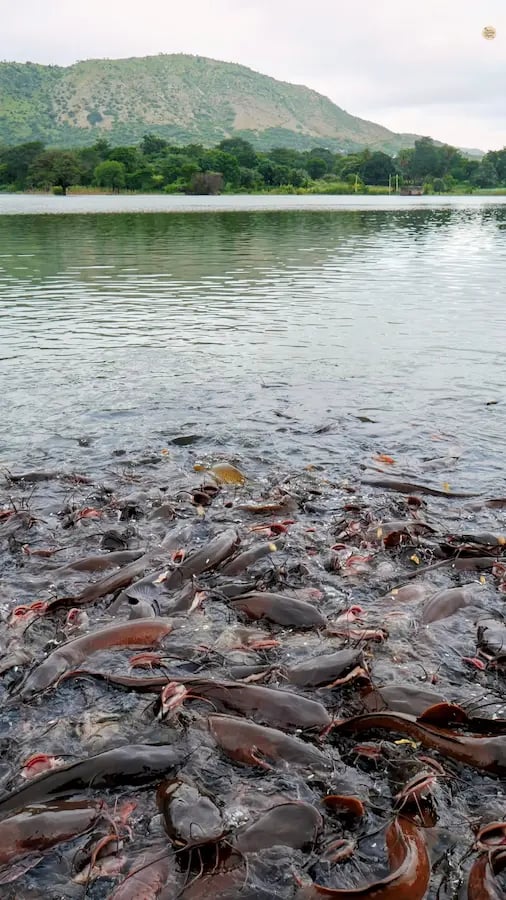
A quiet lake stop tucked beneath the hills.
A surprising sight where the water seems to come alive.
Haldighati: Battle History & Chetak Samadhi
On your way back to Udaipur from Kumbhalgarh Fort, take the route through Haldighati — not just for the drive, but for the feeling it carries. Tucked in the Aravalli hills, this narrow mountain pass gets its name from the yellow soil that resembles turmeric (haldi), giving the entire landscape a distinct, earthy tone.
But Haldighati isn’t just about its color — it’s about its story. This is where, in 1576, the historic battle between Maharana Pratap and Raja Man Singh (leading the Mughal army of Akbar) was fought. Even today, the place feels still, almost reflective, as if holding onto echoes of that संघर्ष. The courage of Maharana Pratap is remembered deeply here — and so is the loyalty of his horse, Chetak, who carried him to safety before taking his last breath.
A short distance away stands the Chetak Samadhi — a simple white marble cenotaph marking the spot where Chetak fell. Nearby, the Maharana Pratap National Memorial showcases a striking bronze statue of the Maharana riding Chetak, capturing a moment that feels both powerful and personal.
Around the area, you’ll also find small glimpses of local life — from the terracotta craft traditions of Balicha village to the fragrant rose products made from Chaitri Gulab, known for its gulkand and rose water.
Haldighati isn’t a long stop — but it’s a meaningful one. A place where the road slows down, and history quietly walks alongside you.
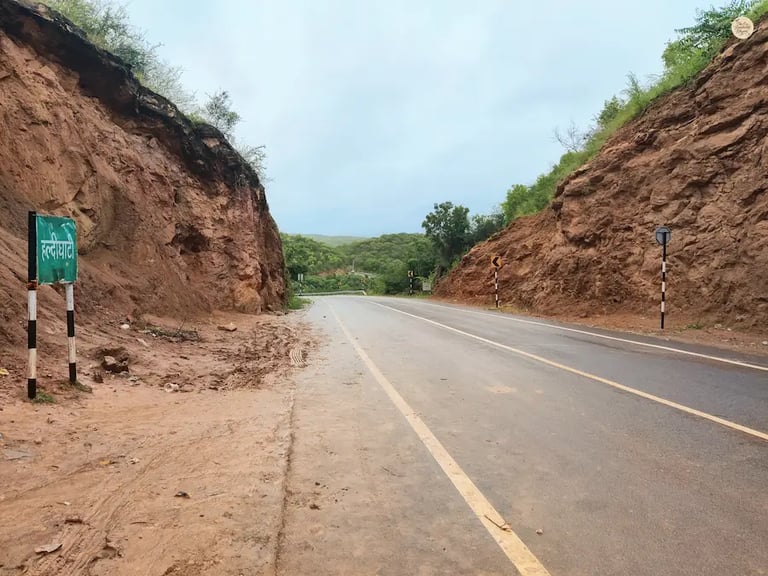
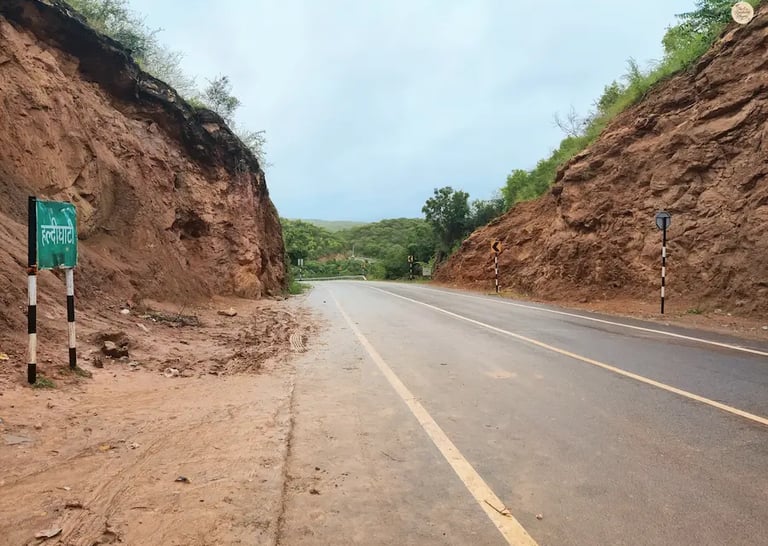
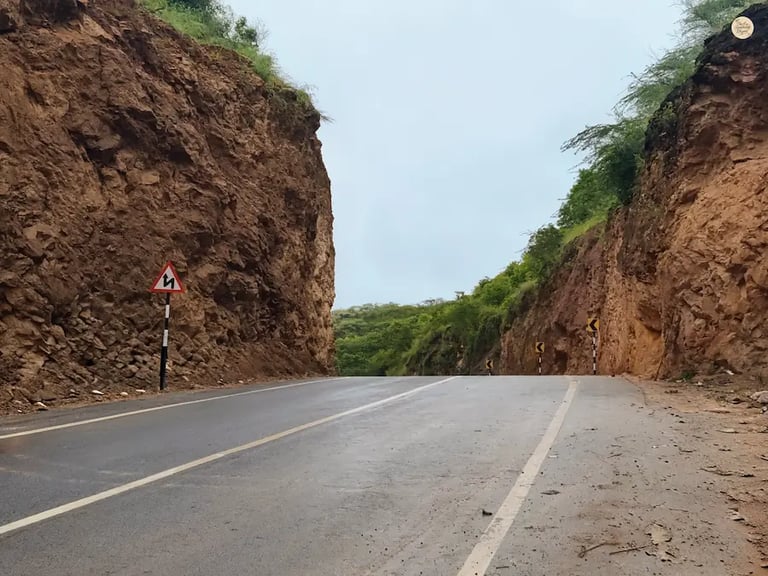
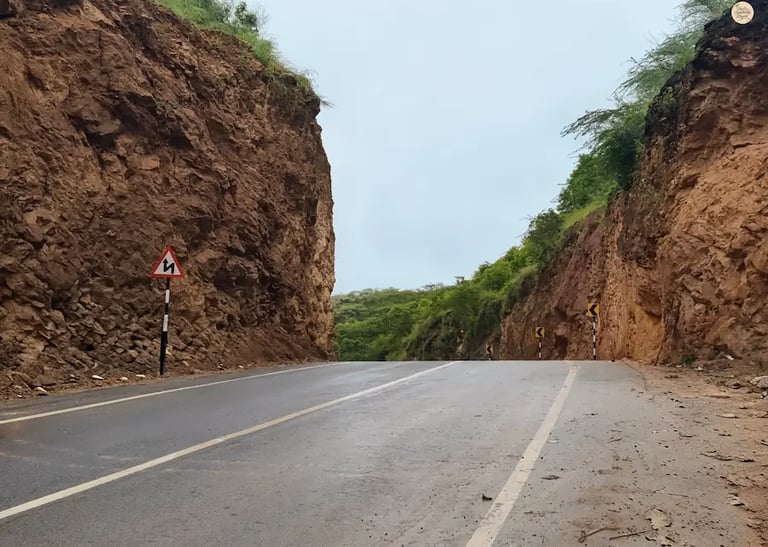
A mountain pass where history still lingers.
A stretch of land where history meets a unique hue.
Statue of Belief Nathdwara: Light Show, Views & Timings
On your way back to Udaipur, the final stop brings you to something truly larger than life — Statue of Belief, also known as Vishwas Swaroopam. Standing at 369 feet, it is one of the largest Shiva statues in the world and a rising highlight among places to visit near Nathdwara. Visible from miles away, it almost feels like the journey is guiding you towards it.
Set atop Ganesh Tekri and envisioned by Madan Paliwal, the experience unfolds step by step. From the grand Nandi statue to the expansive 16-acre complex with gardens, fountains, viewing decks, and walkways — everything here is built at scale. Elevators take you to different levels, offering panoramic views of the Aravalli hills, making it one of the most unique viewpoints near Udaipur.
As evening sets in, the mood transforms. The Statue of Belief light and sound show, combined with 3D projection mapping, turns the structure into a living canvas — colours, visuals, and storytelling blending into a cinematic experience. It’s also considered the best time to visit Statue of Belief Nathdwara, when the entire space glows against the night sky.
After a day of temples, lakes, and forts, this stop feels like the perfect finale — grand, immersive, and unforgettable. A place that doesn’t just end your journey, but elevates it.
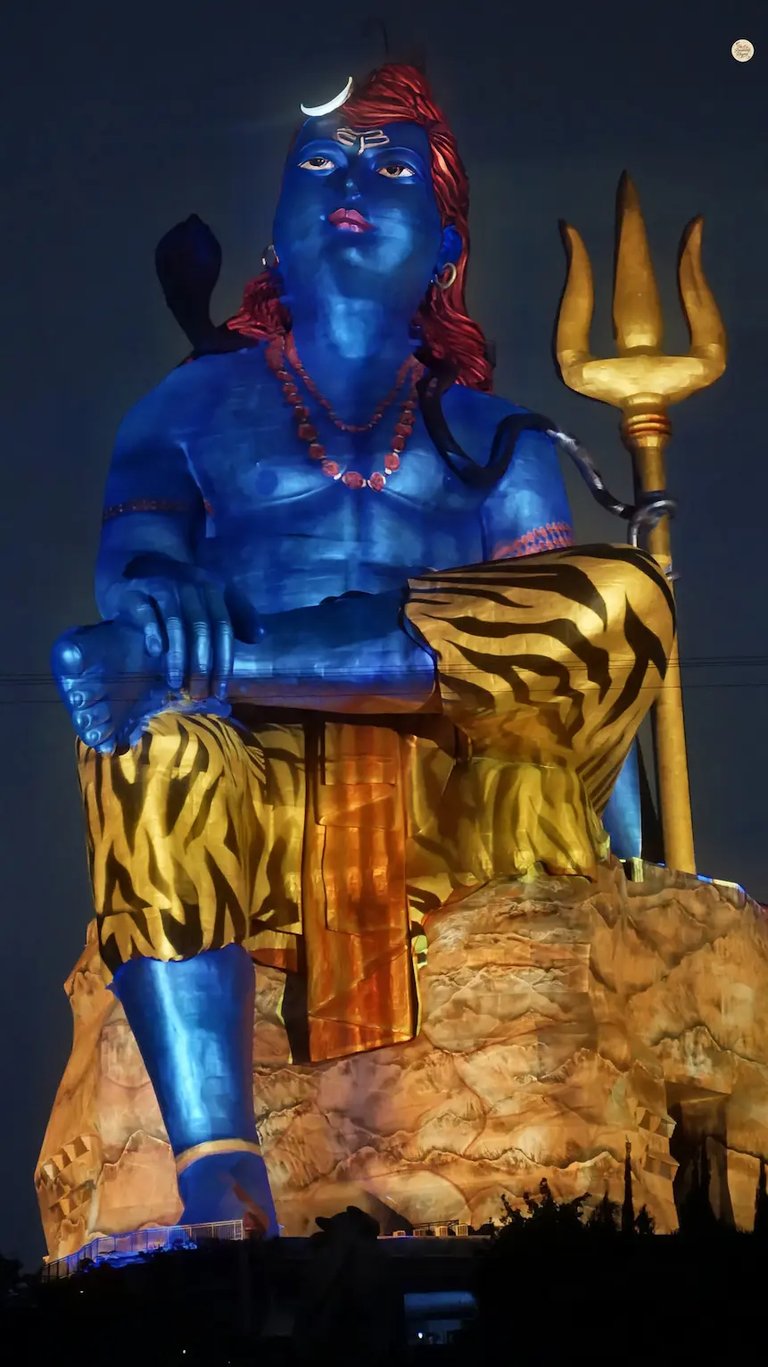
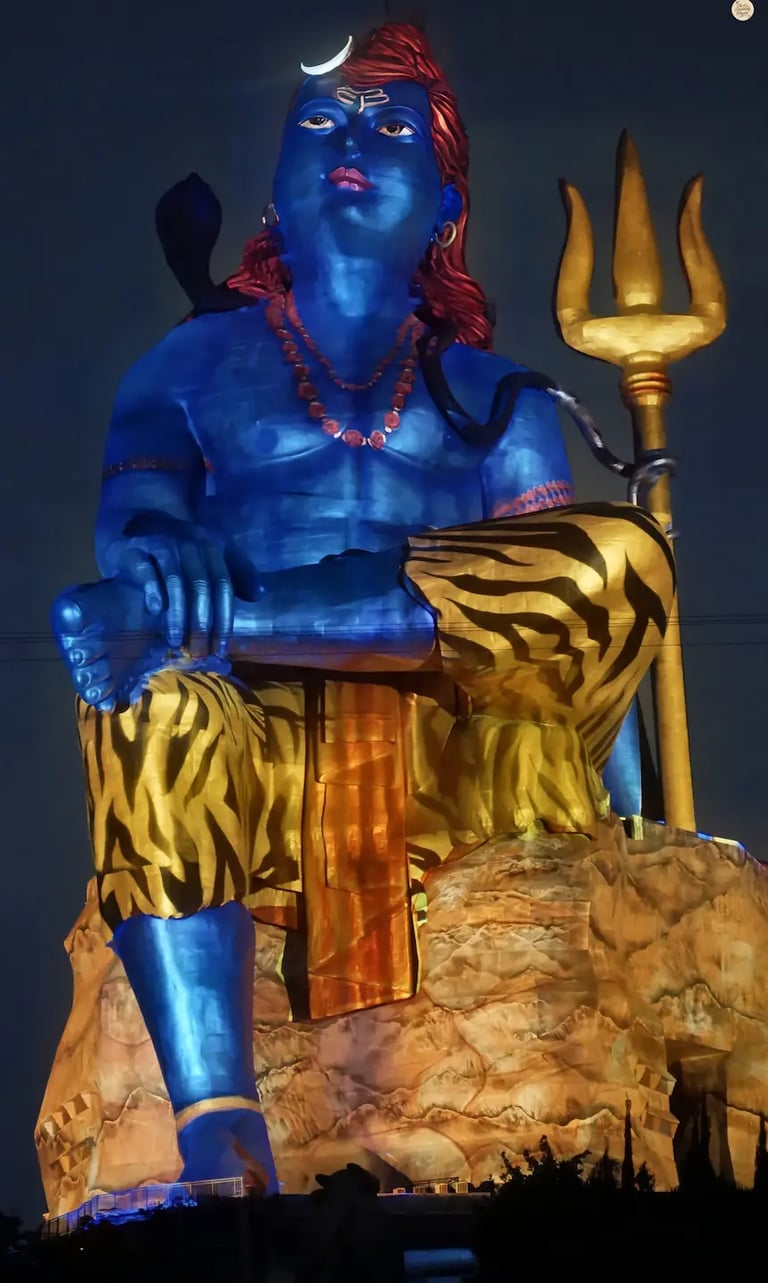
As night falls, the story comes alive in light.
By the time you return to Udaipur, the day doesn’t feel like just a checklist of places — it feels layered. From the quiet chants of Eklingji Temple to the living rhythm of Shrinathji Temple, from the still waters of Rajsamand Lake to the towering walls of Kumbhalgarh Fort — every stop adds a different note, a different mood.
Somewhere along the way, without even realising it, you find yourself tracing the path unknown — not chasing places, but following a quiet rhythm that the road sets for you. One moment you’re walking through centuries-old temples, the next you’re watching hills fade into the horizon, and somewhere in between, you pause — not because you have to, but because you want to.
Rajsamand doesn’t try to impress loudly. It unfolds gently, almost like a roaming rhyme — soft, steady, and full of meaning if you choose to listen. If you’re following this Rajsamand travel guide, taking your time with each stop turns this into more than just a route — it becomes a journey you actually feel. You start early, you cover miles, you return by night — but something about it stays, making it one of the most memorable 1-day trips from Udaipur.
Not just the places you saw,
but the feeling you carried back.
Plan Your Rajsamand Journey
Ready to explore the forts, temples, and lakes around Rajsamand?
Plan your 1-day trip smoothly with the right stays, transport, and travel essentials.
Find Best Stays
Choose from budget to premium hotels near the temple.
Arrange Transport
Book a cab or a taxi for smooth transport.
Plan Your Journey
Check trains, buses, and other travel options.
Book Flights
Compare and book the best flight deals.
Frequently Asked Questions – Rajsamand Travel Guide
Q. Why is Kumbhalgarh famous?
A. Kumbhalgarh Fort is famous for its massive fort walls (second longest in the world after the Great Wall of China), hilltop views, and its status as a UNESCO World Heritage Site under the Hill Forts of Rajasthan.
Q. Which city is nearest to Kumbhalgarh Fort?
A. The nearest major city is Udaipur (~85–100 km). The closest local access town is Sadri/Kumbhalgarh belt in the Rajsamand region.
Q. What is special about Nathdwara?
A. Nathdwara is a temple town built around devotion. It moves entirely around Shrinathji darshan, narrow bustling lanes, and a deep spiritual rhythm that defines daily life.
Q. Which god is worshipped in Nathdwara?
A. Shrinathji Temple is dedicated to Lord Krishna in his child form — Shrinathji (7-year-old form lifting Govardhan hill).
Q. What is the timing of Darshan in Shrinathji?
A. Shrinathji follows 8 daily darshans — Mangla, Shringar, Gwala, Rajbhog, Utthapan, Bhog, Sandhya, Shayan. Timings vary slightly by season, but the flow of the day stays structured around these rituals.
Q. What are the 8 darshans of Shrinathji?
A. Mangla, Shringar, Gwala, Rajbhog, Utthapan, Bhog, Sandhya, Shayan — each marks a different moment of the deity’s “day routine,” like a living tradition.
Q. What is the dress code for Shreenath Ji Darshan?
A. Modest and traditional is preferred — covered shoulders and legs. Simple ethnic wear is ideal, especially for smooth entry and respect inside the temple.
Q. Why is Krishna called Shrinathji?
A. Because it represents Lord Krishna as “Shrinath” — the Lord of Shree (Lakshmi/wealth and divine grace), worshipped in his child form lifting Govardhan hill.
Q. Is Rajsamand Lake worth visiting?
A. Yes — Rajsamand Lake is calm, wide, and deeply scenic. Built in the 17th century, it’s perfect for sunset stops, slow breaks, and linking Kankroli’s peaceful vibe into your journey.
Q. Why is Haldighati famous?
A. Haldighati is known for the 1576 battle between Maharana Pratap and Mughal forces, symbolising Rajput bravery and resistance.
Q. Who really won the Battle of Haldighati?
A. Historically, Mughals claimed tactical control, but Maharana Pratap was never captured. So there’s no absolute winner — it’s remembered more for courage than conquest.
Q. How much is a taxi from Udaipur to Nathdwara?
A. Approx ₹1200 – ₹2000 one way, depending on cab type and season. Easy half-day trip.
Q. How much is a taxi from Udaipur to Kumbhalgarh?
A. Approx ₹2500 – ₹4000 one way. Usually, a full-day or extended trip with stops at Haldighati and Kumbhalgarh Fort.
Share Your Thoughts – We’d Love to Hear From You!
Every journey is better when shared.
We hope you enjoyed this travel story — now, we'd love to hear yours! Share your experience, suggestions, or feedback and help us make our travel tales even better.
Tracing poetry on paths unknown.
Join The Journey
© 2026 The Roaming Rhyme. All rights reserved.


Some links may be affiliate links. If you purchase through them, I may earn a small commission — at no extra cost to you.
Explore
Travel stories, guides, and hidden gems — delivered gently to your inbox.
Karnataka