
Jaipur Travel Guide: The Perfect 3-Day Itinerary
Plan the perfect 3 days in Jaipur. Discover forts, palaces, street food, sunset views, and local tips in this complete Pink City travel guide.
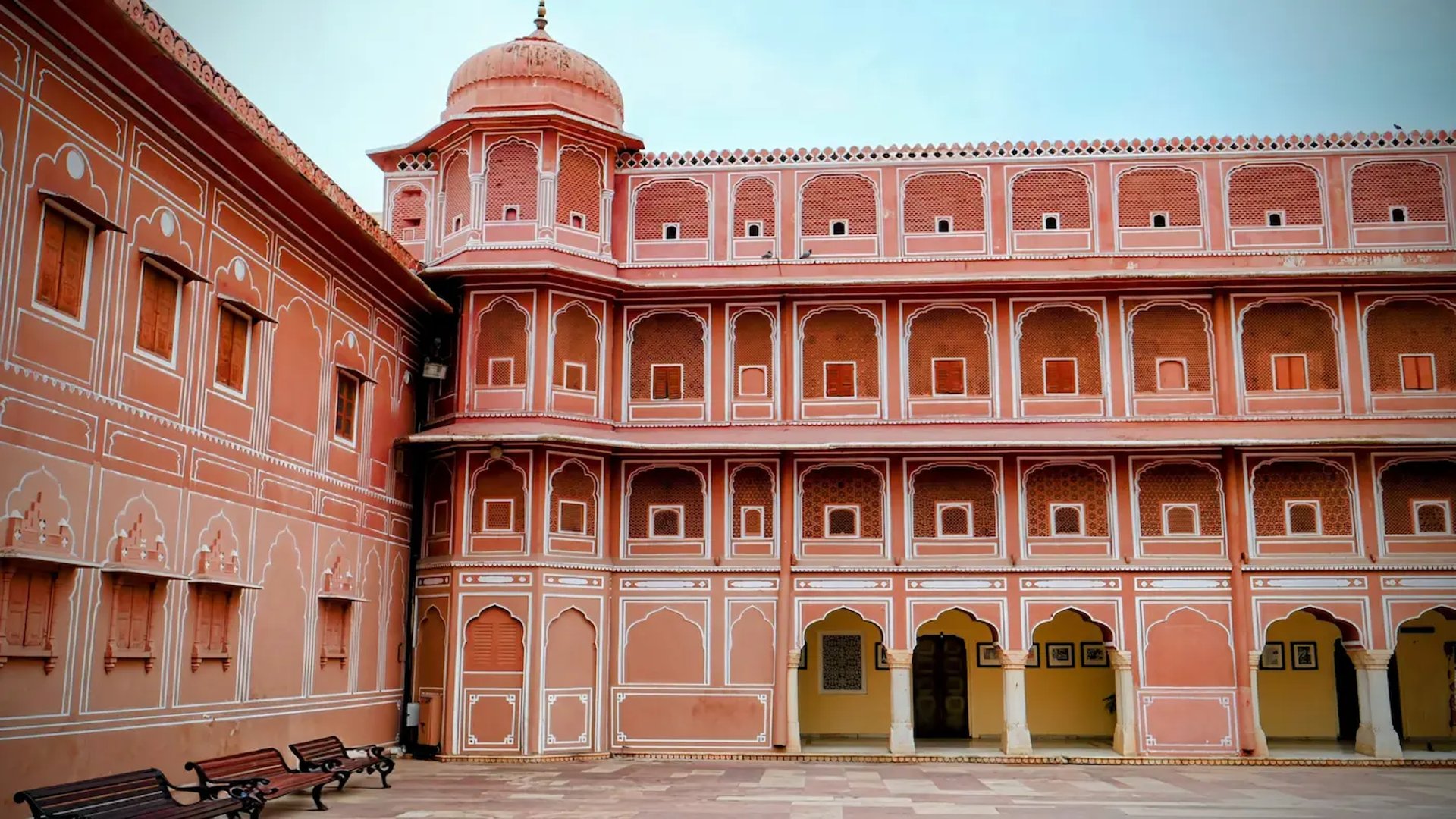
Jaipur – The Pink City That Stays With You | 3-Day Travel Guide
Forts, palaces, bazaars, and sunsets in Rajasthan’s most iconic city.
Updated on: 19th, Mar 2026
Explored on: Aug' 2025
Some cities are visited.
Some are experienced.
And then… there is the Pink City Jaipur.
The capital of Rajasthan, Jaipur, is where royal history and modern life move side by side. Famous for its architecture and admired for its thoughtful planning, Jaipur offers far more than postcard views — it offers character, culture, and continuity.
Known across India as the Pink City, Jaipur glows in warm terracotta hues. Hilltop forts rise above the Aravalli hills, ornate palaces reflect Rajputana grandeur, and bustling bazaars overflow with textiles, jewellery, handicrafts, and street food. Here, the past and present don’t compete — they coexist.
Founded in 1727 by Maharaja Sawai Jai Singh II, Jaipur was one of India’s earliest planned cities. In 1876, the city was painted pink to welcome the Prince of Wales — a tradition that still defines Jaipur’s identity today.
But Jaipur isn’t only about monuments.
It’s sunrise over ancient fort walls.
It’s quiet palace corridors whispering history.
It’s afternoon walks through vibrant local markets.
It’s rooftop evenings under amber skies.
Vibrant, layered, and endlessly fascinating — Jaipur rewards those who explore it slowly.
Whether you’re planning a 3-day Jaipur Itinerary, a quick weekend trip, or searching for a detailed Jaipur Travel Guide, this guide will help you discover the best places to visit, local experiences, food spots, and practical travel tips.
Welcome to the Pink City.
Welcome to Jaipur – Rajasthan’s Timeless Pink City
How to Reach Jaipur
Jaipur is easily accessible by air, rail, and road.
By Air (✈︎): Jaipur International Airport connects Jaipur to major Indian cities, just 20–30 minutes from the center.
By Train (🚆︎): Jaipur Junction railway station offers smooth rail links, including the Ajmer Shatabdi Express
By Road (🚗︎): Excellent highways link Jaipur to Delhi, Agra, Udaipur, and Jodhpur.
Arrive anyway — the welcome feels royal.
Best Time to Visit Jaipur
Jaipur shines all year — each season brings its own mood.
October to March – Peak Season: Cool, pleasant weather makes fort visits and bazaar walks most comfortable — ideal for first-timers.
July to September – Monsoon Charm: The Aravalli hills turn lush, forts look dramatic, and crowds thin out.
April to June – Summer Deals: Hot days but lighter crowds and better hotel prices for budget-friendly travel.
Whenever you visit, Jaipur’s royal charm remains — only the atmosphere shifts.
Where to Stay in Jaipur
Jaipur offers everything from palace luxury to lively hostels — the right stay shapes your experience of the Pink City.
Luxury & Premium Stays: For regal courtyards, chandeliers, and indulgent comfort:
Rambagh Palace↗ – Former royal residence, now an iconic heritage hotel.
The Oberoi Rajvilas↗ – Private villas with serene luxury.
Jai Mahal Palace↗ – Mughal-style grandeur amid lush garden.
Fairmont Jaipur↗ – Majestic design inspired by royal Rajasthan.
ITC Rajputana↗ – Contemporary luxury with Rajasthani soul.
Ideal for honeymoons and luxury seekers.
Mid-Range Heritage Havelis: Traditional charm without palace pricing:
Samode Haveli↗ – Restored haveli with intimate heritage vibes.
Alsisar Haveli↗ – Old-world ambiance in a central location.
Dera Mandawa↗ – Boutique comfort with authentic detailing
Umaid Bhawan Heritage house↗ – Warm Hospitality and classic architecture.
Perfect for culture-loving travelers.
Budget Hotels: Comfortable, reliable, and well-located:
Hotel Pearl Palace↗ – Artistic interiors and great value.
Hotel Arya Niwas↗ – Peaceful stay in the city center.
Nahargarh Haveli↗ – Affordable heritage-inspired design.
Great for value-focused visitors.
Backpacker Hostels: Social, vibrant, and budget-friendly:
Zostel Jaipur↗ – Popular backpacker community hub.
Moustache Hostel Jaipur↗ – Fun, clean, and centrally located.
The Hosteller Jaipur↗ – Modern spaces with rooftop hangouts.
Ideal for solo explorers and young travelers.
No matter where you stay — palace suite or shared dorm —Jaipur ensures one thing:
You sleep surrounded by royal stories.


Hawa Mahal greets the light,
Windows glowing soft and bright.
City Palace stands in grace,
Royal echoes fill the space.
Jantar Mantar tracks the sky,
Stone dials watching time pass by.
Johari Bazar sparkles red and gold,
Bapu Bazar stories bought and sold.
Jal Mahal in silence lies,
Amber climbs where eagle flies.
Sheesh Mahal in starlit flare,
Mirrors shimmer everywhere.
Nahargarh guards sunset’s flame,
Galta springs in temple frame.
Patrika Gate paints colours wide,
Jaipur walks with royal pride.
You can see Jaipur in two days — but to truly feel the rhythm of the Pink City, give it three.
This 3-day Jaipur itinerary blends royal forts, historic streets, temples, viewpoints, and local markets at a relaxed pace. If you’re wondering how to spend three days in Jaipur, this plan covers the city’s most meaningful experiences without rushing.
Day 1 — The Walled Pink City: Govind Dev Ji Temple, City Palace, Jantar Mantar, Hawa Mahal, Swargasuli Tower, and the vibrant bazaars of old Jaipur.
Day 2 — Amber & The Hill Forts: Jal Mahal, Amber Fort, Panna Meena ka Kund, Jagat Shiromani Temple, Jaigarh Fort, and sunset from Nahargarh Fort.
Day 3 — Culture & Spiritual Jaipur: Albert Hall Museum, Moti Dungri Temple, Birla Mandir, Galta Ji Temple, Patrika Gate, and a traditional Rajasthani dinner at Chokhi Dhani / Gulab Garh.
Three days.
Forts, faith, and living heritage.
Jaipur — experienced, not rushed.
Jaipur Travel Guide & 3-Day Itinerary – Forts, Palaces, Bazaars & Sunset Views
Day 1 in Jaipur – Exploring the Walled Pink City
Your first day in Jaipur is about stepping into the historic heart of the city — the UNESCO-listed walled city, where palaces, temples, observatories, and vibrant bazaars sit within walking distance.
Keep the day relaxed but immersive. This part of Jaipur captures the character of the Pink City and is the perfect beginning to your 3-day Jaipur itinerary.
1. Govind Dev Ji Temple (Early Morning Aarti Recommended)
Start your morning at Govind Dev Ji Temple, located near the City Palace complex. Attending the morning aarti offers a powerful glimpse into Jaipur’s living traditions.
Darshan timings change during the day, so it helps to check beforehand. Expect devotional music, crowds of locals, and an uplifting atmosphere.
Time needed: 30–45 minutes
Morning: Divine Start & Royal Grandeur
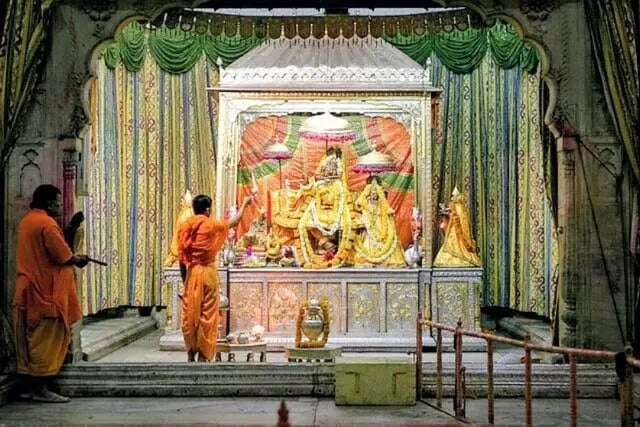
A calm moment of devotion in the heart of Jaipur.
(Image by Ananda Govinda Dasa, licensed under CC BY-SA 3.0, via Wikimedia Commons)
2. City Palace Jaipur
From the temple, walk to City Palace, one of the most beautiful royal complexes in Rajasthan, where Rajput and Mughal architecture blend seamlessly.
Highlights inside include:
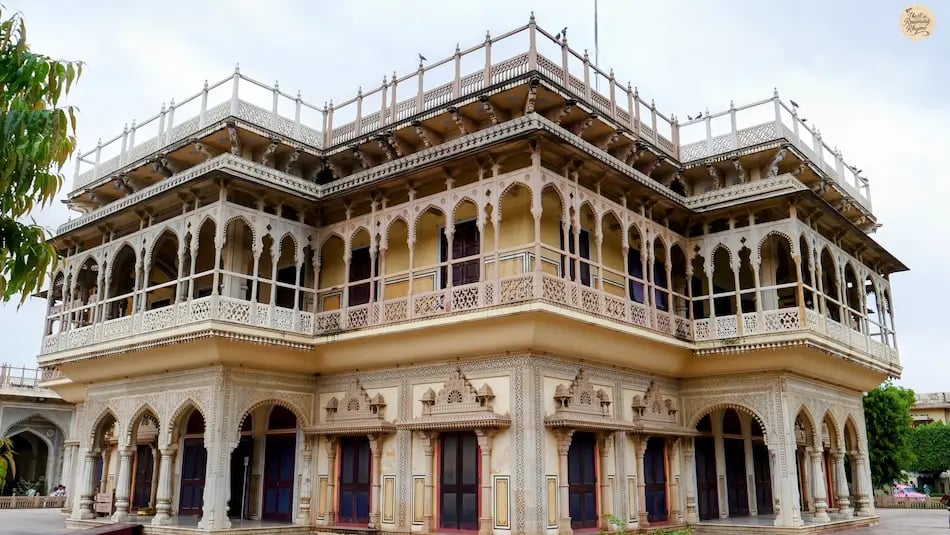
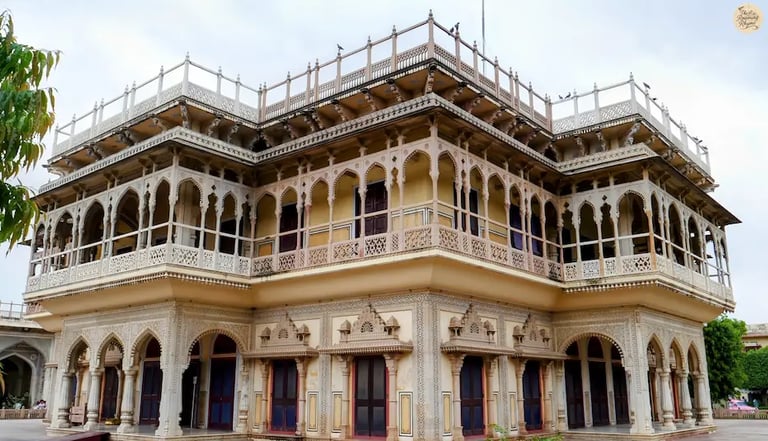
Mubarak Mahal – Royal textile gallery
Chandra Mahal courtyard – Famous painted doorways
Diwan-i-Khas – Home of the giant silver urns
Pritam Niwas Chowk – Seasonal decorative gates
You can choose a standard ticket or special access areas if you want a deeper palace experience.
Time needed: 1.5–2 hours
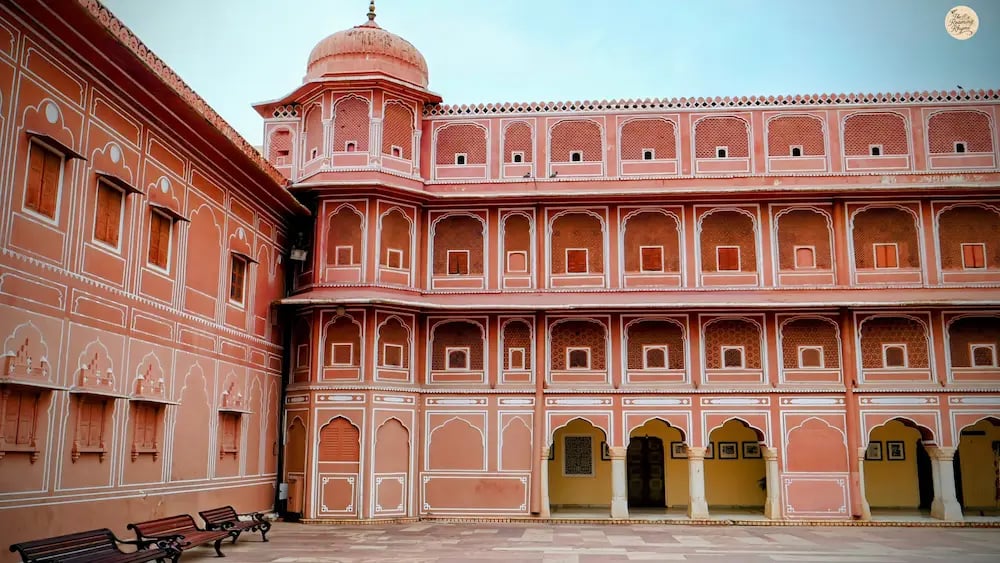
Timeless Rajput elegance carved into Jaipur’s royal heart.
Mubarak Mahal - Royal elegance resting quietly inside Jaipur’s City Palace.
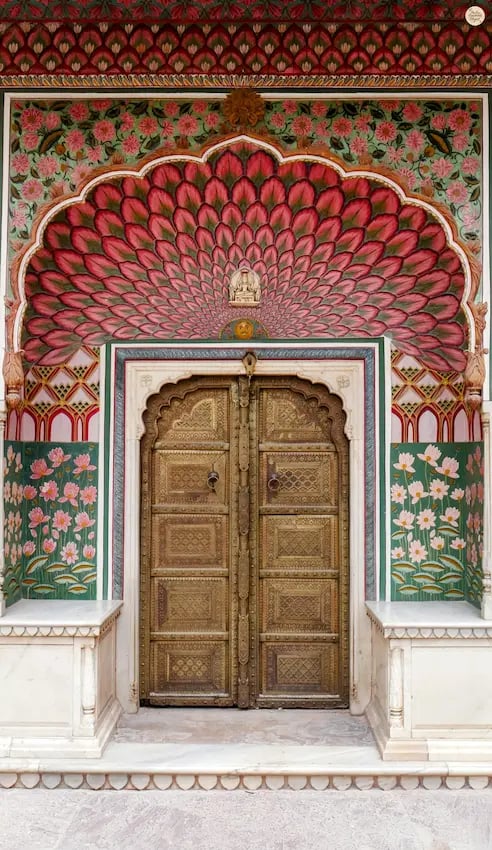
A soft bloom of summer within Jaipur’s royal palace.
Autumn colours quietly glowing within palace walls.
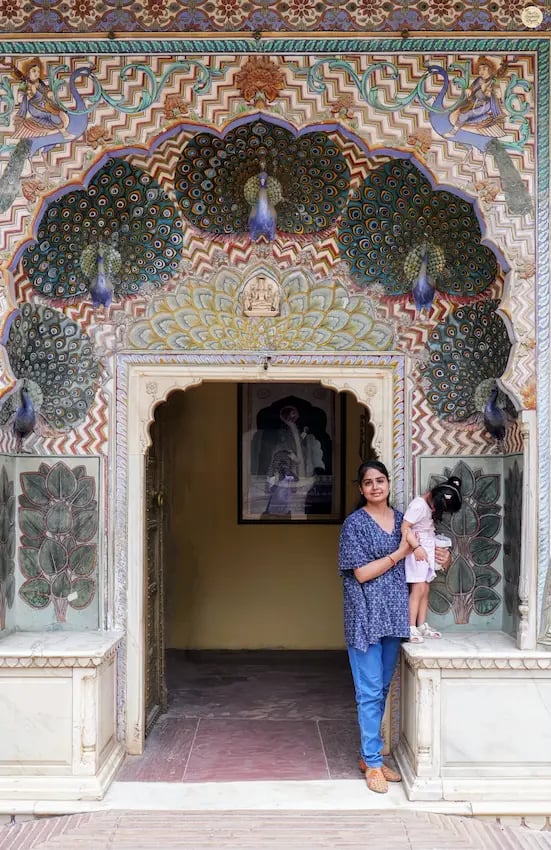
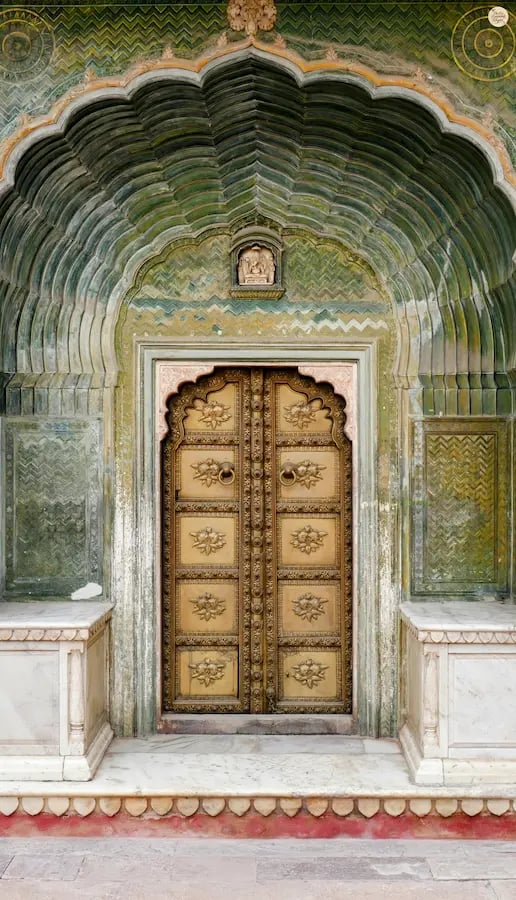
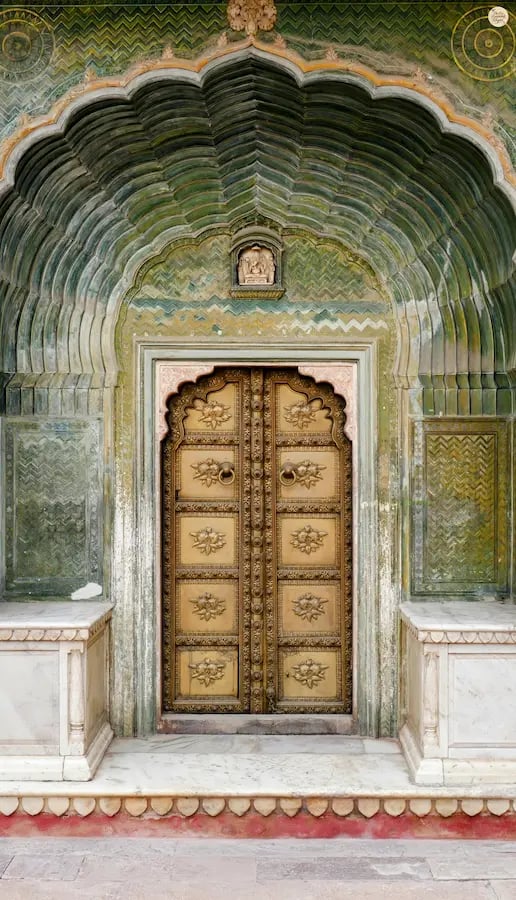
A burst of colour welcoming the freshness of spring.
3. Jantar Mantar
Right next to City Palace is Jantar Mantar, the 18th-century astronomical observatory built by Maharaja Sawai Jai Singh II.
Here you’ll find:
The world’s largest stone sundial
Instruments used to measure time and planetary movement
Many structures look abstract until explained, so hiring a guide can make the visit far more interesting.
Time needed: 45–60 minutes
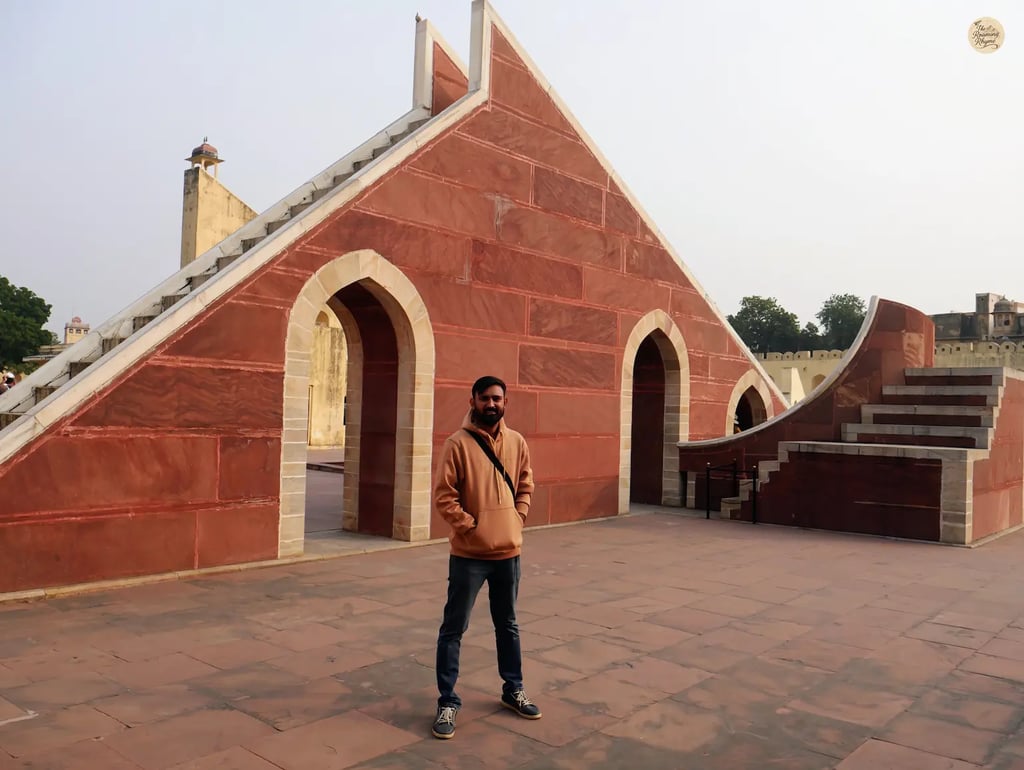
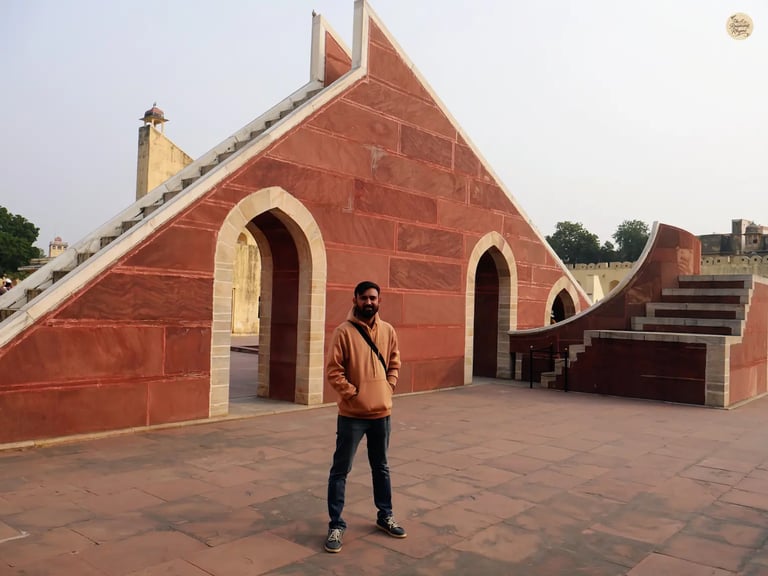
Where shadows quietly mark the passage of time.
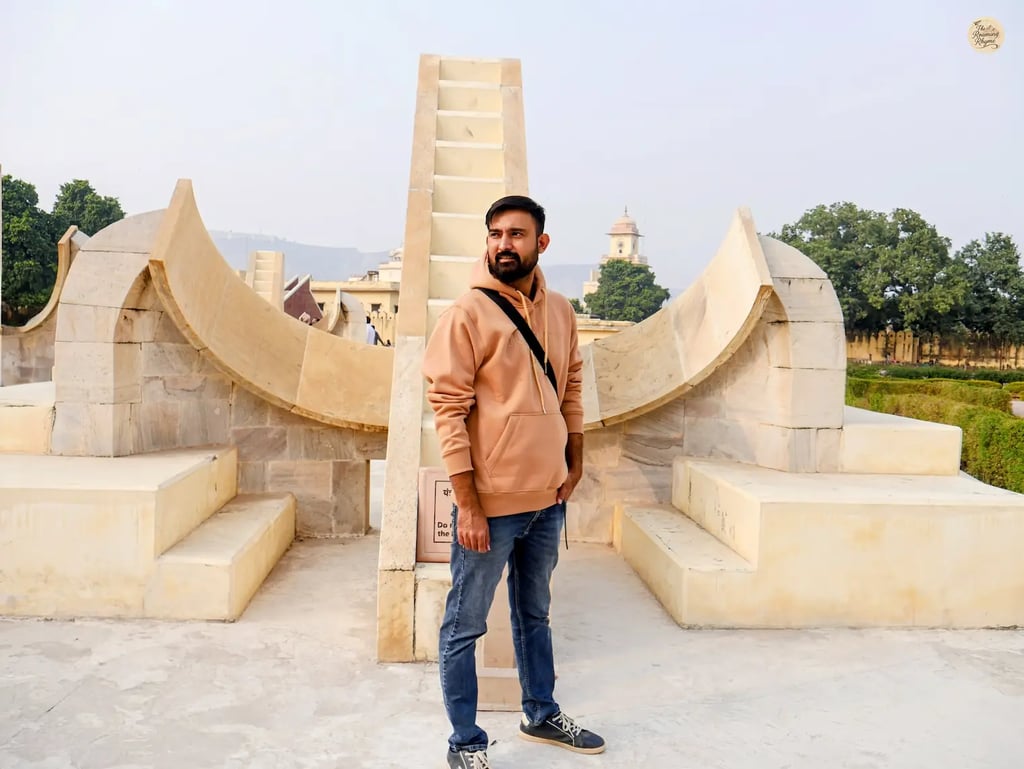
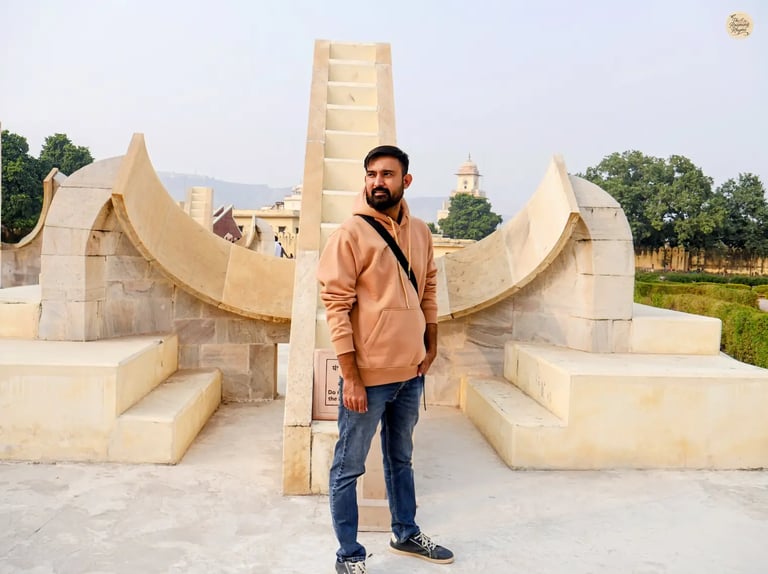
Ancient instruments quietly reading the language of the stars.
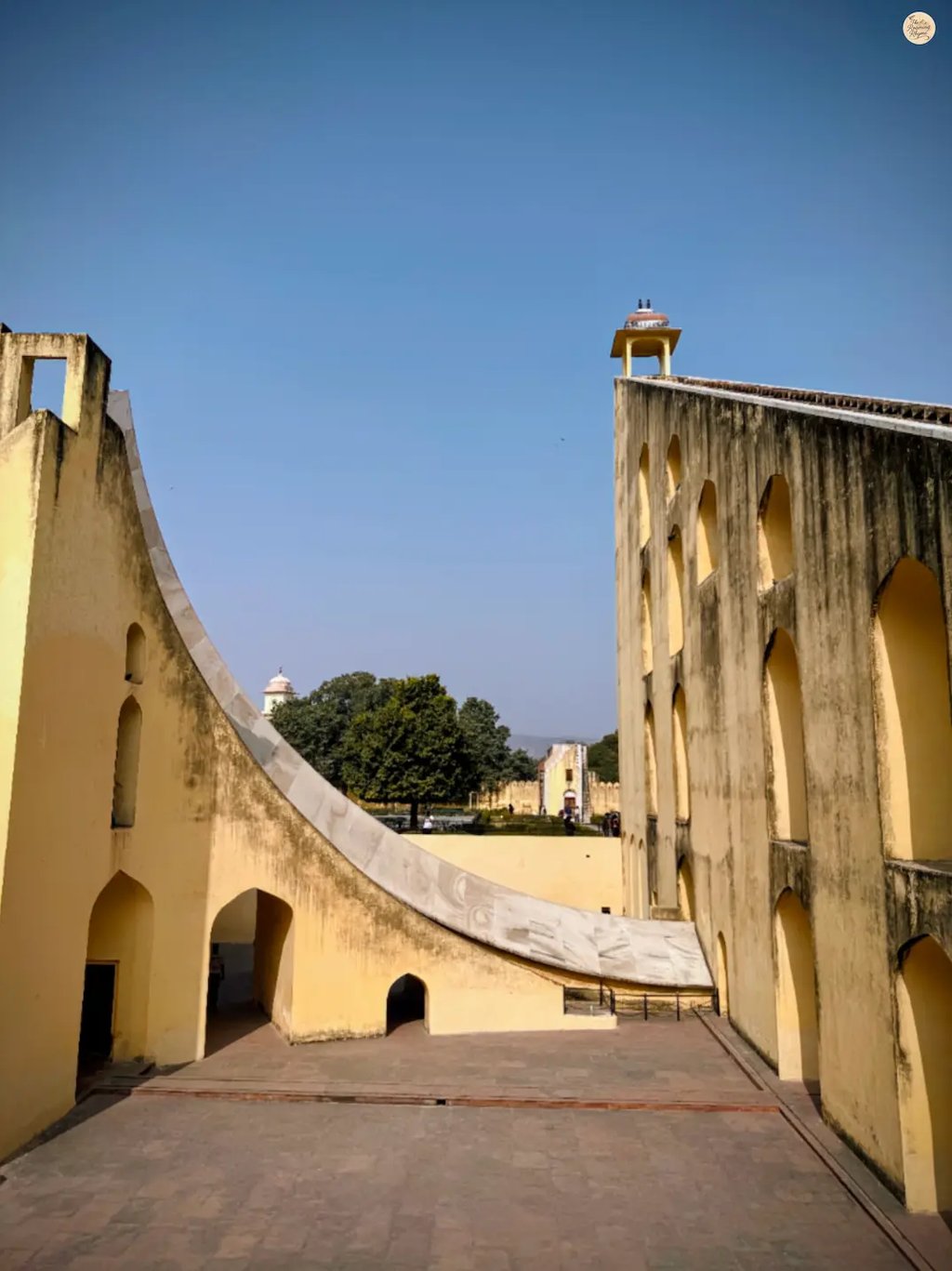
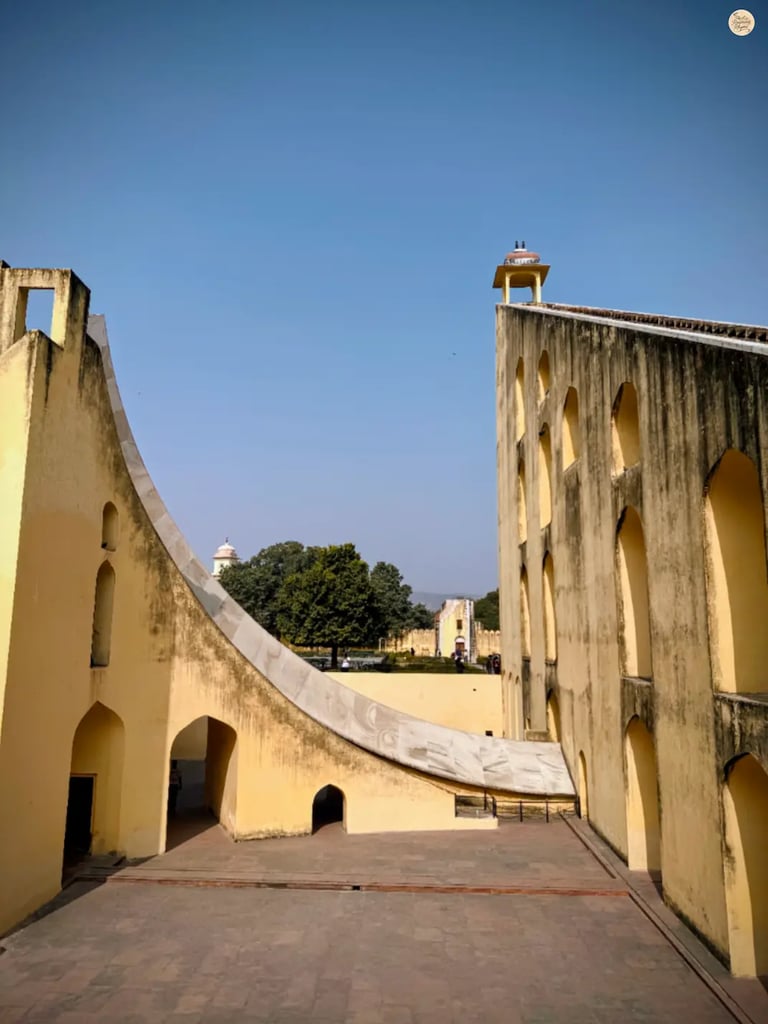
Where stone, shadow, and time quietly meet.
4. Hawa Mahal (Wind Palace)
Walk toward Hawa Mahal, the iconic honeycomb-shaped façade with 953 small windows. It allowed royal women to observe city life without being seen.
You can:
Admire it from the street
Visit inside for rooftop views of the old city
Morning light is best for photography, especially from cafés opposite the palace.
Time needed: 30–45 minutes
Midday: Jaipur’s Most Photographed Landmark
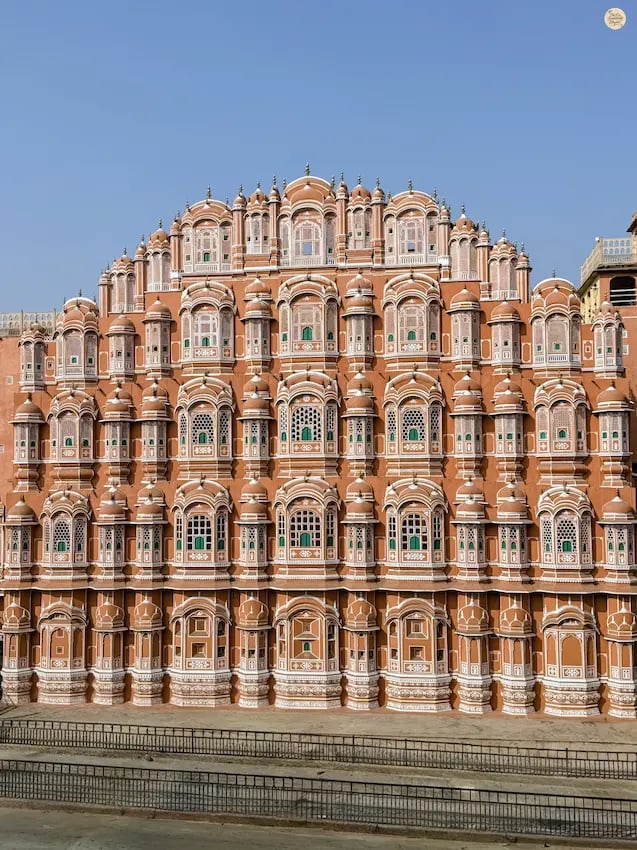
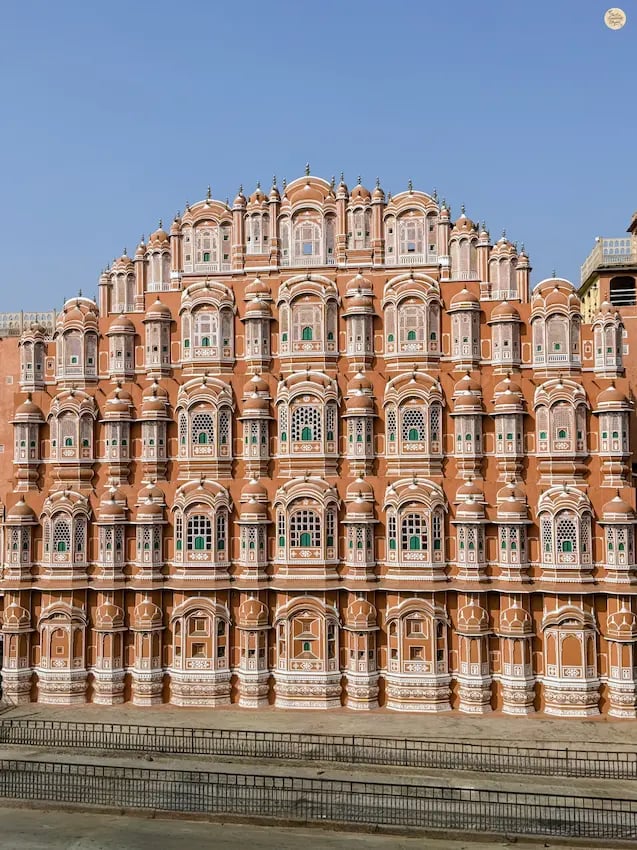
A pink honeycomb rising softly above Jaipur’s old streets.
5. Swargasuli Tower (Isarlat)
For sweeping views of Jaipur’s symmetrical streets, climb Swargasuli Tower. The narrow spiral staircase leads to a panoramic perspective of the walled city.
It’s one of the lesser-known but rewarding stops in central Jaipur.
Time needed: 30 minutes
Afternoon: A Different View of the Old City
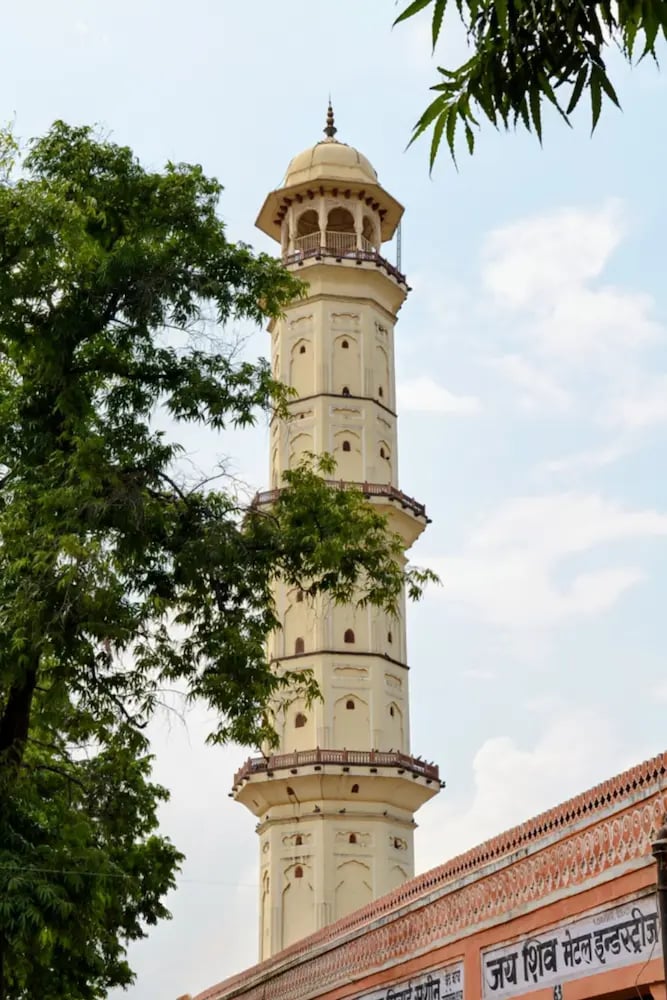
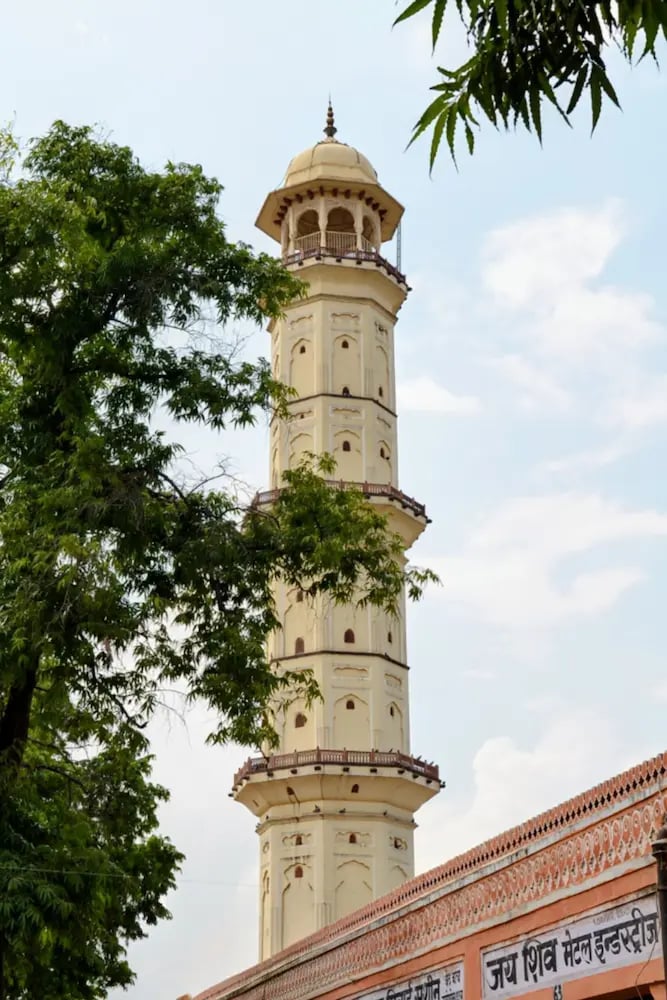
A quiet tower watching over the old Pink City.
(Image by Chetan, licensed under CC BY-SA 3.0, via Wikimedia Commons)
Evening: Bazaar Walk & Local Flavours
Spend the evening wandering through Jaipur’s famous markets:
Johari Bazaar – Jewellery
Bapu Bazaar – Textiles and mojris
Tripolia Bazaar – Lac bangles
This is the best time to:
Shop for handicrafts
Try kachori, lassi, and sweets
Experience the energy of the old city
Walk slowly and notice the painted facades, carved balconies, and glowing evening lights. The Pink City truly comes alive after sunset.
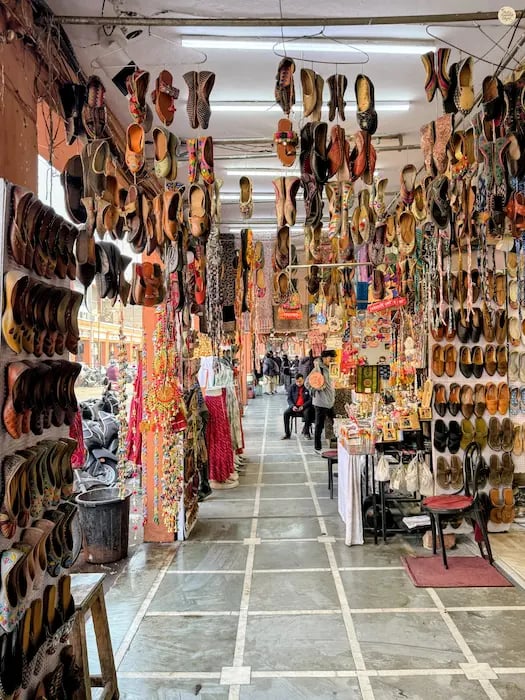
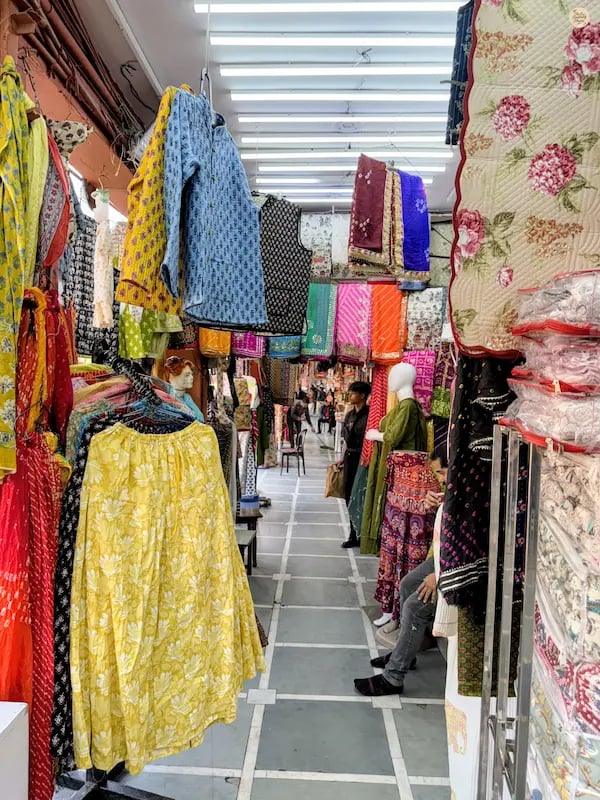
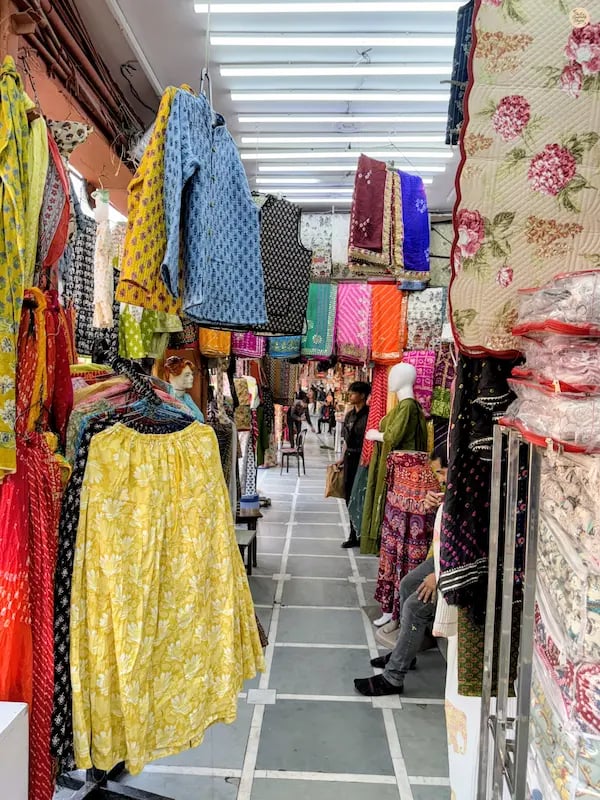
Colours, crafts, and stories lining Jaipur’s lively bazaars.
Colours of Rajasthan flowing through Jaipur’s vibrant bazaars.
Ideal end to the day:
Dinner at a rooftop café overlooking Hawa Mahal or in one of the old-city courtyards.
Day 2 in Jaipur – Amber & The Majestic Hill Forts
Day 2 of your Jaipur journey takes you beyond the city walls and into a dramatic landscape of hills, ramparts, and royal defence architecture — a stretch that truly defines the Royal Rajasthan experience.
Expect sweeping views, massive gateways, ancient stepwells, and glowing sunset horizons — some of the most iconic places to visit in Jaipur. Start early: the light is softer, the crowds are thinner, and the experience feels far more magical.
1. Jal Mahal (Sunrise Stop)
Begin your Day 2 in Jaipur at Jal Mahal. Floating quietly in the middle of Man Sagar Lake, the palace glows beautifully in early morning light. While entry inside isn’t permitted, the lakeside promenade offers peaceful views and excellent photo opportunities with the Aravalli hills in the background.
Time needed: 20–30 minutes
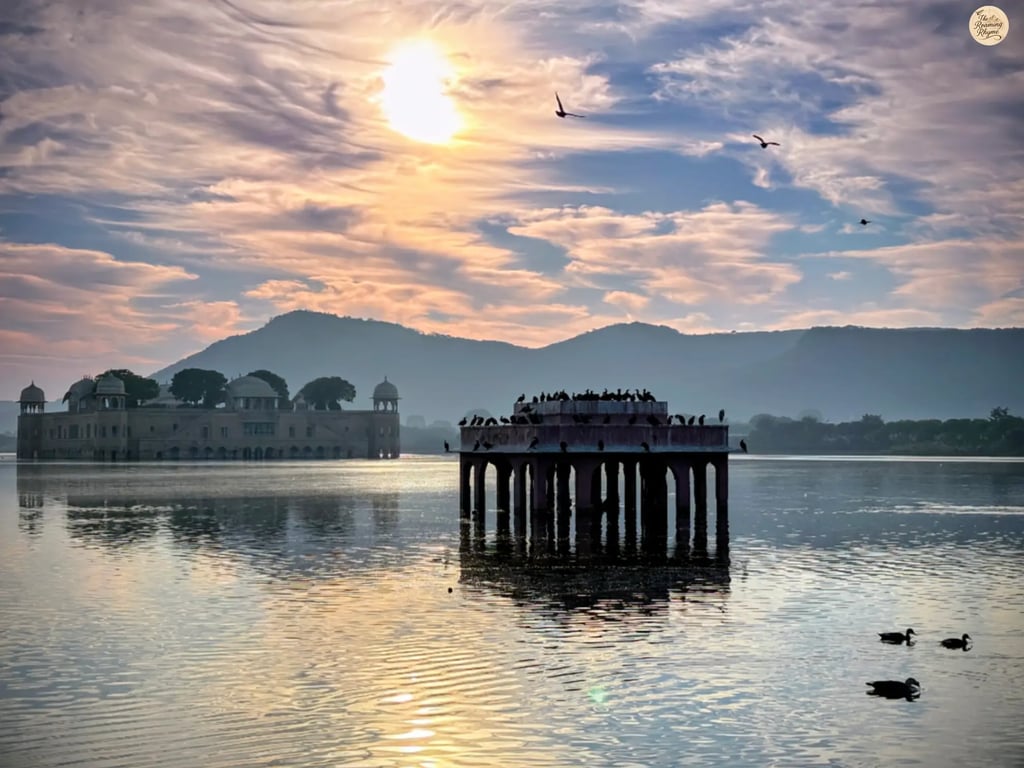
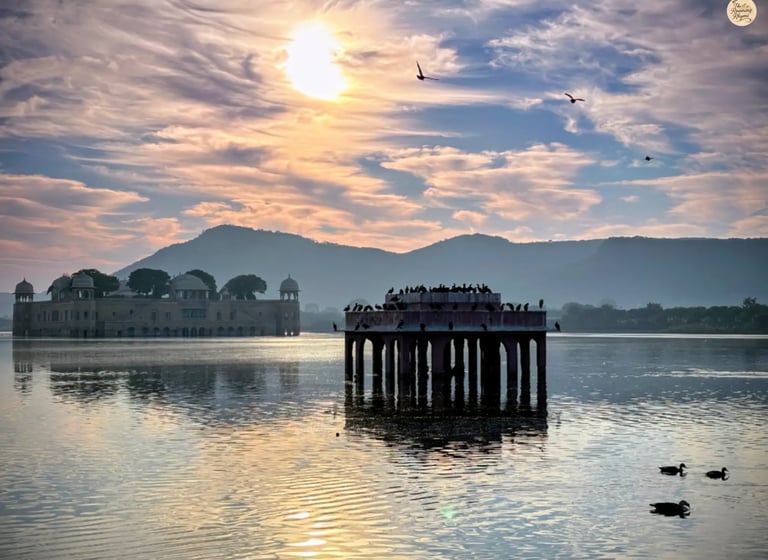
Soft sunrise reflections drifting across the Jal Mahal.
Morning: Sunrise & Amber’s Grandeur
2. Panna Meena ka Kund
A short drive ahead lies Panna Meena ka Kund, a symmetrical 16th-century stepwell known for its striking geometric stairways — one of the lesser-known yet fascinating places to visit in Jaipur. It’s a quick but rewarding stop, perfect for photography and appreciating ancient water-harvesting design.
Time needed: 20–30 minutes
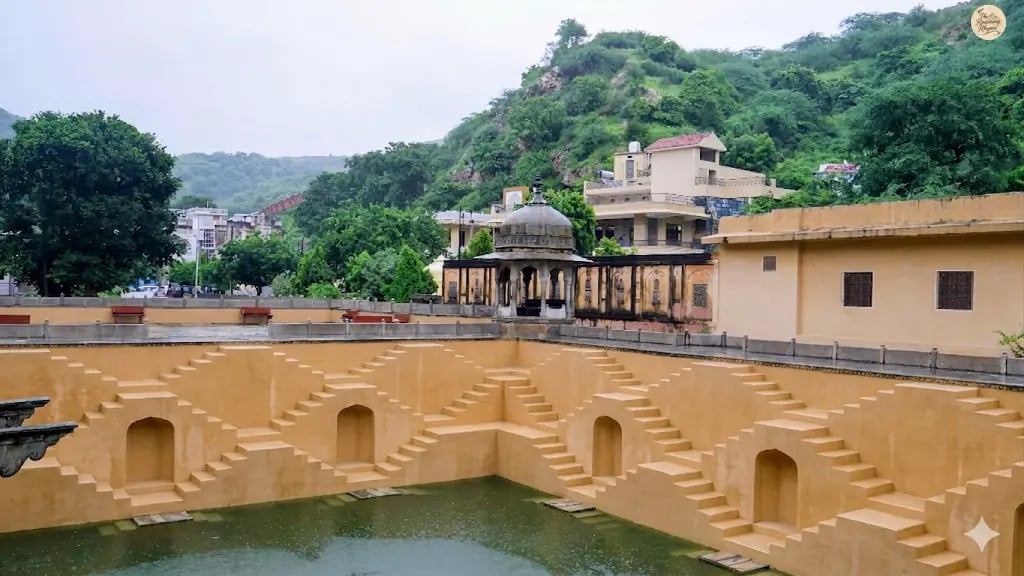
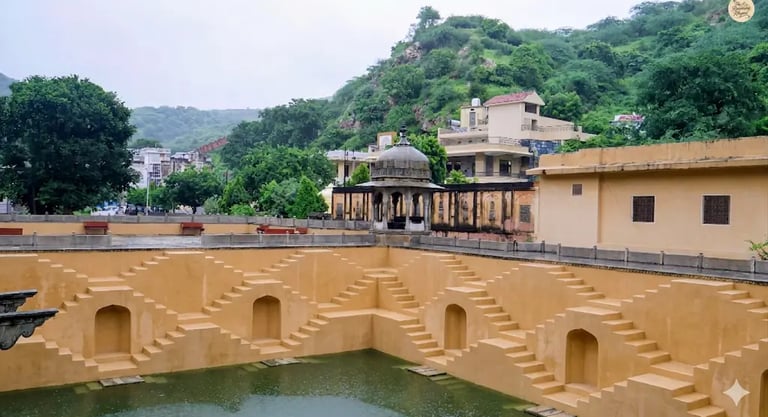
Perfect geometry quietly carved into ancient stone.
3. Jagat Shiromani Temple
Nearby is Jagat Shiromani Temple, a peaceful 17th-century shrine dedicated to Lord Krishna and Meera Bai. The intricate carvings and quiet courtyard showcase fine Jaipur architecture and offer a calm spiritual pause before entering the grand Amber Fort complex.
Time needed: 20–30 minutes
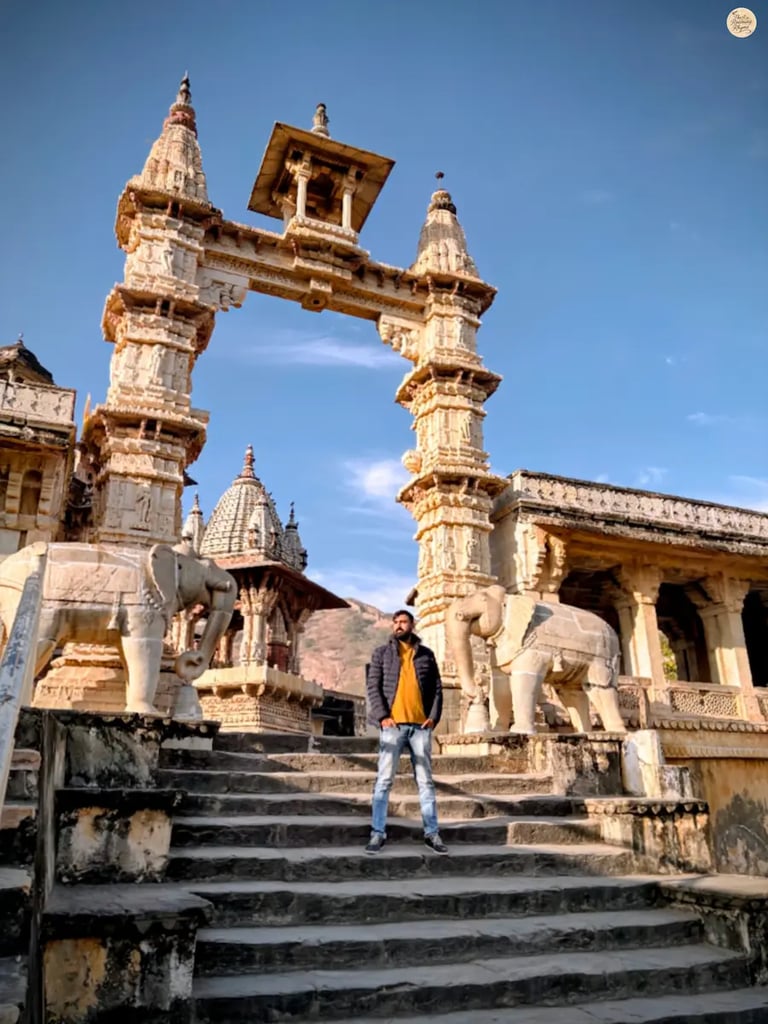
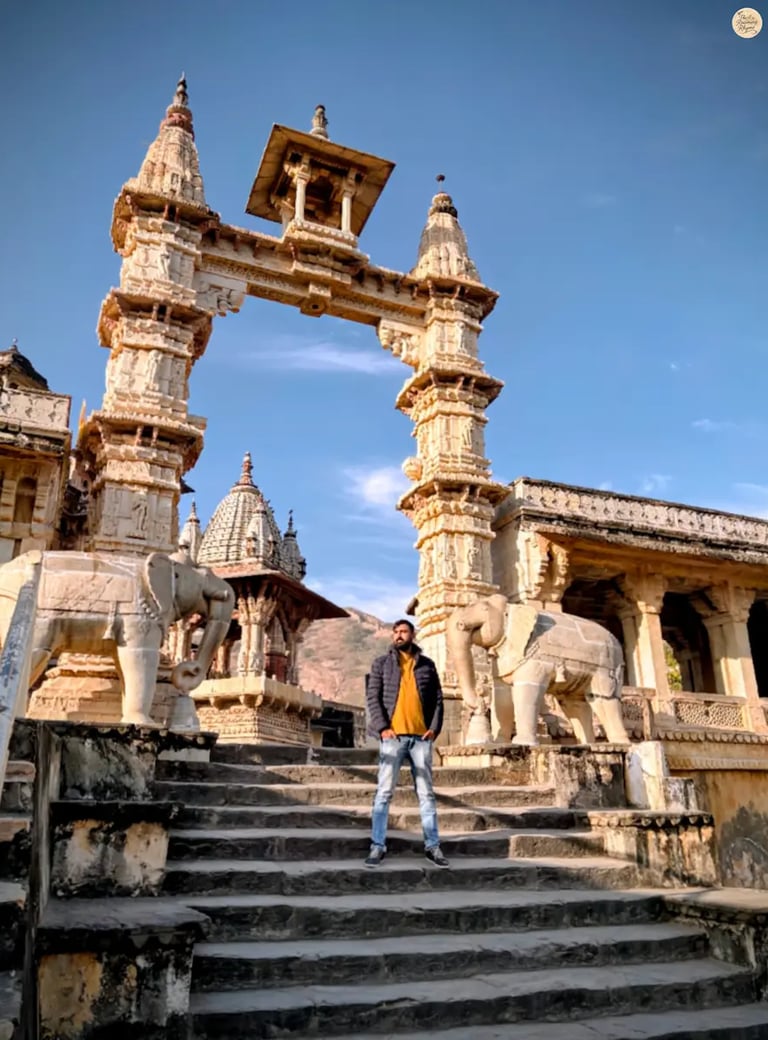
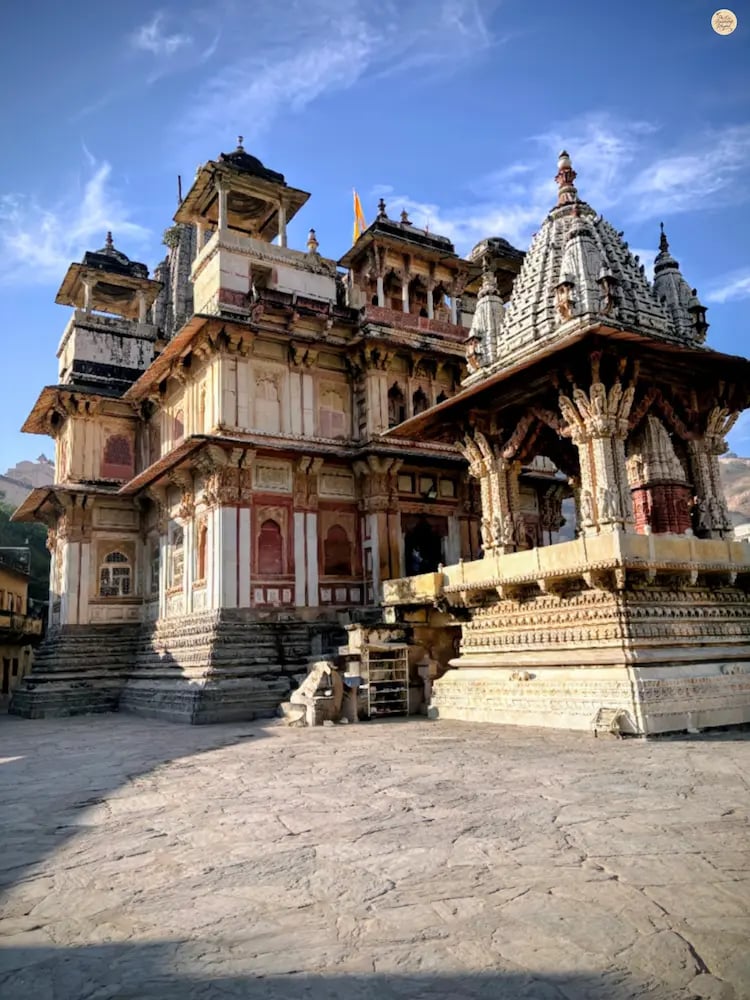
Intricate carvings welcoming visitors into quiet devotion.
A quiet masterpiece of devotion and Rajput artistry.
4. Amber Fort
Now arrive at the majestic Amber Fort, one of Rajasthan’s most iconic forts. Built with red sandstone and marble, it rises dramatically above Maota Lake.
Inside, explore:
Suraj Pol and Jaleb Chowk (main courtyards)
Diwan-i-Aam (Hall of Public Audience)
Sheesh Mahal (Mirror Palace)
Ganesh Pol (ornate gateway)
You can walk up, take a jeep, or use the golf-cart service. A guide is highly recommended to understand the stories behind the architecture.
Time needed: 2–3 hours
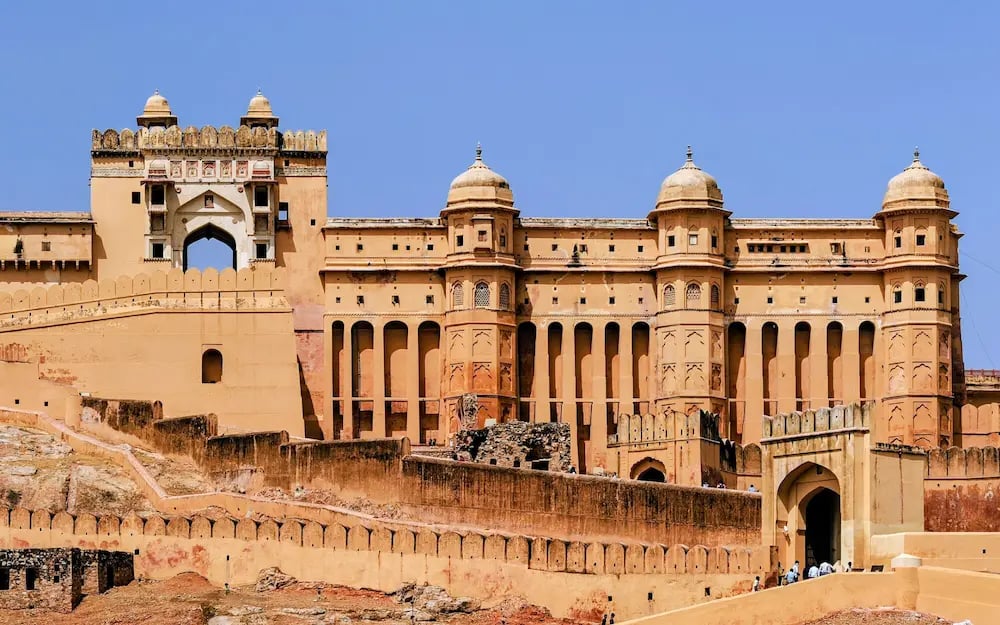
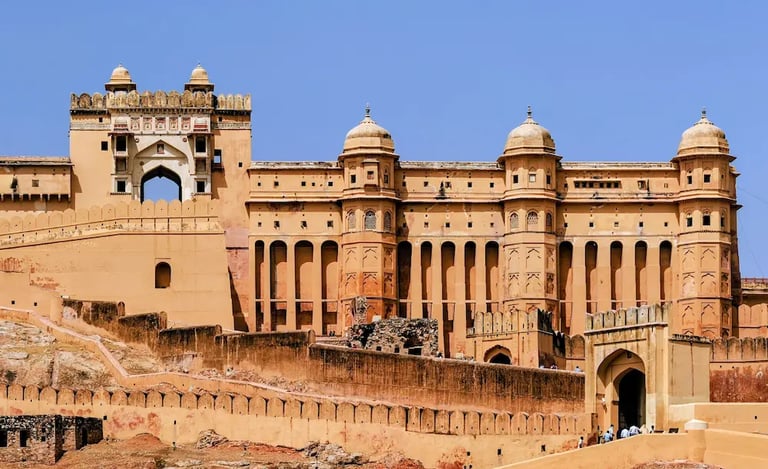


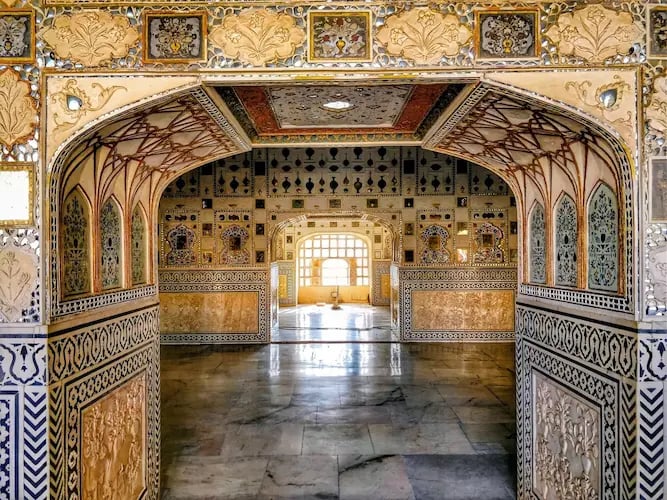
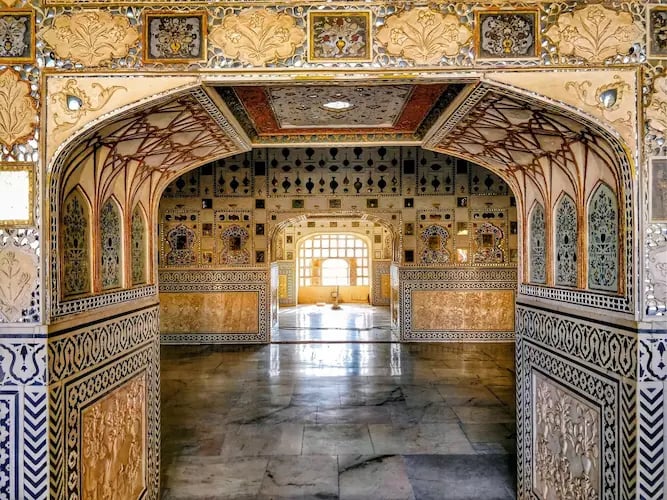
A palace room where mirrors quietly catch the light.
(Image by Hariom Raval, licensed under CC BY-SA 4.0, via Wikimedia Commons)
Royal colours welcoming you into Amber’s inner palace.
(Image by Chainwit, licensed under CC BY-SA 4.0, via Wikimedia Commons)
Golden sandstone rising proudly above the Aravalli hills.
(Image by A. Savin, licensed under Free Art License, via Wikimedia Commons)
5. Jaigarh Fort
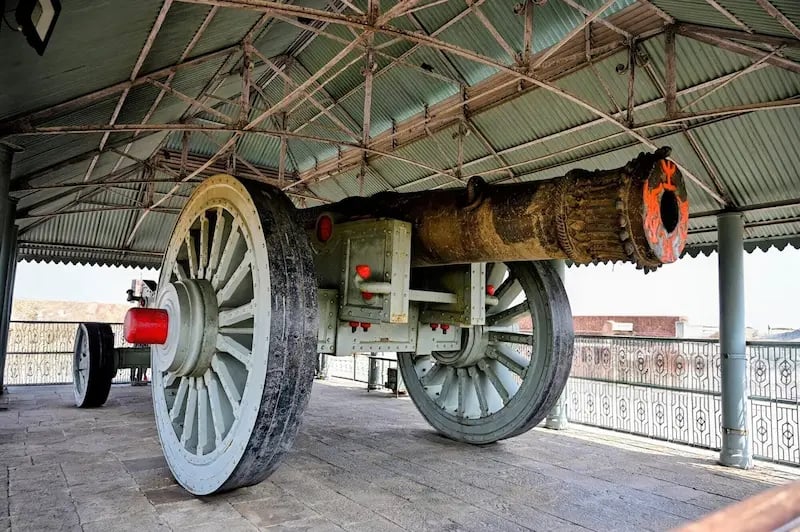
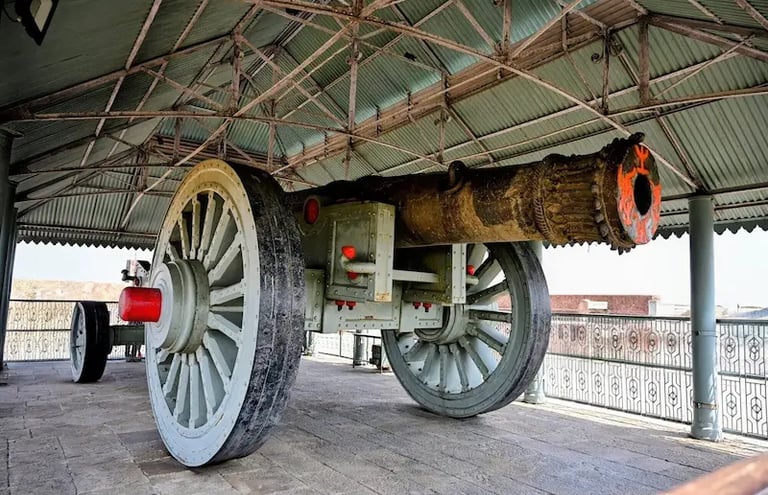
From Amber, continue upward to Jaigarh Fort. Built primarily for defence, this fort houses the world’s largest cannon on wheels — Jaivana. The fort offers expansive views of Amber below and reflects the military strength of the Rajput rulers.
Time needed: 1–1.5 hours
Afternoon: Power & Protection
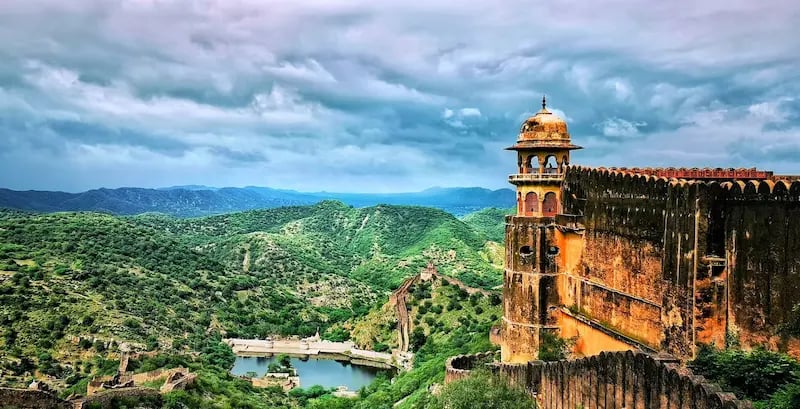
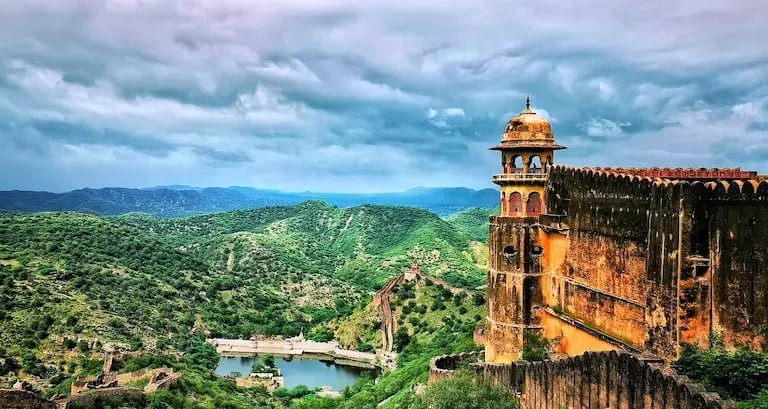
Mighty stone walls stretching across the rugged hills.
(Image by Luv Sharma, licensed under CC BY-SA 4.0, via Wikimedia Commons)
A massive cannon standing silently atop Jaipur’s hills.
(Image by Wander-earth, licensed under CC BY-SA 4.0, via Wikimedia Commons)
6. Nahargarh Fort
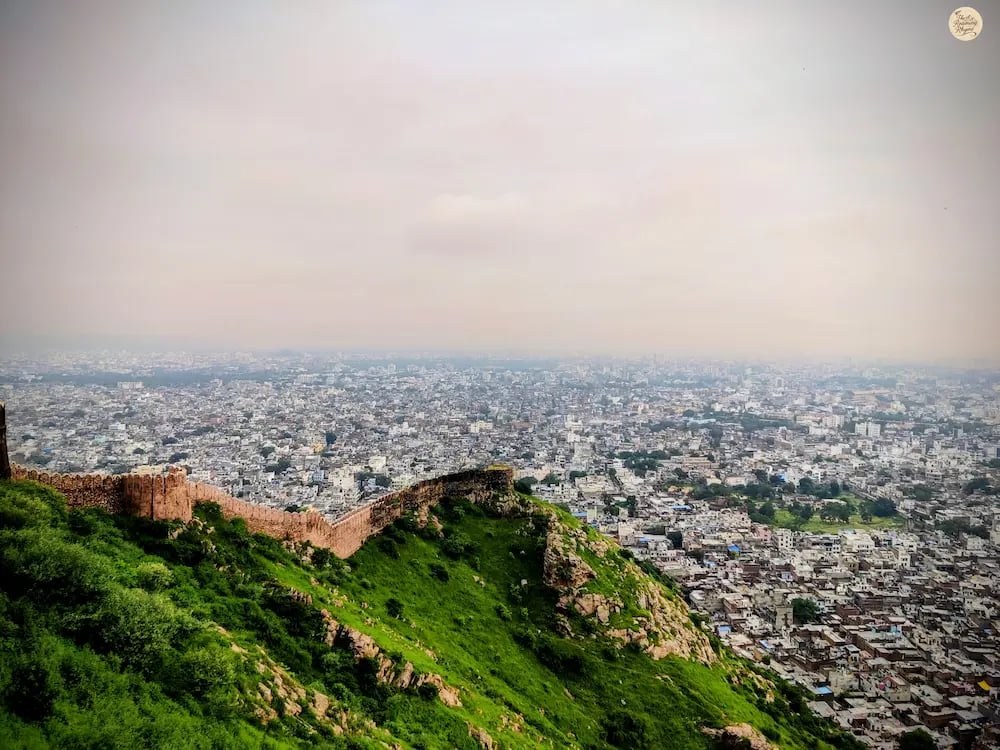
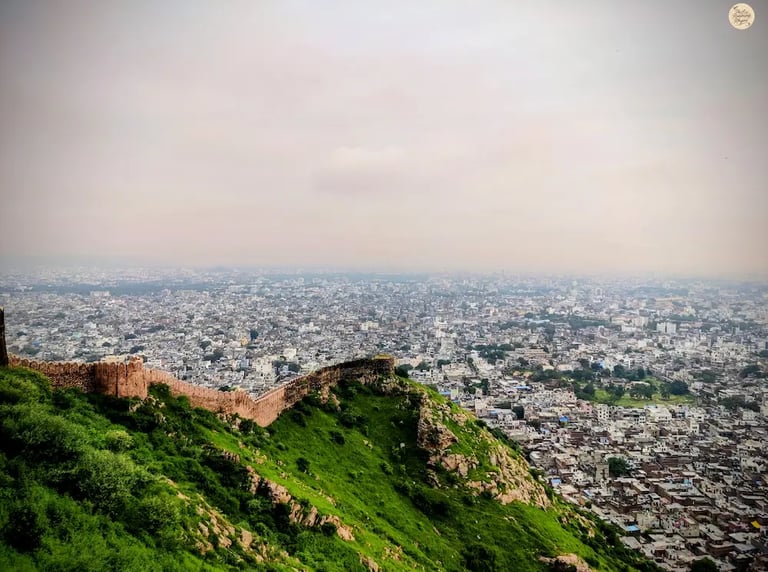
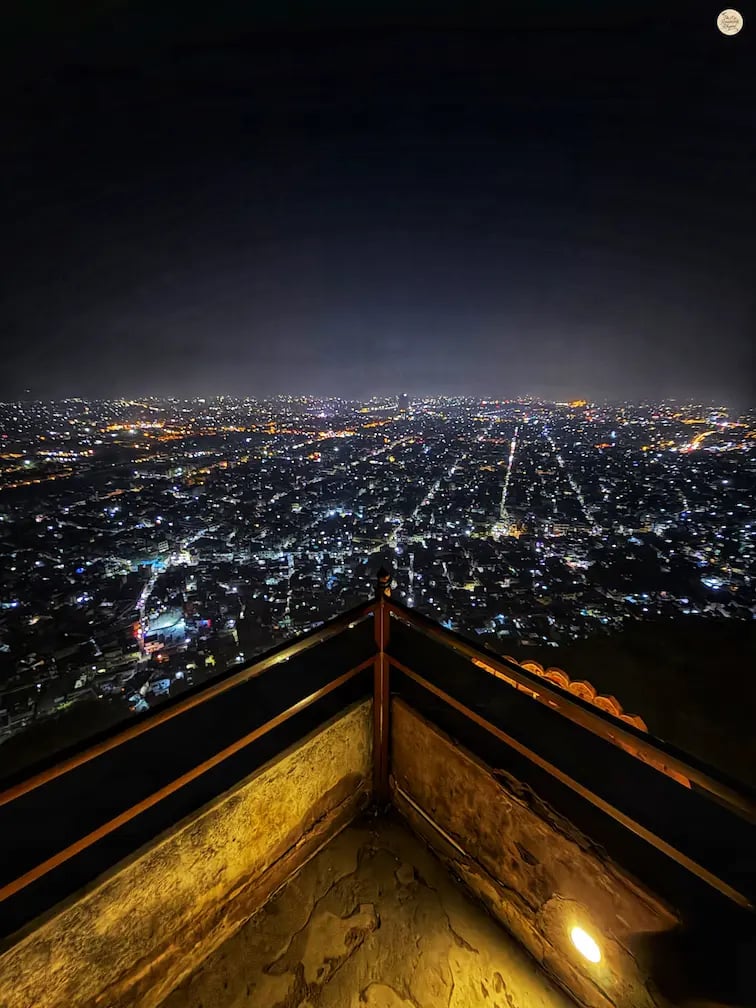
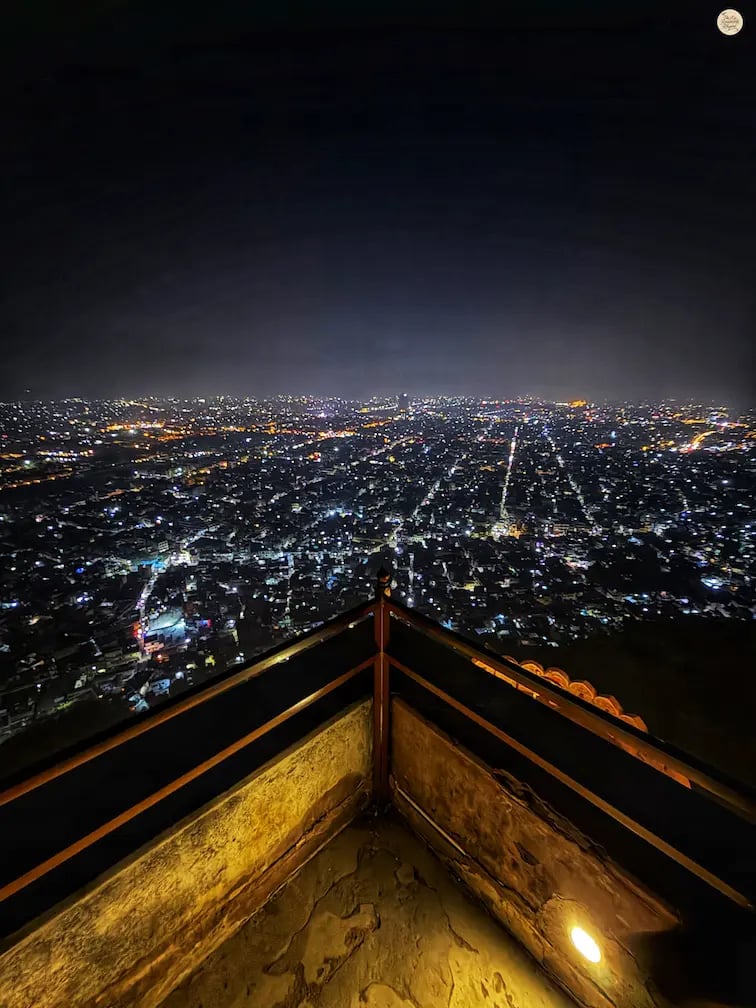
End your day at Nahargarh Fort, perched high above Jaipur. This is one of the best sunset points in the city. As the sky turns golden and the Pink City slowly lights up below, the panoramic view creates the perfect close to your hill-fort exploration.
You can also relax at the café inside the fort complex and enjoy the view as evening sets in.
Time needed: 1–1.5 hours
Evening: Sunset Over the Pink City
Why Day 2 Works Well:
This day connects Jaipur’s royal lifestyle with its strategic brilliance — lakeside beauty, artistic temples, grand palaces, and powerful military forts. It’s visually dramatic, historically rich, and perfectly balanced between exploration and scenic pauses.
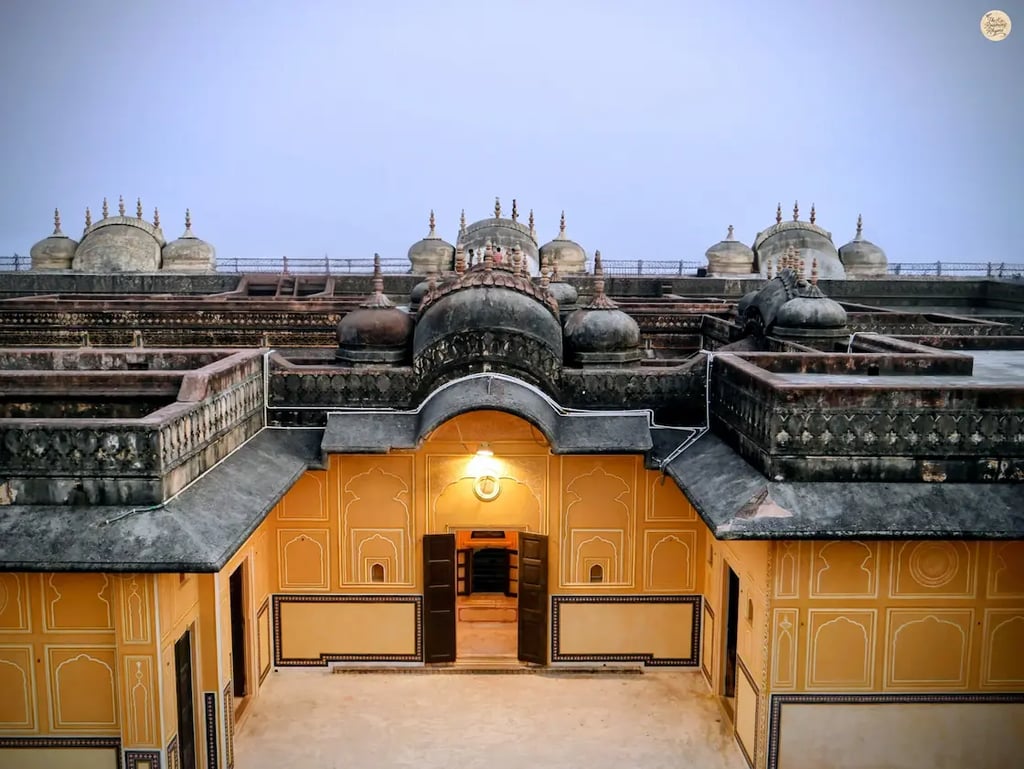
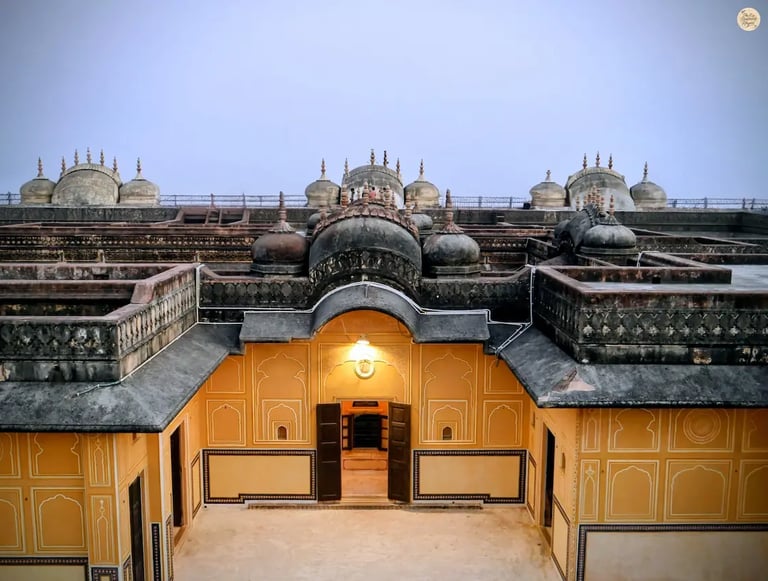
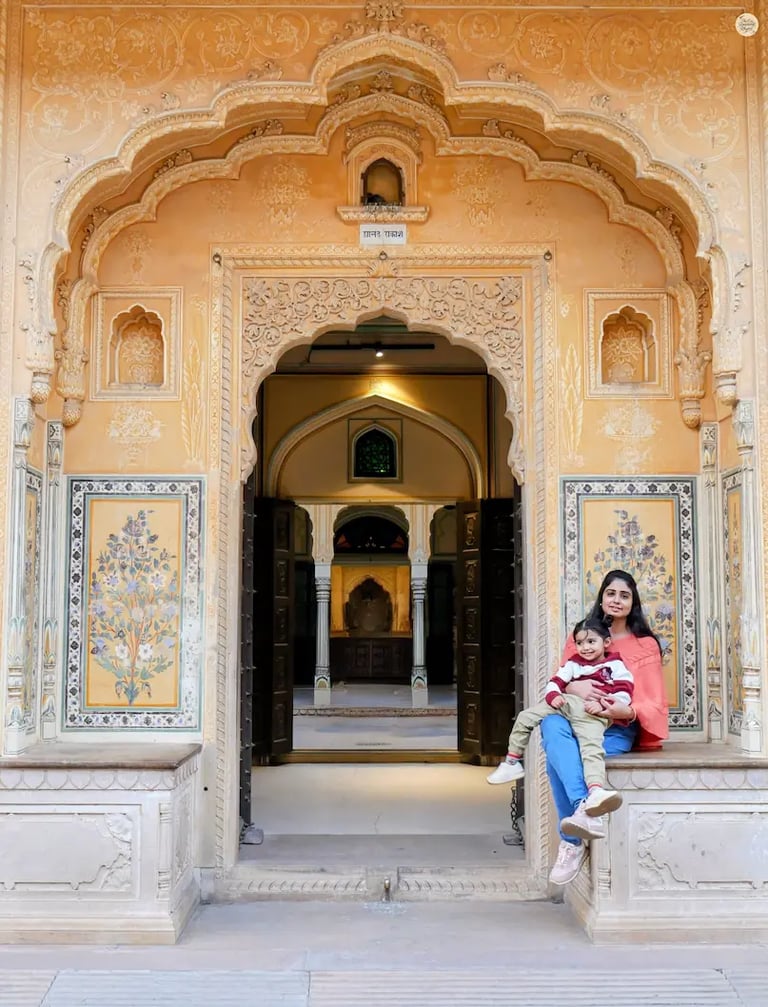
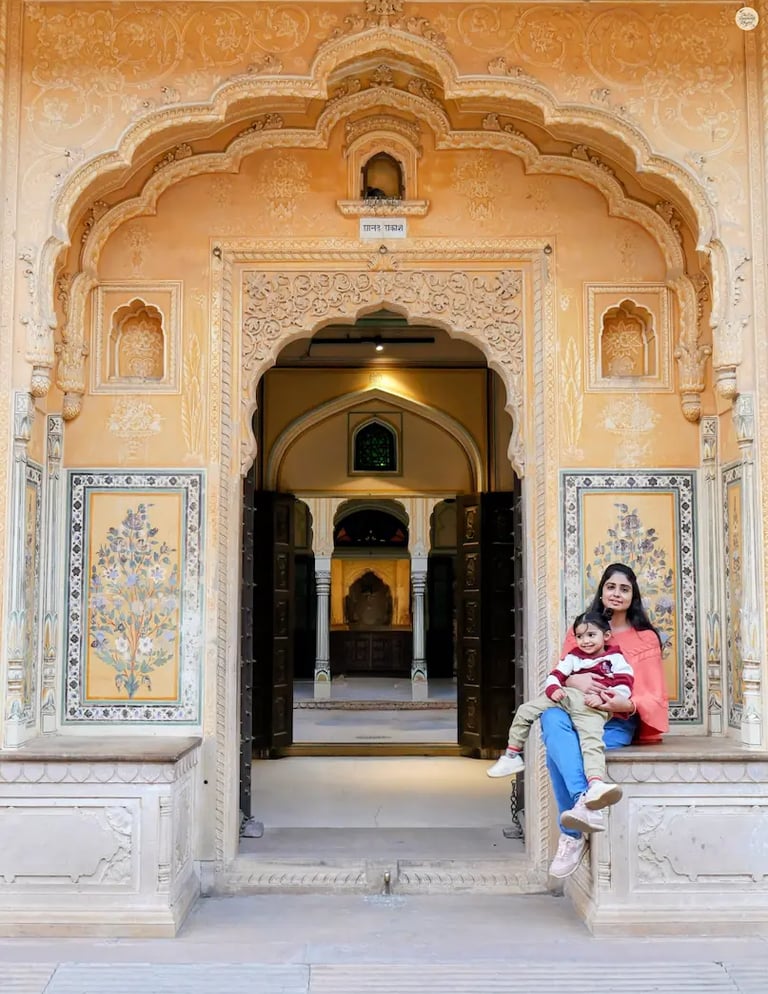
Soft evening light spilling through regal arches.
The Pink City unfolding beneath a golden sunset sky.
The Pink City sparkling quietly under starry skies.
A regal gateway welcoming you into Jaipur’s hilltop fort.
Day 3 in Jaipur – Culture, Temples & Colourful City Highlights
Day 3 slows the pace slightly and blends heritage, spirituality, architecture, and local lifestyle. After two days of palaces and hill forts, this day explores Jaipur’s cultural depth — from museum corridors to marble temples and sacred hill shrines — ending with a colourful, immersive Rajasthani evening.
1. Albert Hall Museum
Begin your day at Albert Hall Museum, Rajasthan’s oldest museum, located in Ram Niwas Garden. Built in Indo-Saracenic style, the building itself is as impressive as the collections inside, making it a key stop in any thoughtful Jaipur travel guide.
Inside, you’ll find:
Royal artefacts and miniature paintings
Ancient coins, weapons, and sculptures
The famous Egyptian mummy
It’s a great place to understand Rajasthan’s artistic and cultural evolution beyond forts and palaces — adding depth to your Jaipur sightseeing.
Time needed: 1–1.5 hours
Morning: Art, History & Architecture
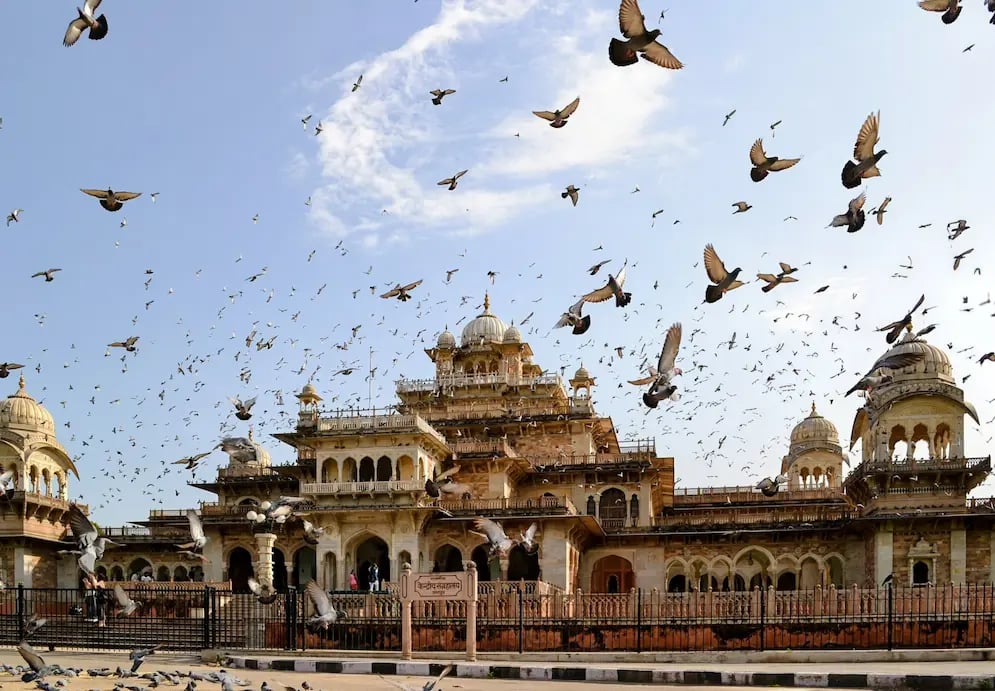
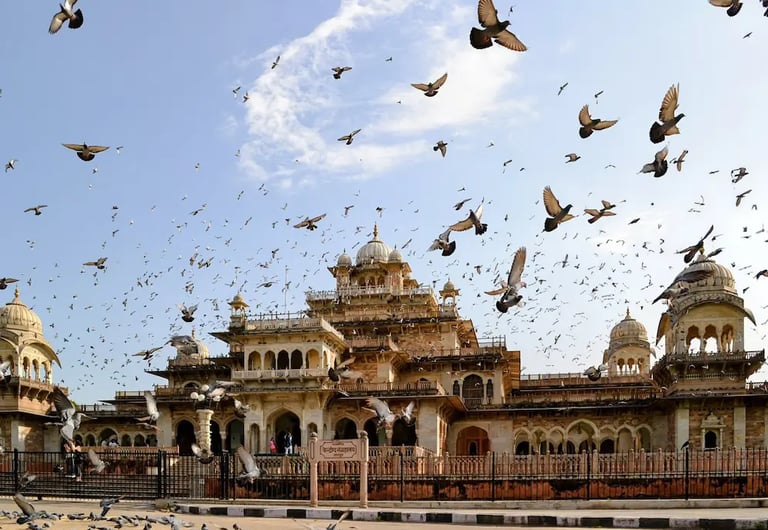
A graceful museum standing quietly in Jaipur’s Ram Niwas Garden. (Image by Chetan, licensed under CC BY-SA 3.0, via Wikimedia Commons)
2. Moti Dungri Temple
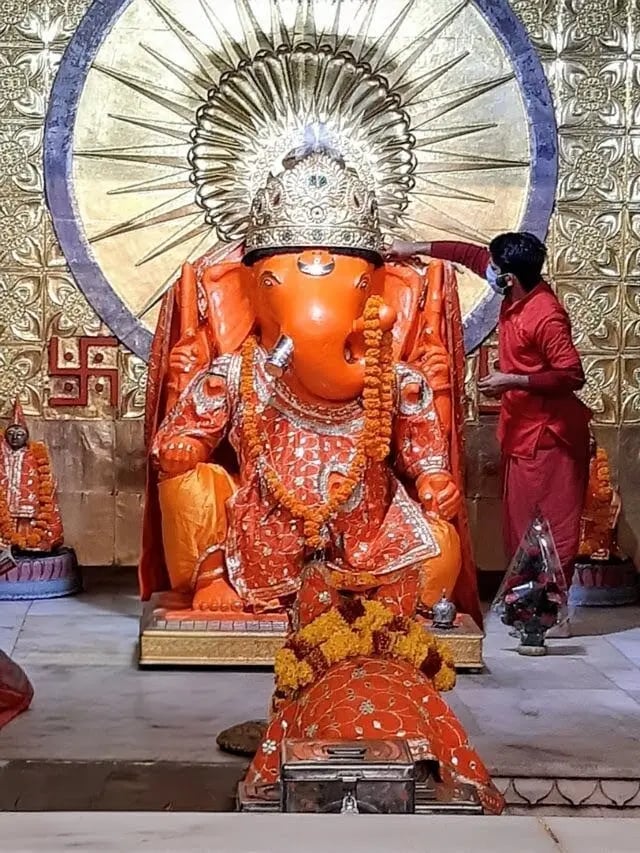
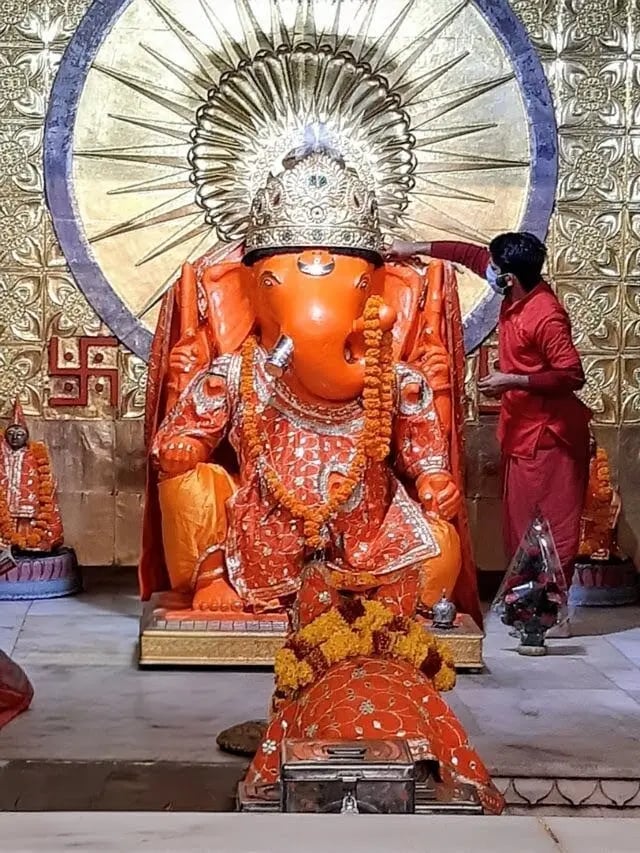
Next, visit Moti Dungri Temple, a popular shrine dedicated to Lord Ganesha and an important spiritual stop in Jaipur. Set against a small hill with the palace backdrop, it’s a quick yet meaningful addition to your Jaipur sightseeing plan — especially lively during local prayer hours.
Time needed: 20–30 minutes
Late Morning: Devotion in the City
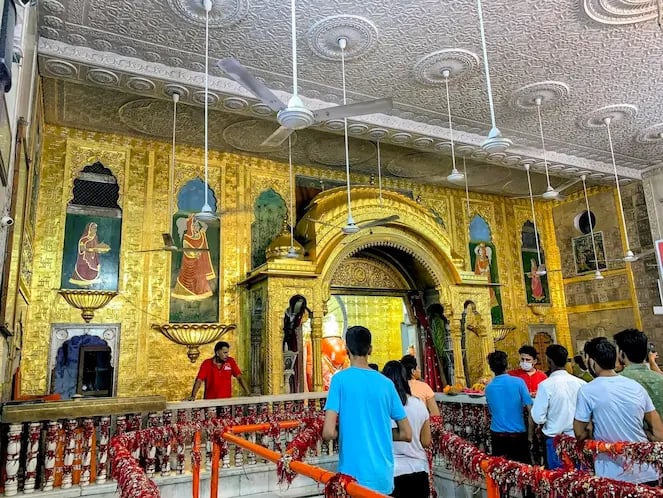
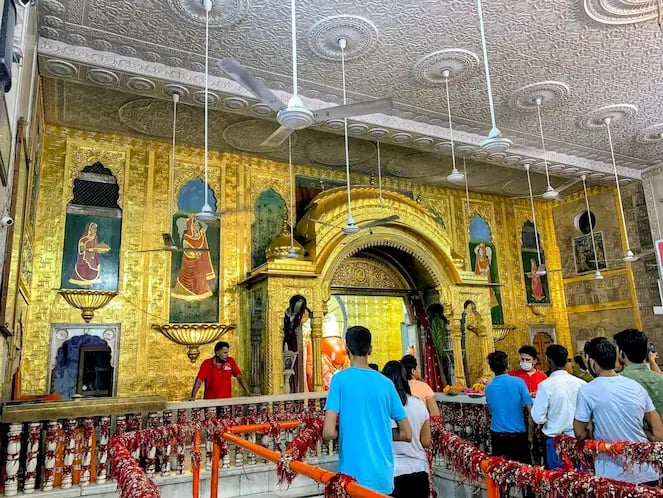
A beloved Ganesh temple in Jaipur’s everyday rhythm.
(Image by Chainwit, licensed under CC BY-SA 4.0, via Wikimedia Commons)
A revered Ganesh idol quietly blessing Jaipur’s faithful.
(Image by Kanhaiyalal Chauhan, licensed under CC BY-SA 4.0, via Wikimedia Commons)
3. Birla Mandir (Lakshmi Narayan Temple)
Just across the road stands the serene white marble Birla Mandir Jaipur, dedicated to Lord Vishnu and Goddess Lakshmi. Its intricate marble carvings, delicate lattice work, and peaceful interiors offer a calm pause in your Jaipur itinerary.
Visit during late morning or early evening for softer light, cooler temperatures, and a more tranquil temple experience.
Time needed: 30–40 minutes
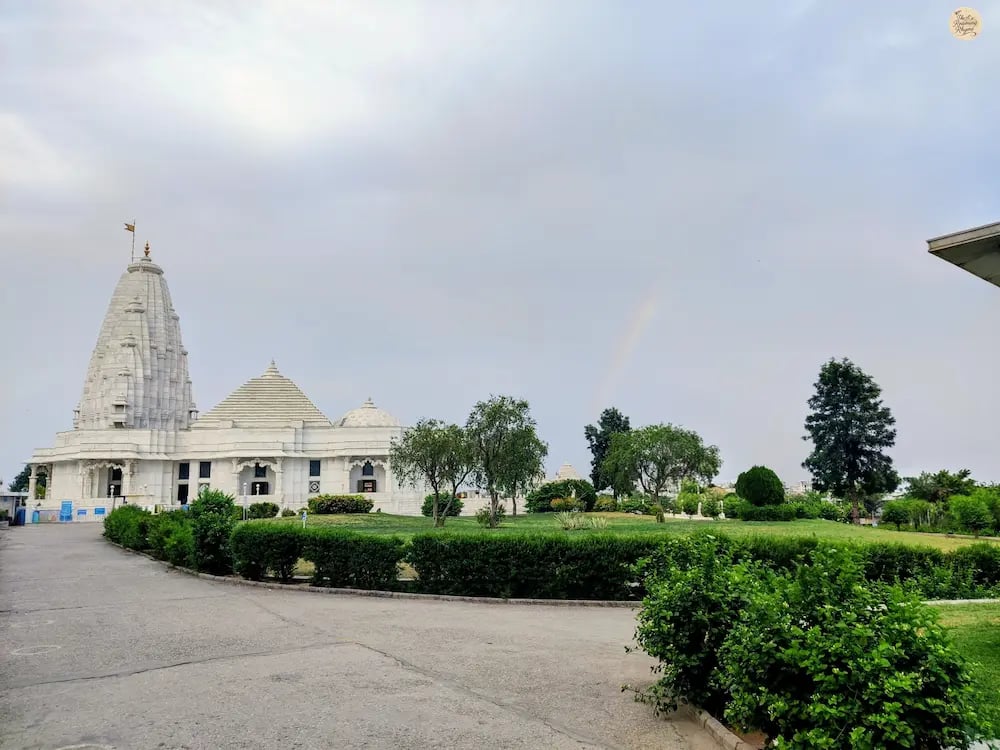
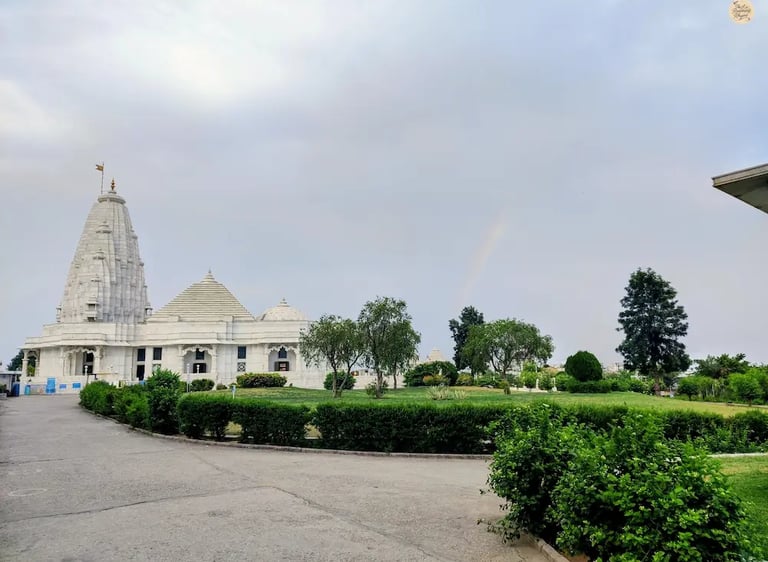
White marble serenity glowing softly against Jaipur’s skyline.
4. Galta Ji Temple (Monkey Temple)
Drive toward the eastern hills of Jaipur to reach Galta Ji Temple, an ancient pilgrimage site built around natural water springs and sacred kunds. Tucked between rocky Aravalli cliffs and home to many playful monkeys, the setting feels wonderfully removed from the city’s bustle.
Climb slightly upward for scenic hill views, explore the pastel-coloured temple structures, and observe devotees taking holy dips in the sacred water tanks. Early-morning or late-afternoon visits offer softer light and a more peaceful atmosphere.
Time needed: 1–1.5 hours
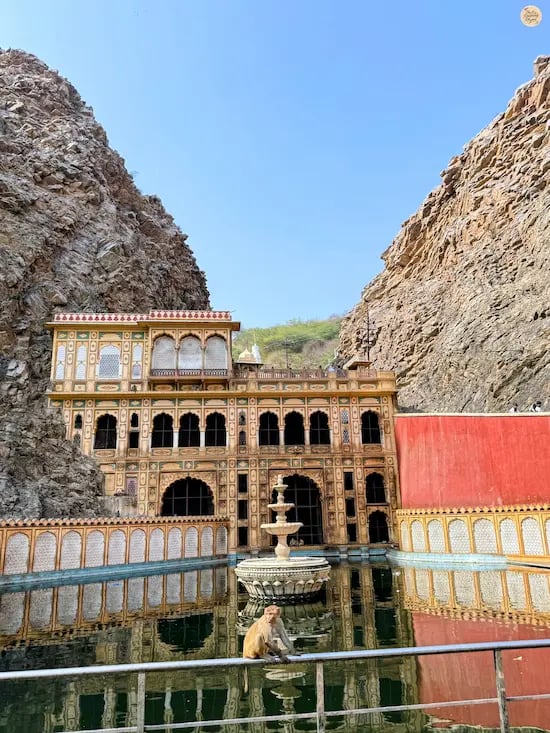
A hidden temple world unfolding among the Aravalli hills.
Afternoon: Spiritual Escape
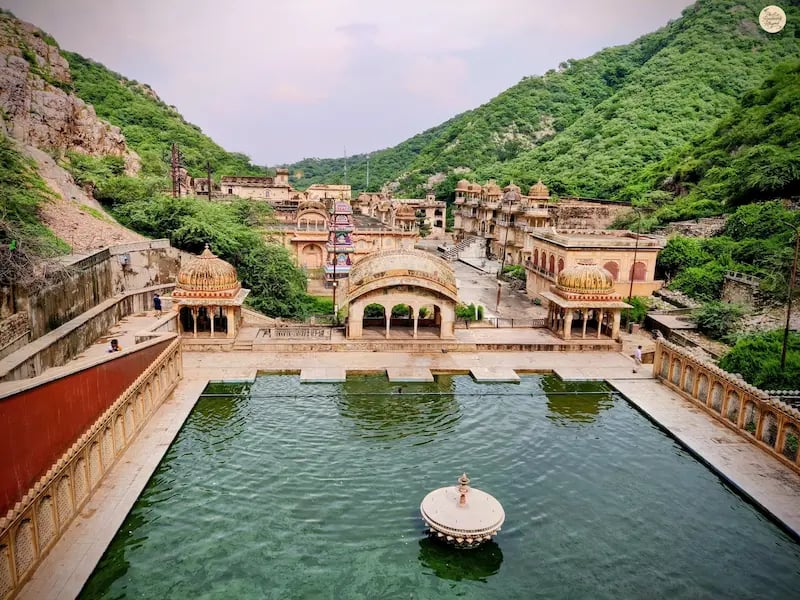
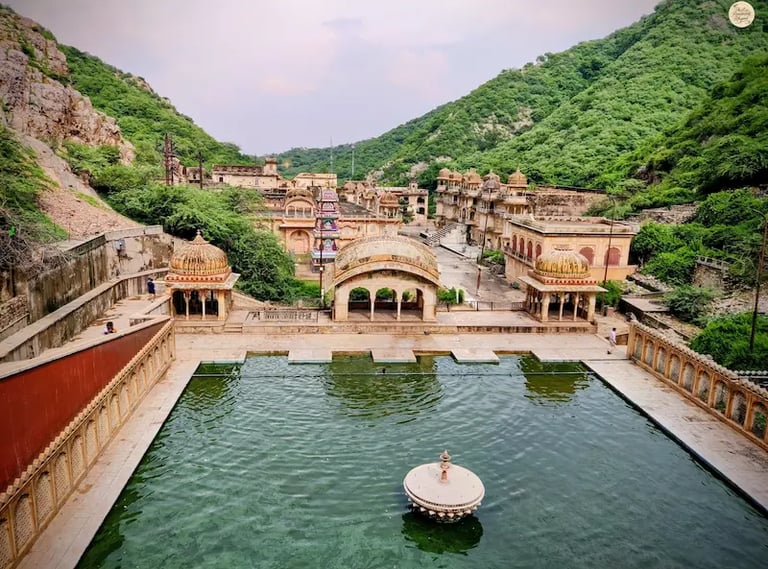
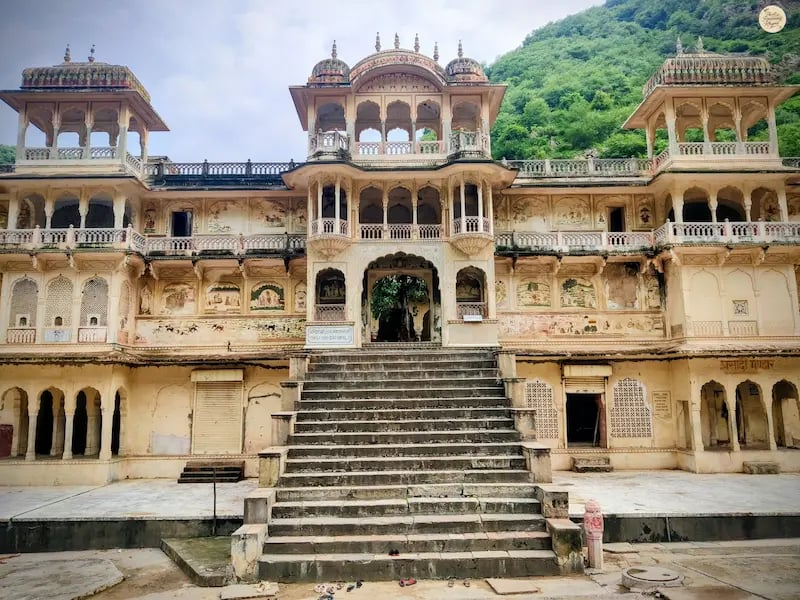
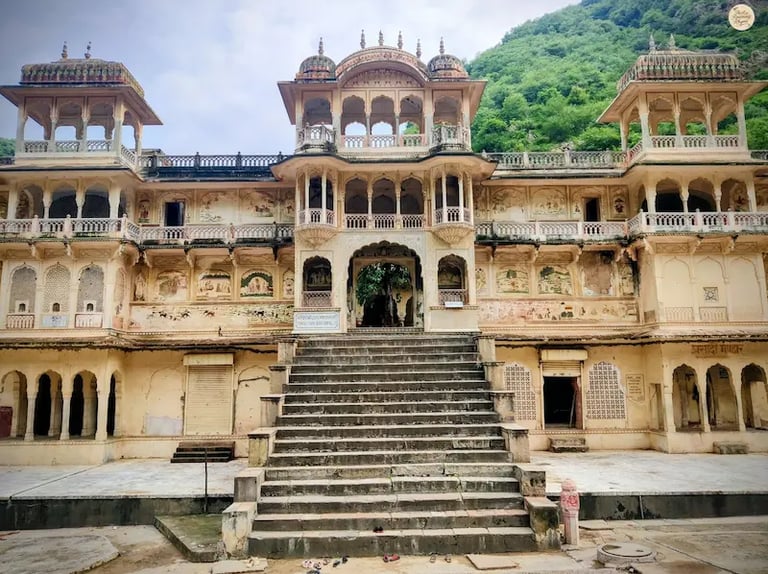
Graceful Rajput architecture resting quietly in the hills.
Sacred waters resting quietly among Jaipur’s rocky hills.
5. Patrika Gate & Toran Dwar
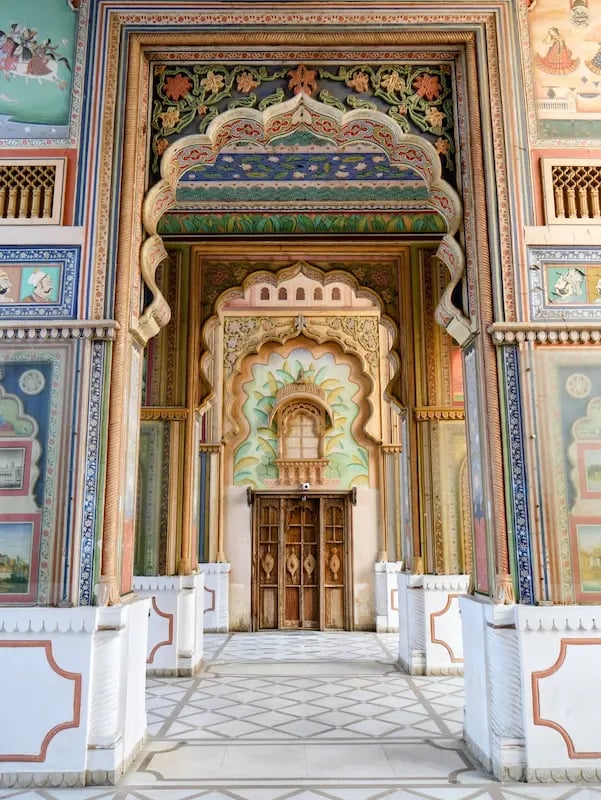
On your way back, pause at Patrika Gate — one of the most colourful and most Instagrammable spots in Jaipur. The vividly painted archways narrate stories of Rajasthan’s culture, monuments, festivals, and royal heritage through beautifully symmetrical corridors.
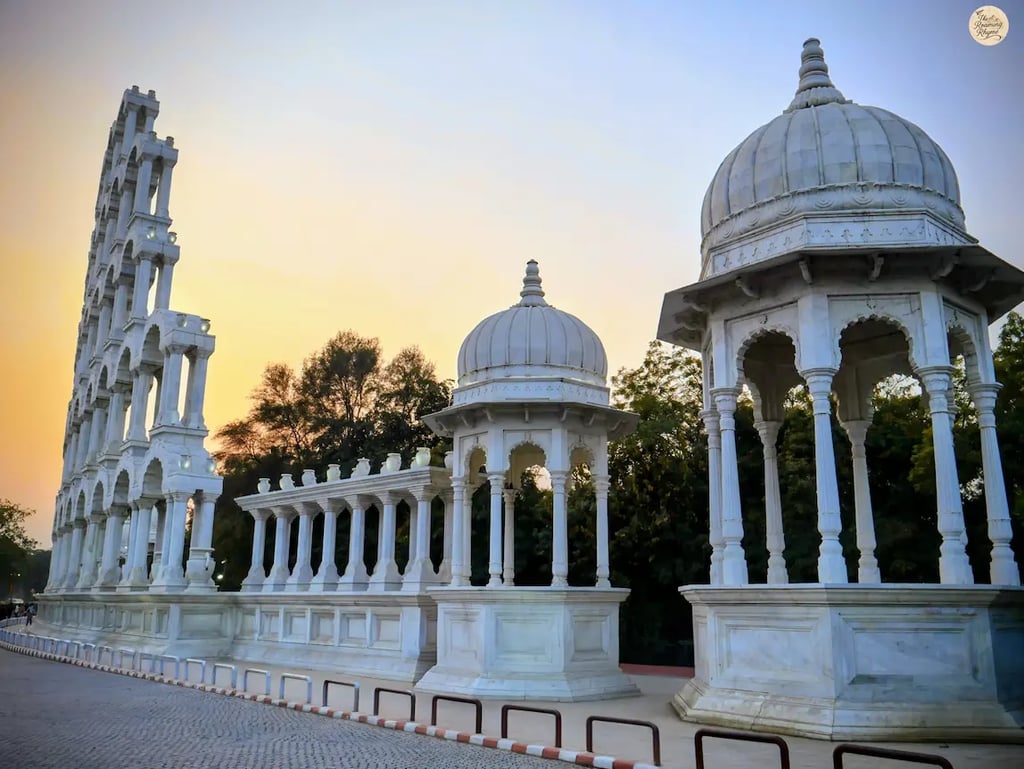
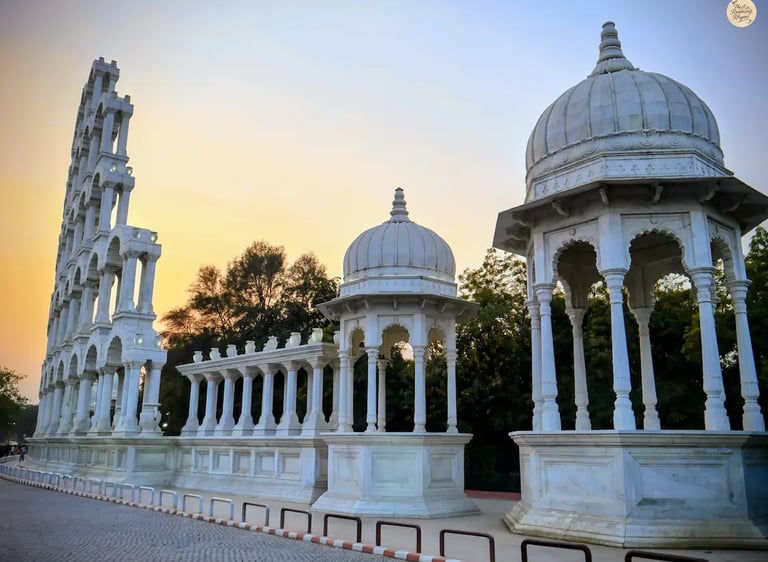
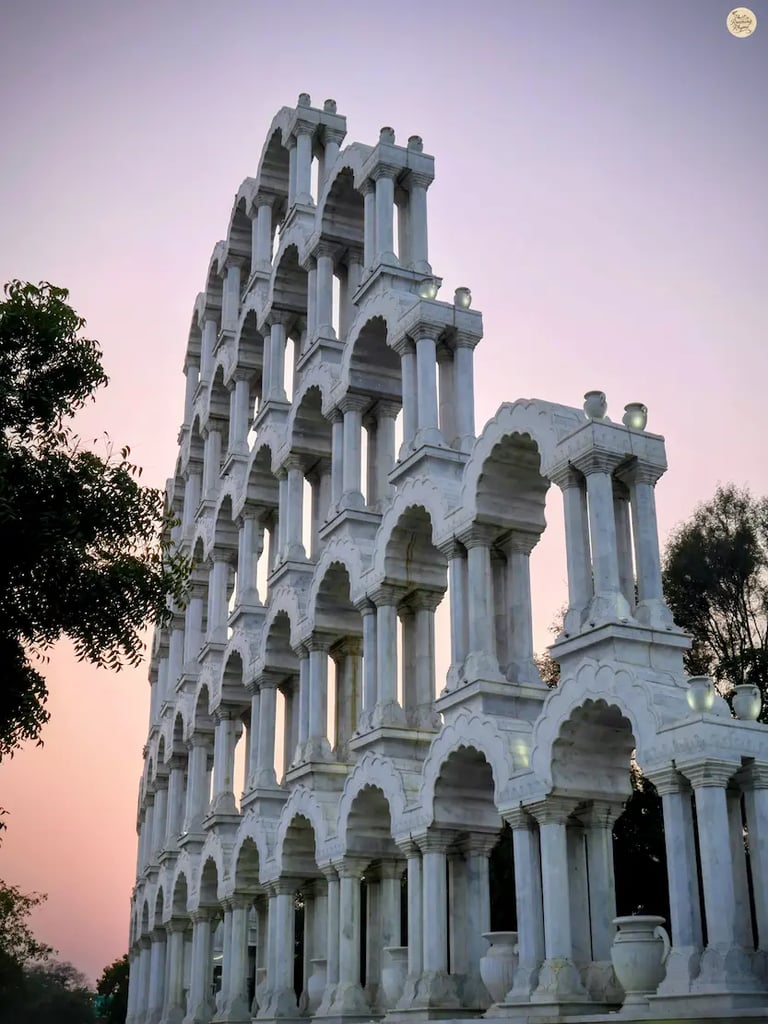
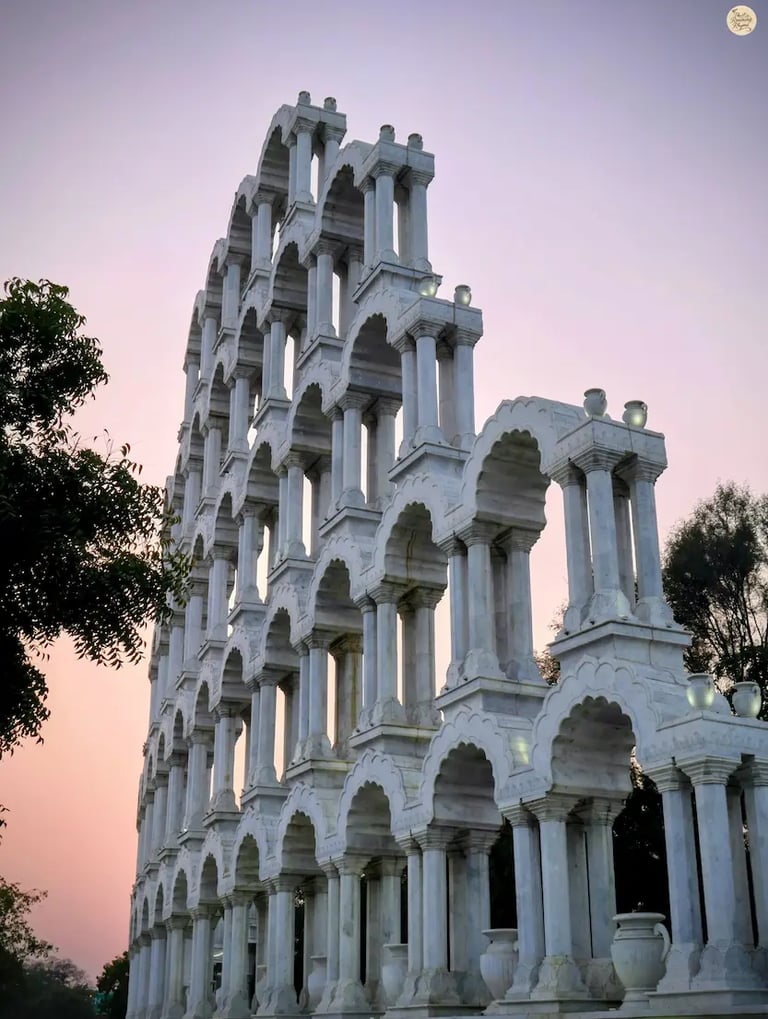
Right nearby, walk through the elegant Toran Dwar — a ceremonial-style gateway inspired by traditional Rajasthani entrance arches. Its detailed carvings and graceful structure make it another lovely photo stop, especially during golden hour.
Together, these vibrant gateways create a visually rich sunset experience as you continue your Jaipur sightseeing journey.
Time needed: 20–30 minutes
Evening: Colours & Culture
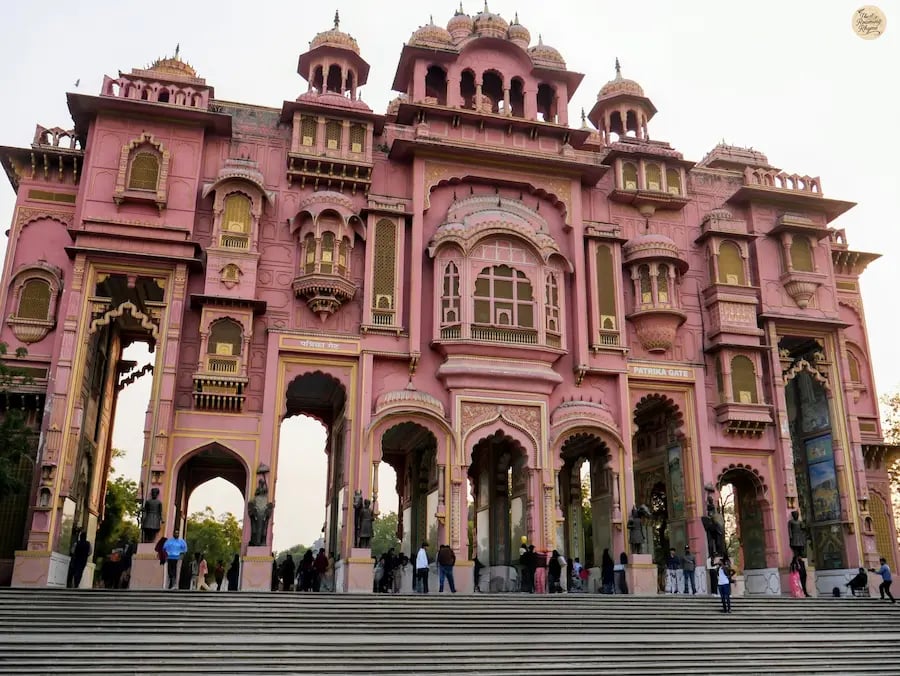
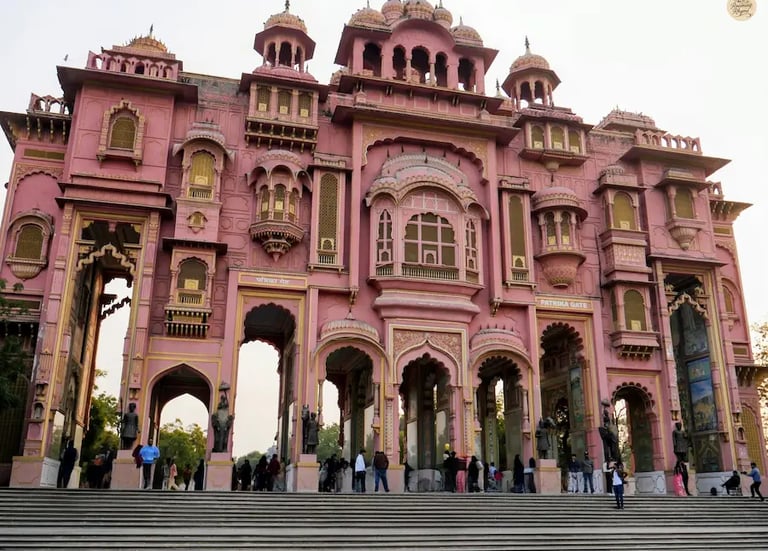
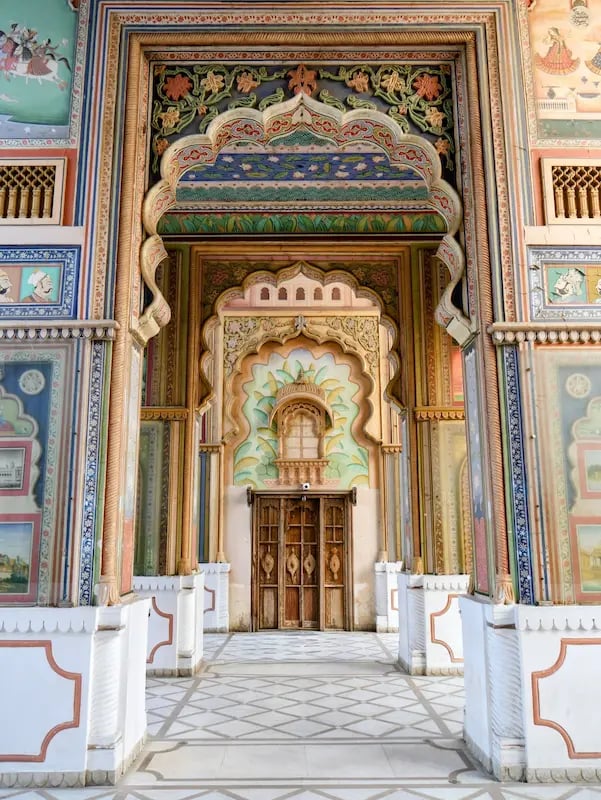
Jaipur’s most colourful frame for a perfect photo moment.
A grand gateway celebrating Jaipur’s timeless royal style.
Jaipur’s most colourful frame for a perfect photo moment.
Golden sunset light drifting through Toran Dwar’s graceful arches.
5. Gulab Garh – Rajasthani Village Experience
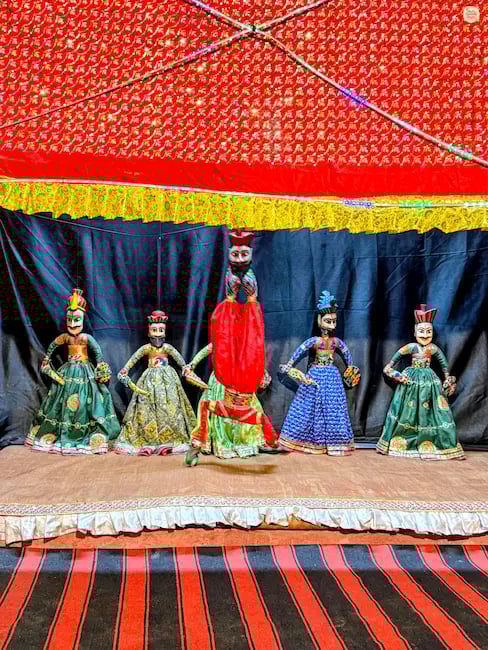
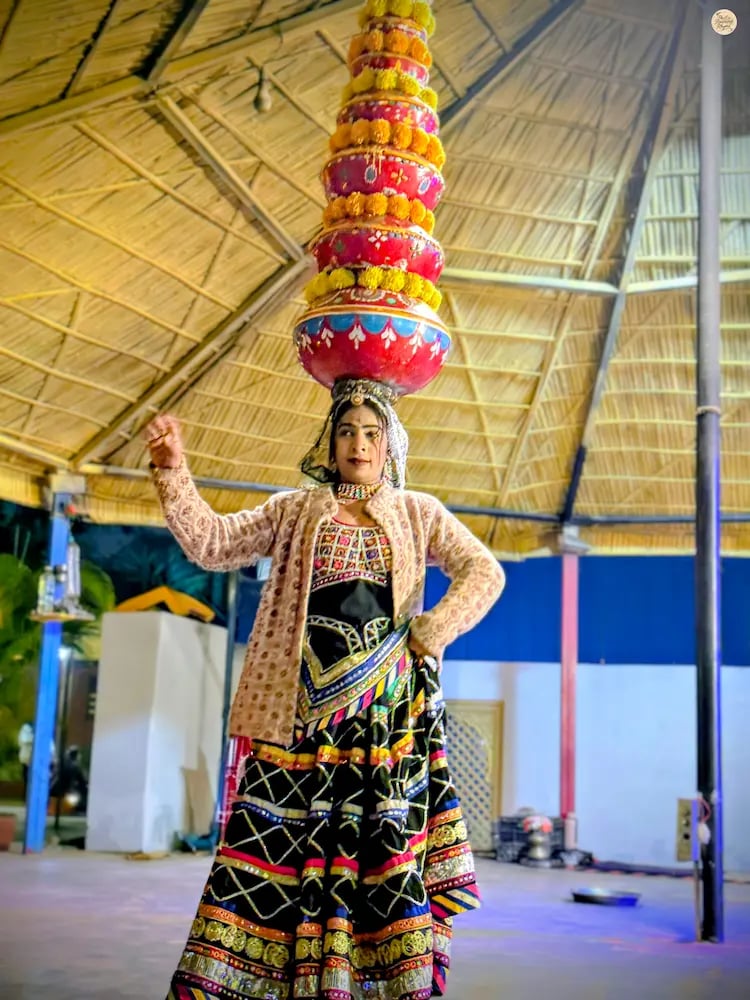
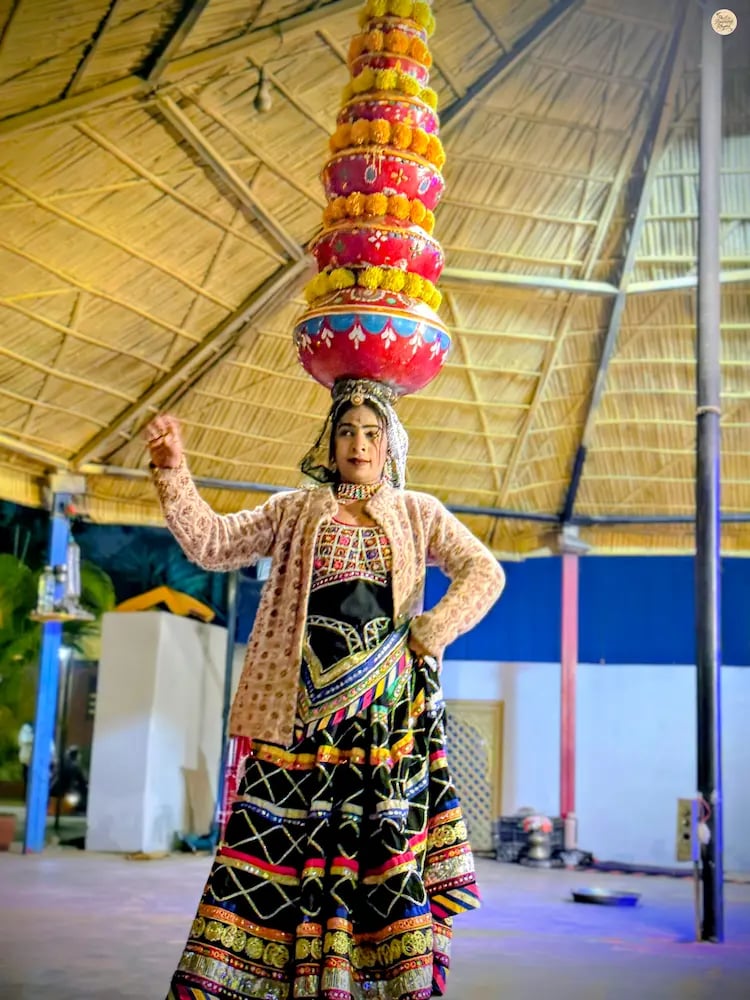
End your Jaipur journey with a vibrant cultural evening at Gulab Garh, a traditional village-themed dining experience. Expect live folk music, energetic Kalbeliya dance, colourful puppet shows, and warm Rajasthani hospitality in a rustic courtyard setting.
You can also enjoy short camel rides and bullock cart rides, adding a playful rural touch to the evening — perfect for families and first-time visitors wanting a glimpse of traditional village life.
Savour authentic Rajasthani cuisine served in traditional style — from dal baati churma to gatte ki sabzi — while performers bring the desert’s rhythm to life. It’s a lively, immersive way to conclude your Jaipur 3-day itinerary.
Time needed: 1.5–2 hours
Why Day 3 Works Well:
Day 3 completes your Jaipur experience — art, devotion, hidden heritage, and local culture woven together in a slower rhythm. It’s less about royal grandeur and more about cultural depth, revealing a softer, more intimate side of the Pink City as your 3-day Jaipur itinerary gently draws to a close.
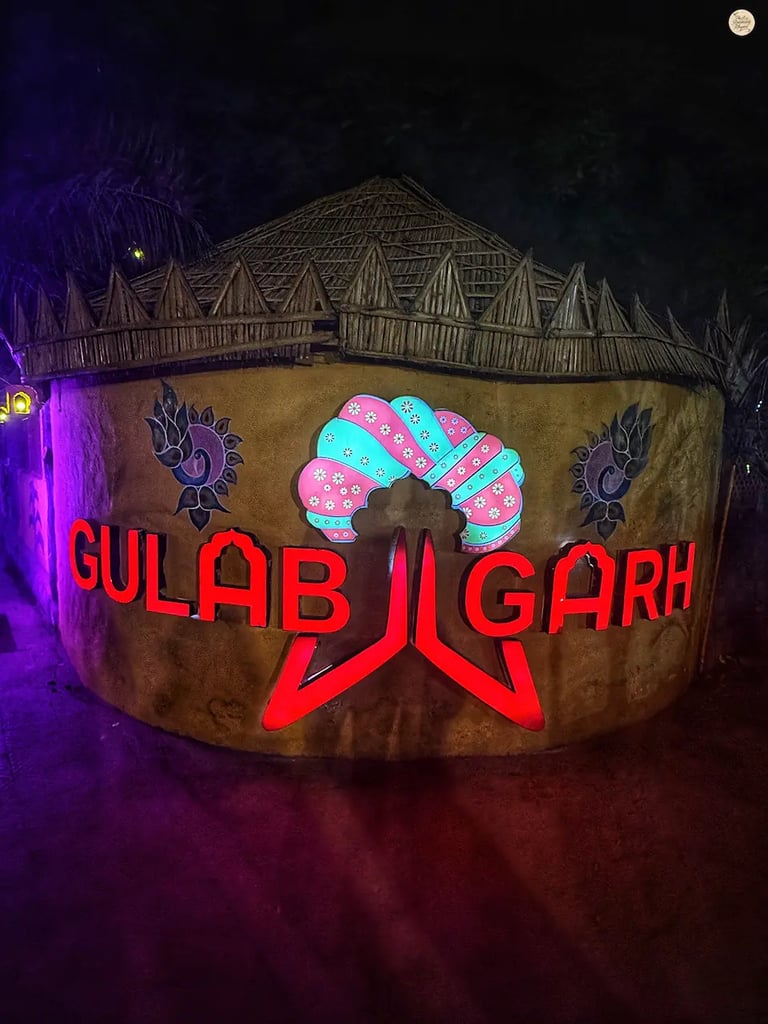
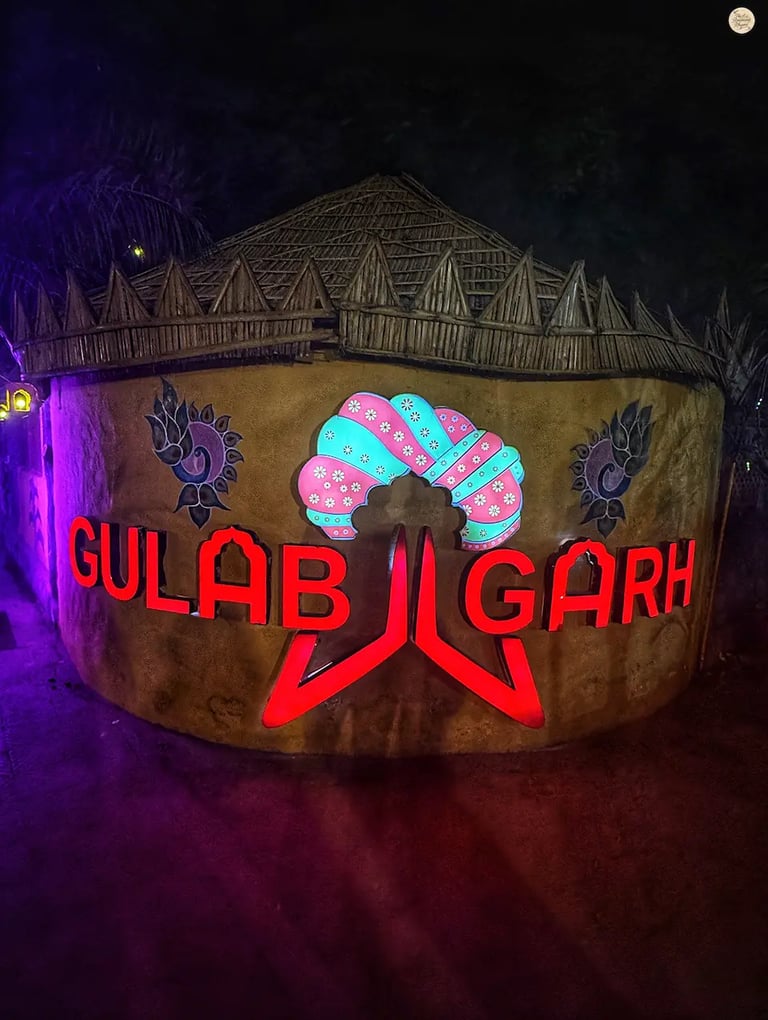
A rustic village evening filled with music, colours, and tradition.
Colourful puppets bringing old Rajasthani tales to life.
Flames, rhythm, and tradition lighting up the Rajasthani night.
Jaipur doesn’t just end — it stays with you.
Three days of forts, palaces, bazaars, and sunsets over the Aravallis blend into one vivid memory.
From the grandeur of Amber Fort to the iconic façade of Hawa Mahal, the Pink City leaves its mark — bold, colourful, unforgettable.
Because Jaipur isn’t just a destination.
It’s royal heritage.
It’s living culture.
It’s timeless architecture.
And when you leave, you don’t just carry photos —
you carry the feeling of walking through history.
Planning your trip to Jaipur?
Make it three days. Experience it fully.
Frequently Asked Questions – Jaipur Travel Guide
Q. What is Jaipur famous for?
A. Jaipur is famous for its pink-painted old city, magnificent forts, royal palaces, vibrant bazaars, and rich Rajasthani culture. Landmarks like Hawa Mahal, Amber Fort, and City Palace reflect the city’s grand royal heritage and architectural beauty.
Q. Why is Jaipur called the Pink City?
A. Jaipur is known as the Pink City because many buildings in the historic walled city are painted terracotta pink. The color was introduced in 1876 to welcome the Prince of Wales and has since become the city’s iconic identity.
Q. Can Jaipur be covered in 2 days?
A. Yes, Jaipur can be explored in 2 days if you focus on the main attractions such as Amber Fort, Hawa Mahal, City Palace, Jantar Mantar, and Nahargarh Fort. However, a 3-day trip allows you to explore the city’s markets, temples, and cultural experiences more comfortably.
Q. What are the top places to visit in Jaipur?
A. Some of the most popular places to visit in Jaipur include Amber Fort, Hawa Mahal, City Palace, Jantar Mantar, Nahargarh Fort, Jaigarh Fort, and Albert Hall Museum.
Q. What is the best time to visit Jaipur?
A. The best time to visit Jaipur is from October to March, when the weather is pleasant and comfortable for sightseeing. Summers (April–June) can be extremely hot, often crossing 40°C.
Q. What can you do in Jaipur at night?
A. At night, Jaipur offers charming experiences such as rooftop dinners with fort views, evening walks through lively markets, cultural shows, and visiting beautifully illuminated landmarks like the Albert Hall Museum.
Q. Is Jaipur safe for female solo travelers?
A. Yes, Jaipur is generally considered safe for female solo travelers. Tourist areas are lively and well-visited. As with any destination, it’s advisable to stay aware of surroundings, avoid isolated areas late at night, and use trusted transportation.
Q. What is famous to buy in Jaipur?
A. Jaipur is famous for bandhani sarees, gemstone jewelry, lac bangles, handcrafted juttis, block-printed textiles, and colorful handicrafts. The city’s bazaars are among the best places in India for traditional Rajasthani shopping.
Q. Is Jaipur expensive for travelers?
A. Jaipur caters to all types of travelers. Budget visitors can enjoy affordable street food and guesthouses, while luxury travelers can stay in heritage hotels and dine at royal restaurants.
Q. Can you take a day trip from Delhi to Jaipur?
A. Yes, a day trip from Delhi to Jaipur is possible by train or car, but the journey takes about 4–5 hours each way. Staying at least one night allows you to explore the city more comfortably.
Q. How many days are enough for Jaipur?
A. Ideally, 2 to 3 days are enough to explore Jaipur comfortably. Two days allow you to cover major attractions like Amber Fort, Hawa Mahal, City Palace, and Jantar Mantar, while three days give you time to explore local markets, temples, museums, and sunset viewpoints like Nahargarh Fort.
Q. What is the best way to travel around Jaipur?
A. The best way to explore Jaipur is by auto-rickshaw, cab services, or renting a car with a driver for the day. App-based taxis like Uber and Ola are widely available, and many attractions in the old city can also be explored on foot.
Share Your Thoughts – We’d Love to Hear From You!
Every journey is better when shared.
We hope you enjoyed this travel story — now, we'd love to hear yours! Share your experience, suggestions, or feedback and help us make our travel tales even better.
Tracing poetry on paths unknown.
Join The Journey
© 2026 The Roaming Rhyme. All rights reserved.


Some links may be affiliate links. If you purchase through them, I may earn a small commission — at no extra cost to you.
Explore
Travel stories, guides, and hidden gems — delivered gently to your inbox.