
Things to Do in Udaipur – Best Places to Visit, Attractions & Travel Guide
Discover the top things to do in Udaipur — from majestic palaces and serene lakes to heritage walks, rooftop cafés, local markets, and hidden gems. Plan your perfect Udaipur itinerary with this detailed travel guide.
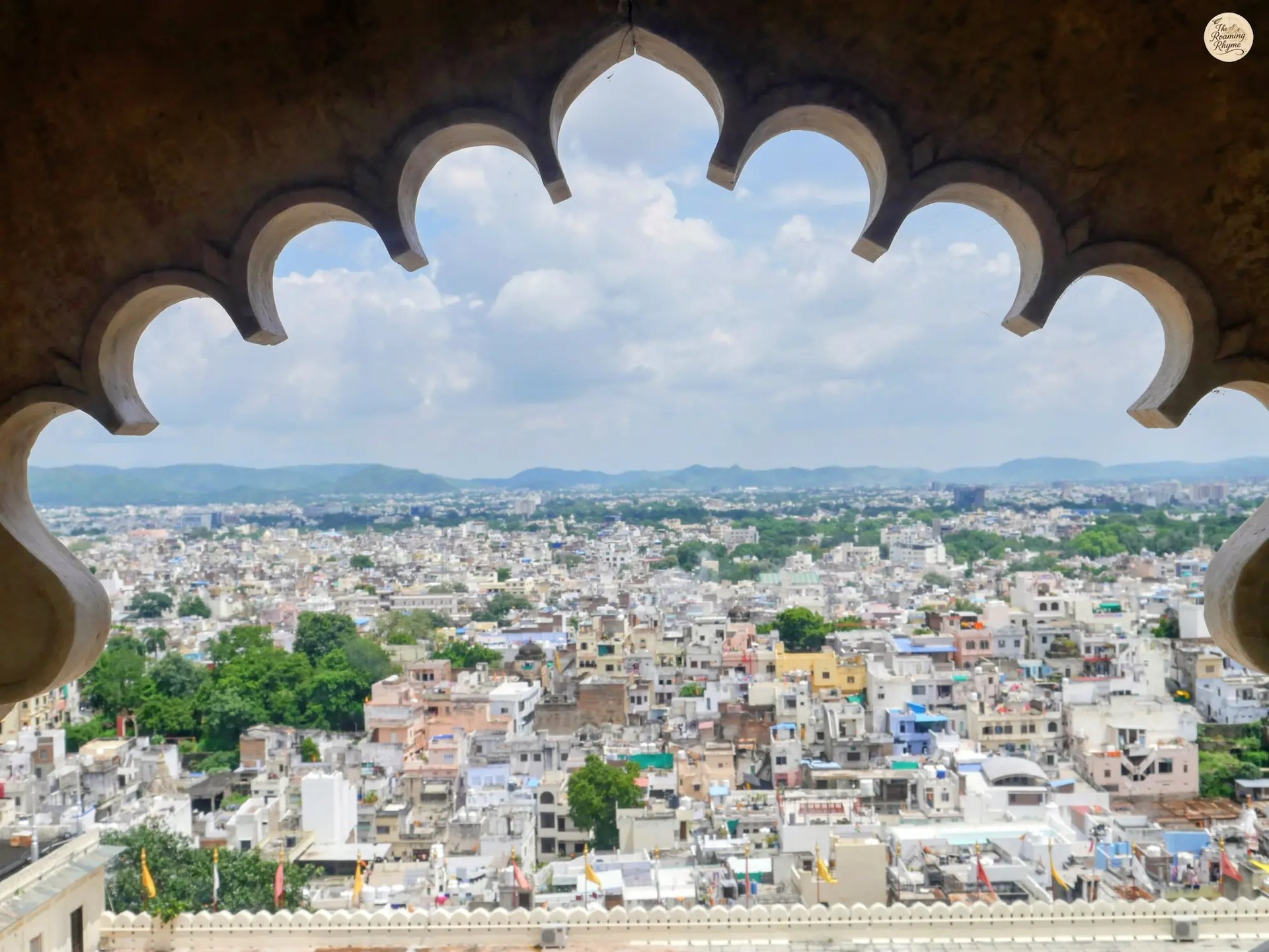
Things to Do in Udaipur – Best Places to Visit, Attractions & Travel Guide
Discover Udaipur’s best sights, lakes, and hidden gems.
Updated on: 17th, Dec 2025
Explored on: Aug' 2025
Discover the City of Lake, Udaipur – A Journey Through Lakes, Palaces & Calm
There are cities you visit, and then there are cities that feel painted by a storyteller’s hand. Udaipur belongs to the second kind. The famed Venice of the East rests on shimmering lakes, wears palaces like crowns, and glows with a golden light that makes every corner feel brushed with magic. It’s hard to believe such serenity thrives in the heart of vibrant Rajasthan.
Udaipur doesn’t rush to impress — it settles into you slowly, through every glinting reflection, every sun-warmed palace wall, and every calm breath you take by the ghats. Often called the City of Lakes, it welcomes travelers with a soft, unhurried charm. Boats glide across mirror-like waters, streets hum with everyday rhythms, and the Aravalli hills cradle the city like an old, affectionate guardian.
What makes Udaipur unforgettable is its effortless blend of romance, heritage, and local color. One moment you’re standing on a palace terrace watching the skyline float over Lake Pichola, the next you’re sipping chai at a lakeside café as pigeons scatter across the water. The lakes aren’t mere attractions — they’re the city’s living soul. From Pichola’s iconic silhouettes to Fateh Sagar’s breezy promenades, each offers a new shade of beauty to your journey.
As you wander through old lanes, Udaipur begins to whisper its stories — of Mewar’s proud legacy, temples echoing divine quiet, and artisans preserving centuries-old craft traditions. Its grand palaces, regal yet welcoming, feel like they’re opening their doors not just to be seen, but to be understood.
Udaipur is a city for travelers who savor — who pause, who feel, who notice. Not for the checklist, but for the charm of simply being present.
If you’re planning your visit, prepare for views that soothe, stories that captivate, and moments that stay with you long after you leave.
Welcome to Udaipur — a city where every turn holds a touch of magic, and every moment invites you deeper into its timeless embrace.
How to Reach Udaipur – Step Into Rajasthan's Lake-Lit Dream
Nestled in the soft embrace of the Aravalli hills, Udaipur feels like a city plucked straight from a storybook. Yet, reaching this lake-lit wonder is simpler than you might think. Whether you fly over mountains, glide along scenic rails, or take a leisurely drive, the journey itself sets the stage for the charm that awaits in the city of lakes.
By Air:
Maharana Pratap Airport (UDR)↗, about 22 km from the heart of Udaipur, is the fastest way to arrive. Daily flights connect the city with major hubs like Delhi, Mumbai, Jaipur, Bangalore, and Ahmedabad. From the airport, taxis and app-based cabs whisk you into the lakeside landscapes, offering your first glimpses of the city’s famous beauty.
By Train:
Udaipur City Railway Station↗ links the city to Jaipur, Delhi, Ahmedabad, Mumbai, and Kolkata. Trains such as the Mewar Express, Chetak Express, and Ananya Express make travel comfortable and reliable. Conveniently close to the city center, the station lets you reach hotels, old-town lanes, and Udaipur attractions quickly — a perfect choice for travelers who love smooth, hassle-free journeys.
By Road:
Well-connected highways lead into Udaipur from across Rajasthan and neighboring states:
From Ahmedabad: ~260 km
From Jodhpur: ~250 km
From Jaipur: ~400 km
From Delhi: ~660 km
Whether you self-drive or hop on a bus, the road winds through villages, open fields, and rolling Aravalli hills. Rajasthan Roadways↗ and Private AC Sleeper Buses↗ run regularly, offering comfort for every budget.
No matter how you arrive, the journey feels like a story unfolding. Slowly, lakes appear, the hills rise, and palaces peek through the greenery. It’s your first taste of the magic that makes Udaipur unforgettable.
Best Time to Visit Udaipur – When the City Feels Just Right
Udaipur dazzles all year, yet each season paints the city in a new mood. Choosing when to visit depends on the kind of experience you’re after — from serene lakeside mornings to vibrant palace walks.
October to March – Peak Beauty
This is Udaipur at its most enchanting. Cool breezes, clear skies, and golden winter light make boat rides, heritage walks, and rooftop dinners pure magic. The city buzzes with festivals and celebrations, perfect for photographers, explorers, and anyone planning full days discovering the top things to do in Udaipur.
July to September – Monsoon Magic
When the rains arrive, Udaipur transforms. The Aravalli hills turn lush green, the lakes brim with sparkling water, and the city takes on a calm, romantic glow. Monsoon is ideal for couples, nature lovers, and travelers who enjoy quieter streets and moodier landscapes — perfect for soaking in the subtle charm of Udaipur attractions.
April to June – Hot but Crowd-Free
Summer brings warmth, but also fewer crowds, lower hotel rates, and relaxed sightseeing. For budget travelers or those who prefer peaceful walks along lakes and through the old city lanes, this season offers a slow, leisurely experience of places to visit in Udaipur without the rush.
No matter the season, Udaipur has a way of greeting every traveler with warmth, calm, and magic. The right time simply depends on how you want to feel — whether it’s festival-filled energy, rainy romance, or quiet, sunlit exploration.
Where to Stay in Udaipur – Finding Your Home Among Lakes and Palaces
Udaipur offers stays for every kind of traveler — from dreamy palaces floating on Lake Pichola to vibrant, colorful hostels tucked inside the old city. Whether you’re planning a romantic escape, a family trip, or a solo adventure, there’s a perfect base for exploring the best things to do in Udaipur and soaking in its timeless charm.
Luxury & Premium Stays
For travelers who want Udaipur at its most magical — royal corridors, sparkling lake views, and indulgent comfort — these luxury hotels are icons:
The Oberoi Udaivilas↗ – A palace-like retreat with domes, courtyards, and serene lake panoramas.
Taj Lake Palace↗ – A floating white-marble wonder on Lake Pichola, perfect for couples seeking romance.
The Leela Palace↗ – Lakeside elegance infused with Rajput grandeur.
Taj Aravali Resort & Spa↗ – Nestled in the Aravalli foothills, offering peace and privacy.
RAAS Devigarh↗ – Restored palace for quiet luxury and timeless charm.
These options are ideal for honeymooners, luxury seekers, or anyone wanting a scenic stay close to top Udaipur attractions.
Mid-Range Heritage Havelis
For travelers craving authentic heritage charm without the high price tag, Udaipur’s havelis strike the perfect balance:
Jagat Niwas Palace↗ – Lakeside haveli with carved windows and a sunlit rooftop.
Fateh Prakash Palace↗ – Inside the City Palace complex, offering royal vibes at accessible rates.
Shiv Niwas Palace↗ – Elegant palace-style rooms with a warm, historic feel.
Hotel Karohi Haveli↗ – Cozy and traditional, combining comfort with authentic Rajasthani ambiance.
Mid-range stays are great for travelers who want to explore places to visit in Udaipur while enjoying heritage charm and central locations.
Budget Hotels
For those who want comfort without stretching the wallet, Udaipur’s budget hotels are simple, convenient, and full of character:
Hotel Poonam Haveli↗ – Economical, heritage-inspired, and centrally located.
Lake Pichola Hotel↗ – Affordable stay with a traditional Udaipur vibe.
Howard Johnson↗ – Reliable mid-budget choice with good amenities.
Budget options let value-focused travelers enjoy the city’s charm and easy access to Udaipur sightseeing.
Backpacker Hostels
Udaipur’s hostels are social, friendly, and perfect for solo travelers or groups on a budget:
Zostel Udaipur↗ – Rooftop views with a lively, communal vibe.
The Hosteller↗ – Affordable, clean, and traveler-approved.
Moustache Udaipur↗ – Warm atmosphere ideal for meeting fellow adventurers.
Hostels are perfect for those exploring offbeat places to visit in Udaipur, or anyone seeking budget-friendly, social stays while discovering the city’s top things to do.


Jagdish Temple wakes in light,
Morning bells lift soft and bright.
City Palace glows in stone,
Old steps breathe a royal tone.
Pichhola drifts in silent blue,
Boats glide by with sky in view.
Ambrai’s lamps in gold unwind,
Gangaur hums with peace in mind.
Karni Mata waits up high,
Ropeway rising into sky.
Fateh Sagar stirs the breeze,
Ripples whisper through the trees.
Sajjangarh guards dusk’s last gleam,
Sunset crowns the palace dream.
Rayta rolls in quiet thrill,
Bahubali calms twilight’s hill.
You need at least two days to truly feel Udaipur — but give yourself three, and the city quietly slips under your skin. Many travelers rush through with a palace tour and a sunset boat ride, but Udaipur isn’t a place you check off; it’s a place you linger in. The longer you stay, the more its serene magic unfolds: shimmering lakes, majestic palaces, temple bells drifting across the ghats, and the gentle rhythm of life in the old city.
This guide takes you through Udaipur’s soulful layers at an easy, immersive pace. Most major attractions sit close together, making it simple to wander on foot or hop into a tuk-tuk as you weave through bridges, viewpoints, and hidden lanes.
Day One is all about the City Palace↗ and the surrounding old-city charms — a deep dive into Mewar’s royal legacy and Udaipur’s vibrant, lived-in heritage.
Day Two takes you slightly farther, from Doodh Talai↗ to Fateh Sagar Lake↗, blending peaceful lakeside corners with local hangout spots.
Day Three carries you into the outskirts — Sajjangarh (Monsoon Palace)↗, Bahubali Hills↗, and Rayta Hills↗ — where sweeping views, hilltops, and countryside breezes reveal Udaipur’s wilder, quieter side.
In just three days, you can soak in the best things to do in Udaipur and explore its top places to visit — not just as a traveler passing through, but as someone tuning in to the city’s timeless charm, one lake, one palace, and one golden sunset at a time.
Udaipur Travel Guide & 3-Day Itinerary – Explore Lakes, Palaces & Royal Heritage
Day 1 – Inside the Heart of Udaipur: Palaces, Alleys & Lake Magic
Begin your morning at Jagdish Temple, where soft bells and detailed stone carvings set the perfect, serene tone for the day. From there, walk up to the City Palace↗, wandering through its royal courtyards, mirrored halls, and lake-facing terraces that offer some of the most iconic views in Udaipur.
Next, drift across Lake Pichola↗ on a peaceful boat ride — the best way to see the shimmering Lake Palace, Aravalli-backed skyline, and the ghats that line the old city. Stop by Ambrai Ghat↗ and Gangaur Ghat↗, two timeless lakeside corners where locals gather, pigeons flutter, and the water reflects the city’s golden glow.
As evening arrives, step into the cultural world of Bagore Ki Haveli↗ for its vibrant folk dance and music show. Afterward, take a slow stroll through the old lanes, exploring craft shops, miniature art studios, and cozy cafés tucked between historic walls.
A gentle, immersive start to your Udaipur journey — capturing the essence of the city’s attractions and offering some of the best things to do in Udaipur on your very first day.
Jagdish Temple — Udaipur’s Spiritual Heartbeat
Begin your Udaipur journey at Jagdish Temple, a 17th-century masterpiece tucked into the winding lanes of the old city. Its towering shikhara rises above the bustle like a silent guardian, reminding you that devotion, history, and artistry still pulse through Udaipur’s core. Built in 1651 by Maharana Jagat Singh I, this grand temple is dedicated to Lord Vishnu in his Jagannath form↗.
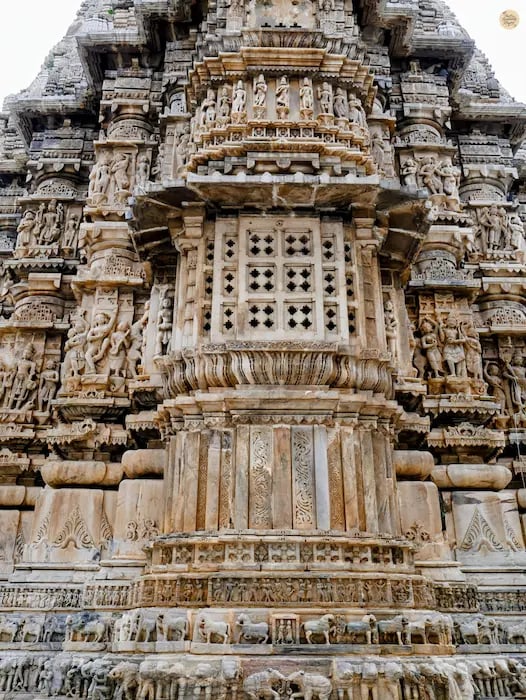
Climb the 32 intricately carved steps, and you enter a world sculpted in stone. Every pillar, ceiling, and panel narrates stories from Hindu mythology — celestial dancers, divine guardians, and motifs crafted with astonishing precision by Mewar’s finest artisans. At the sanctum, the black stone idol of Lord Jagannath, adorned with jewels and a luminous crown, radiates a calm, commanding presence. Smaller shrines around the temple offer peaceful corners for quiet reflection.
What makes Jagdish Temple special isn’t just its heritage — it’s the life within it. The soft chants, the glow of diyas, the steady rhythm of prayers, and the flow of locals who come seeking solace give the temple an energy that feels timeless.
Whether you’re drawn to spirituality, architecture, or photography, Jagdish Temple is a must-visit. It’s one of the finest Udaipur sightseeing spots, ideal for travelers looking for meaningful experiences, offbeat places to visit in Udaipur, or family-friendly and couple-friendly activities.
A perfect, peaceful beginning to your day in the City of Lakes.
🕒 Jagdish Temple Timings & Entry Fee
Timings: 5:00 am – 2:30 pm | 4:00 pm – 10:30 pm (Daily)
Entry Fee: No Entry Fee
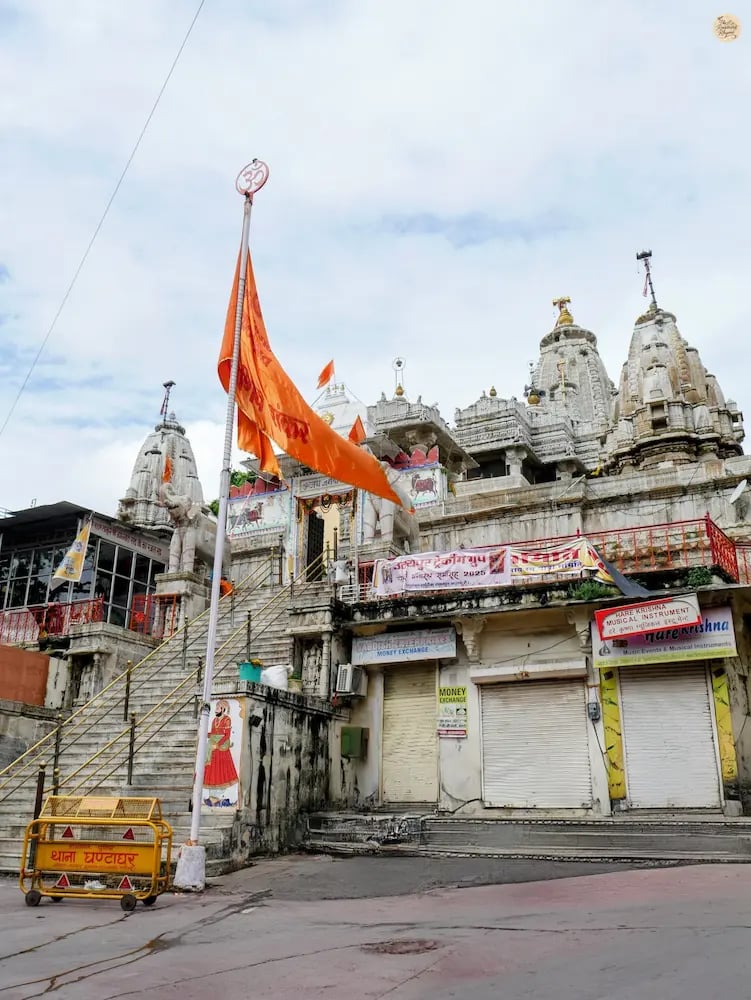
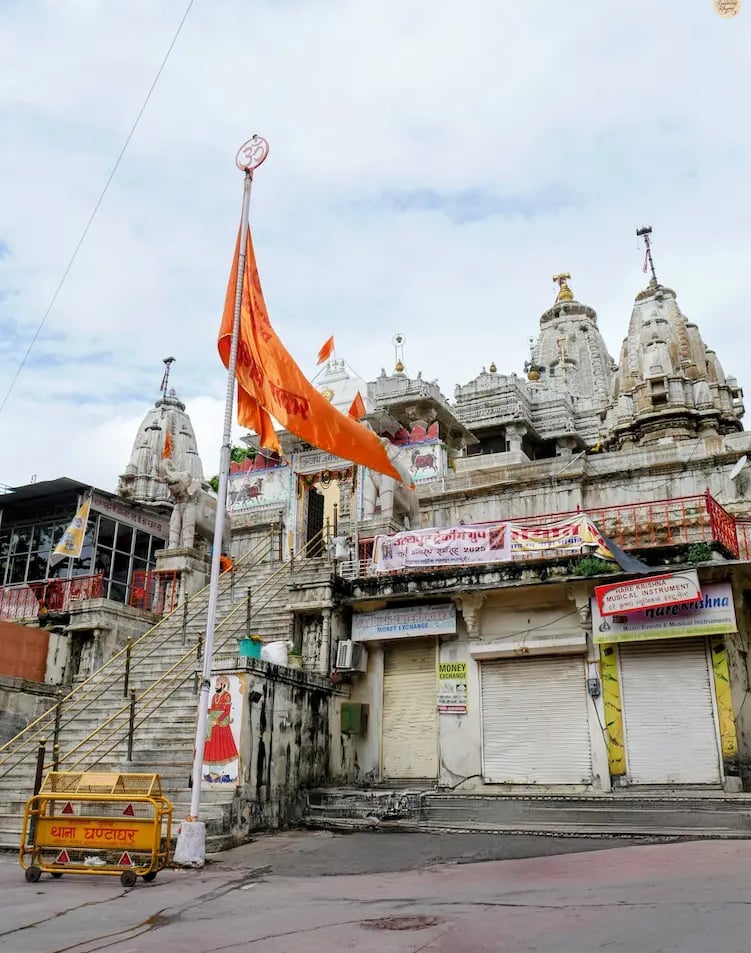
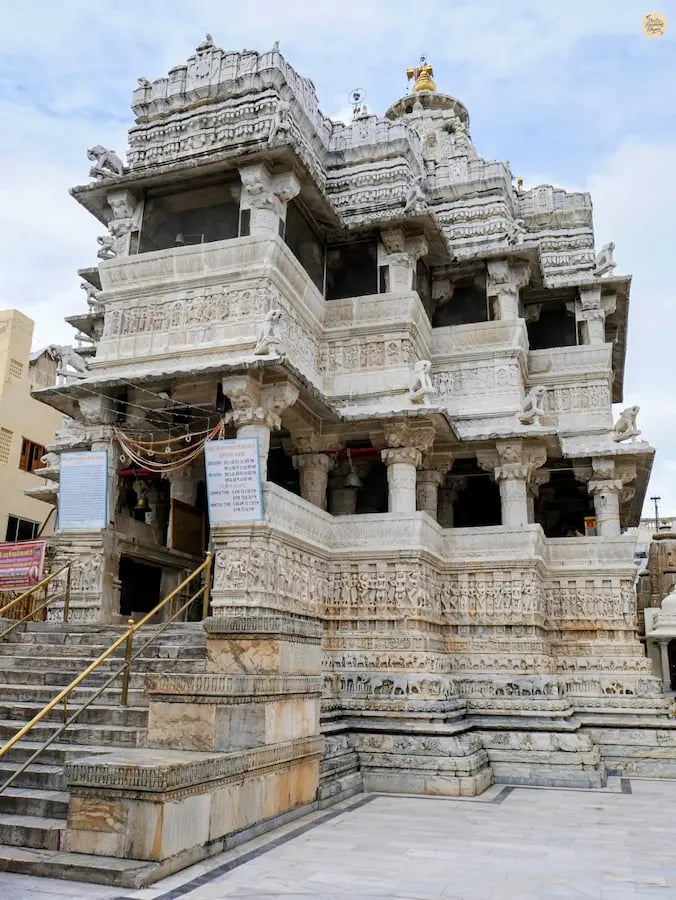
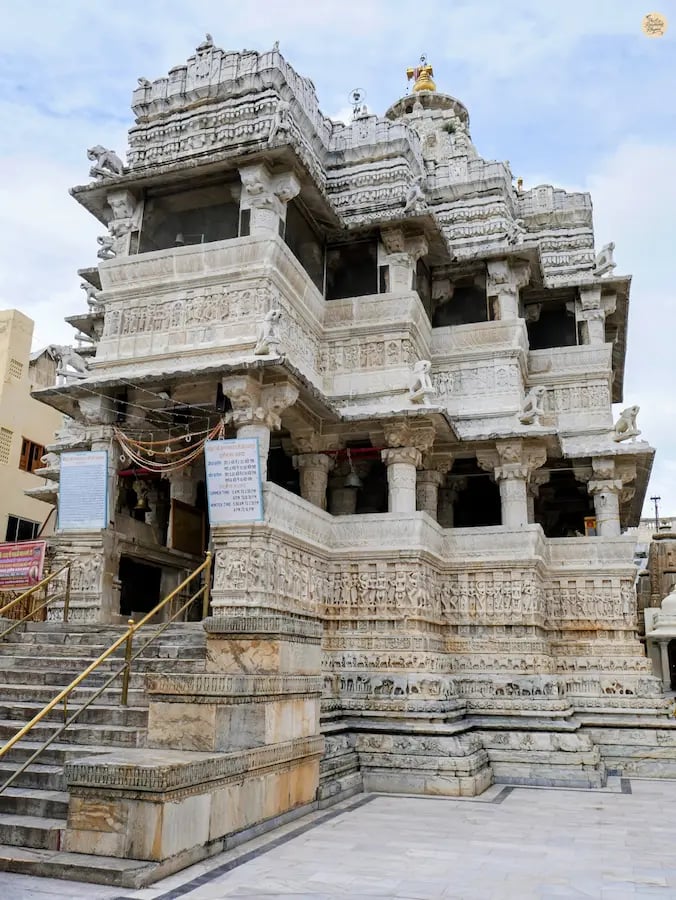
Devotion flows through Udaipur’s narrow lanes.
A masterpiece shaped by devotion.
Ancient arches, timeless calm.
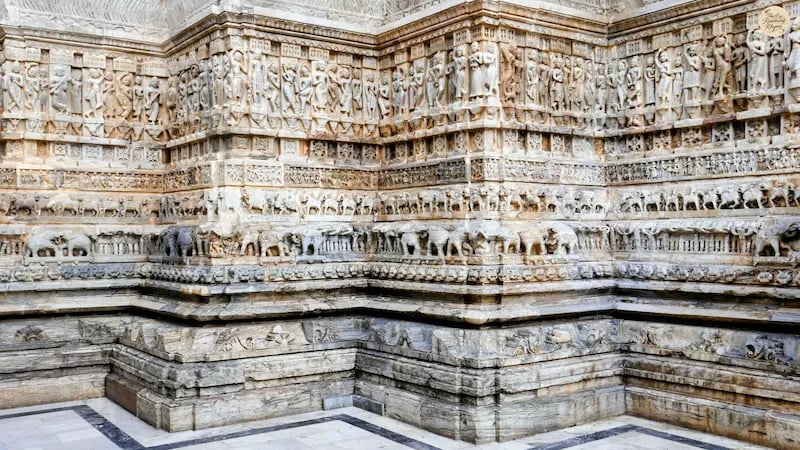
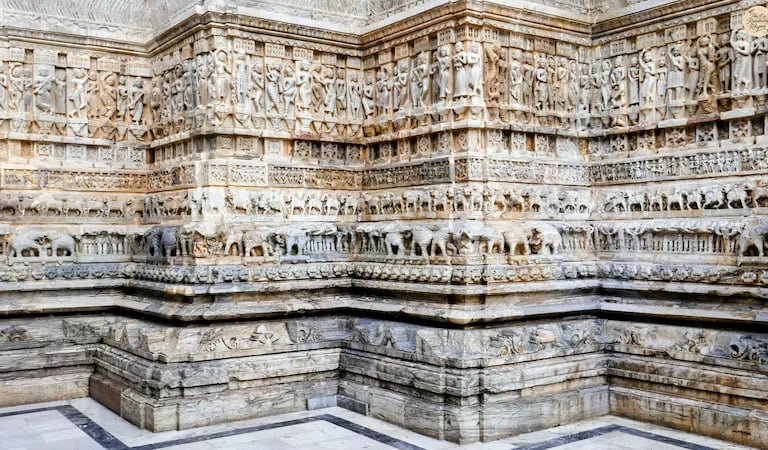
Carvings that breathe the old world alive.
City Palace, Udaipur — History, Architecture & Royal Experience
Just a short stroll from Jagdish Temple and you step into one of the top Udaipur attractions — the iconic City Palace of Udaipur. Fuel up before you go, because a full Udaipur palace tour can easily sweep you into its stories for nearly three hours.
Rising above Lake Pichola like a white-marble dream, the City Palace feels carved from time itself. Started in 1559 by Maharana Udai Singh and shaped over four centuries, it’s the largest palace complex in Rajasthan — a grand weave of Rajput power, Mughal grace, European touches, and even hints of Chinese influence. Eleven interlinked palaces, hanging gardens, octagonal towers, fountains, and lake-facing jharokhas make it the shining heart of Mewar and a star of Udaipur sightseeing.
Inside, it’s a treasure chest — mirror mosaics, delicate enamel, colorful glass, ancient paintings, and a museum showcasing sculptures, textiles, royal artefacts, and a legendary armory. Truly one of the best things to do in Udaipur for families, couples, and heritage lovers alike.
Your Udaipur City Palace walk begins at Badi Pol and through the three-arched Tripolia Gate into Manek Chowk — once alive with elephant parades, royal shows, and festival crowds. It sets the tone with a grand, open welcome.
Manek Chowk
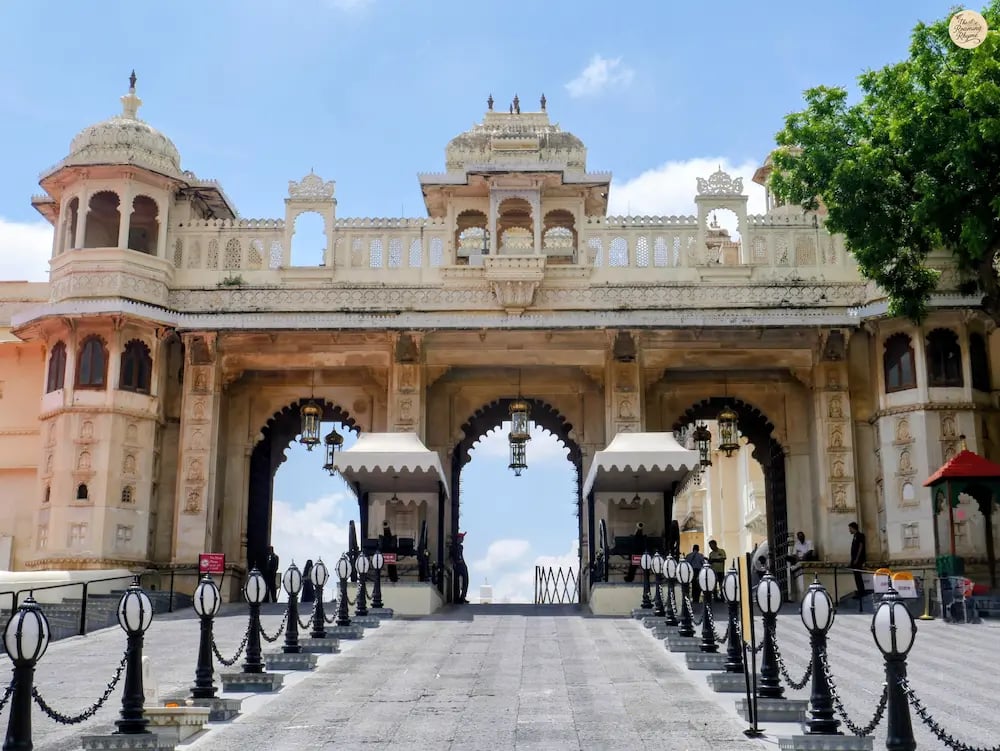
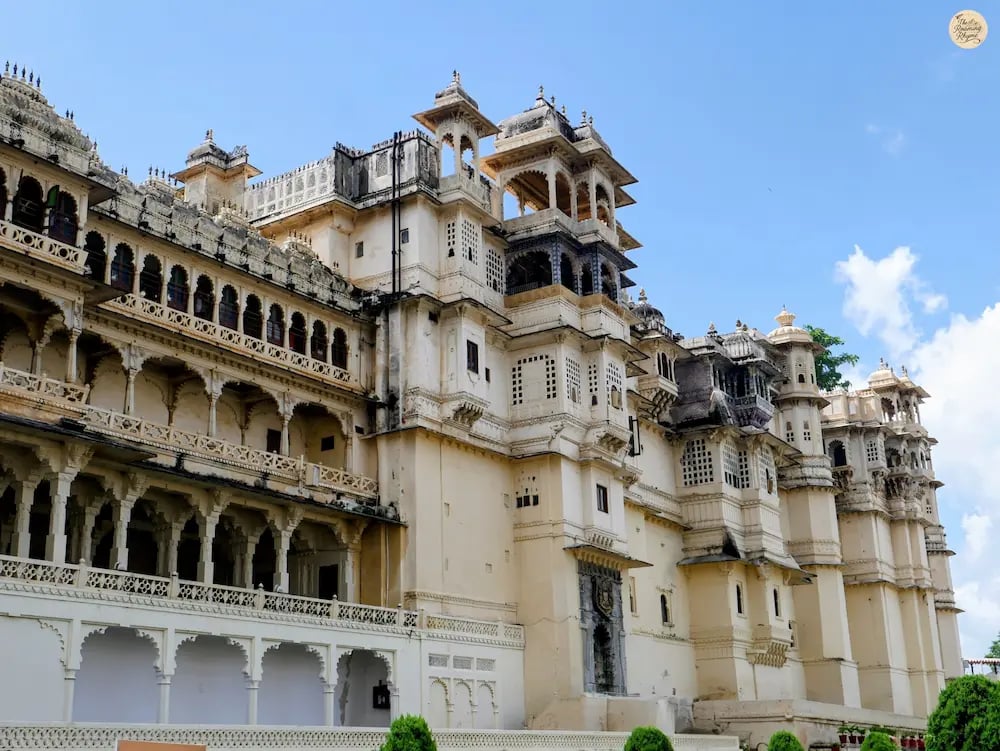
A grand gateway into Mewar’s memory.
The City Palace shining from Manek Chowk.
Moti Chowk
Crossing Toran Pol, the gateway of good beginnings, you reach Moti Chowk. Portraits of Mewar’s Maharanas line the space, making you feel like the rulers themselves are guiding your path.
Armory (Shastraagar)
At Ganesh Deodi, sparkling with Belgian glass, the museum opens fully. The Armory displays Rajput swords, crocodile-skin shields, spears, rifles, and Maharana Pratap’s armour. Paintings retell Haldighati↗, with a special gallery honoring Maharana Pratap↗ and his faithful Horse Chetak↗.
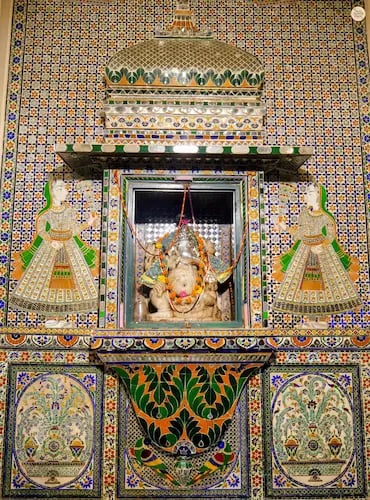
Artistic glass and tile detailing at Ganesh Deodi.
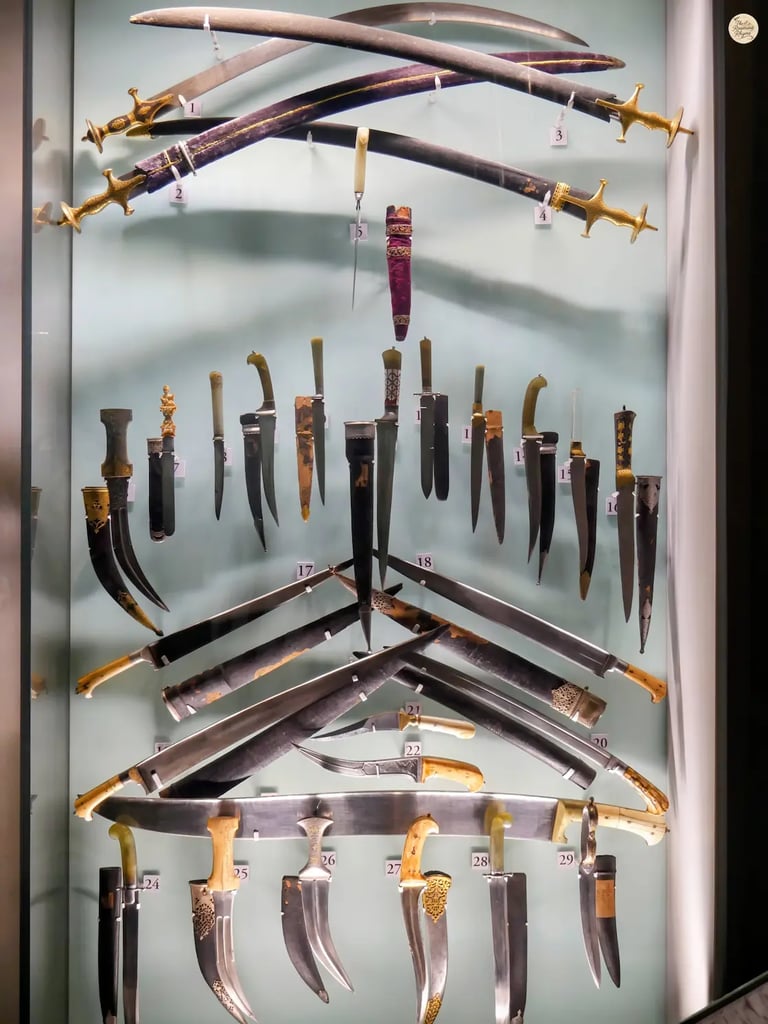
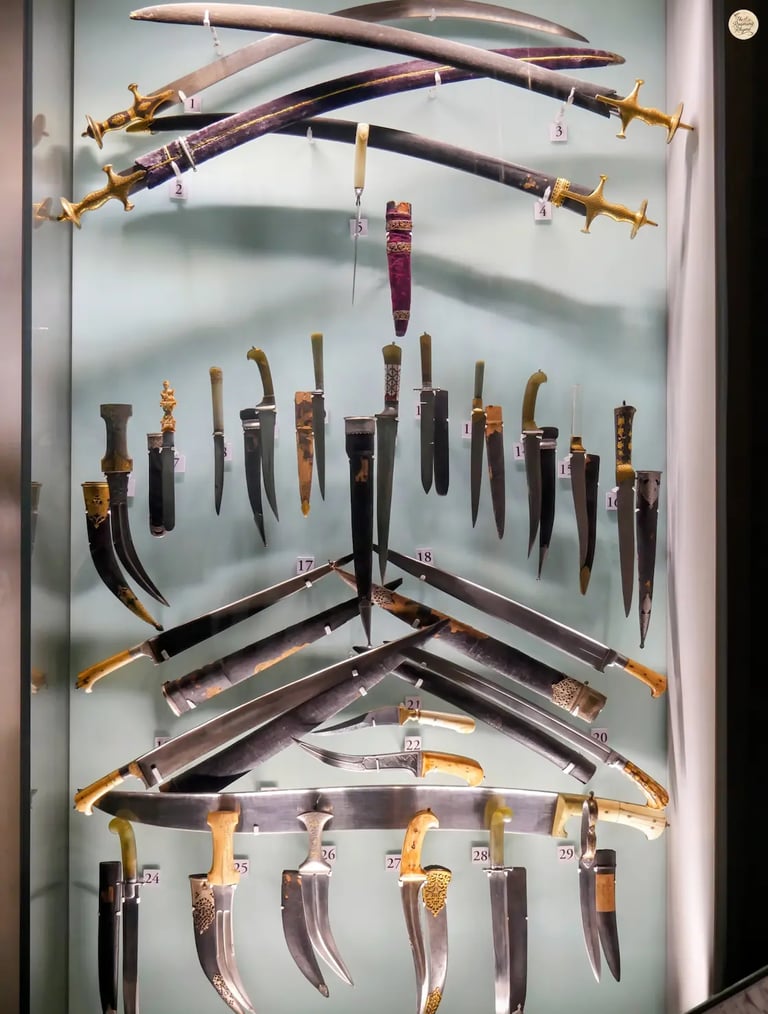
Blades that once guarded a kingdom.
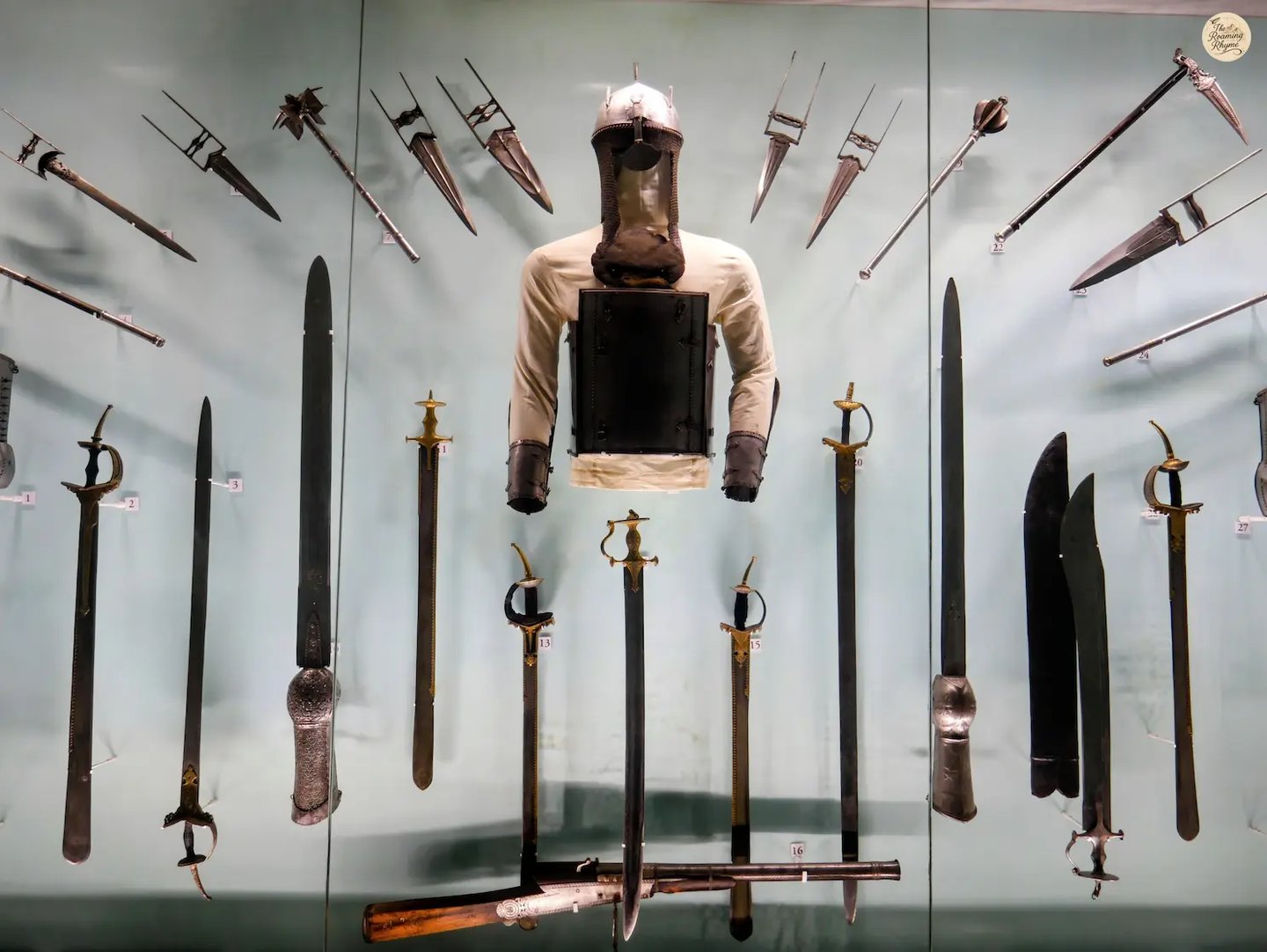
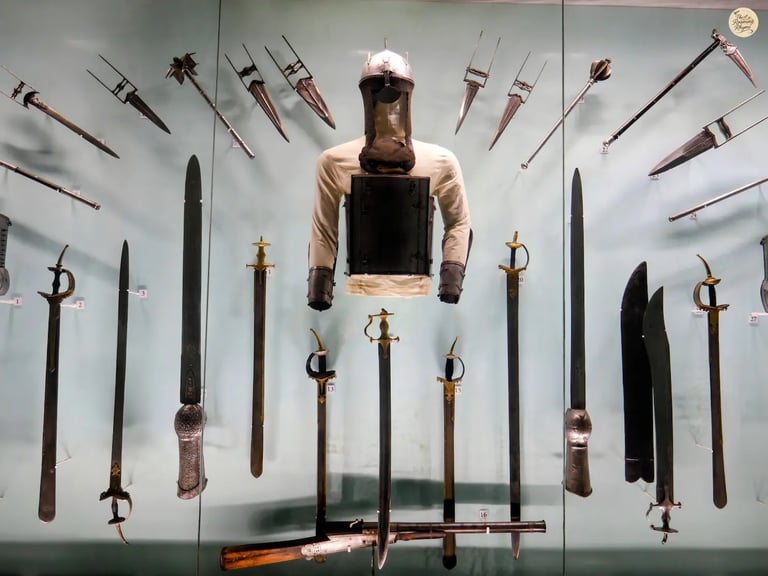
Maharana Pratap's sword speaks without words.
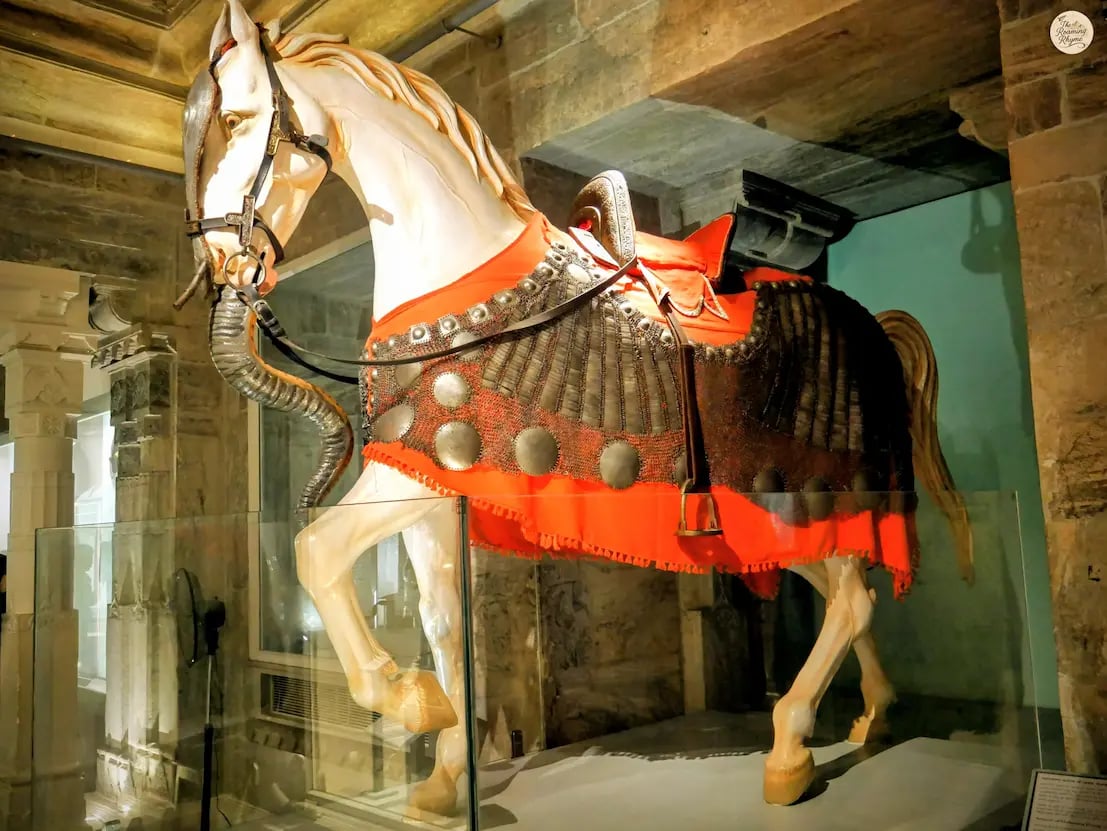
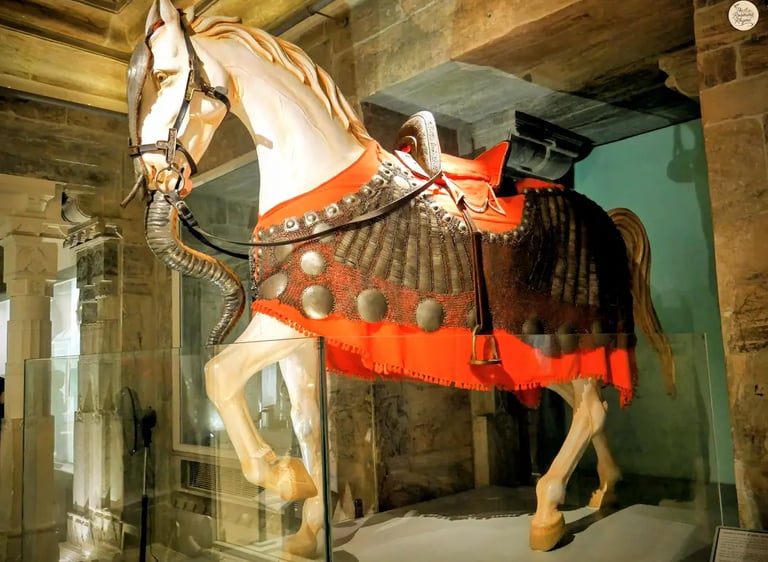
The warrior’s horse, forever loyal.
Rajya Angan
This is the coronation courtyard — the oldest part of the palace. A small shrine marks where a saint advised Udai Singh to build his new kingdom, adding a quiet touch of destiny.
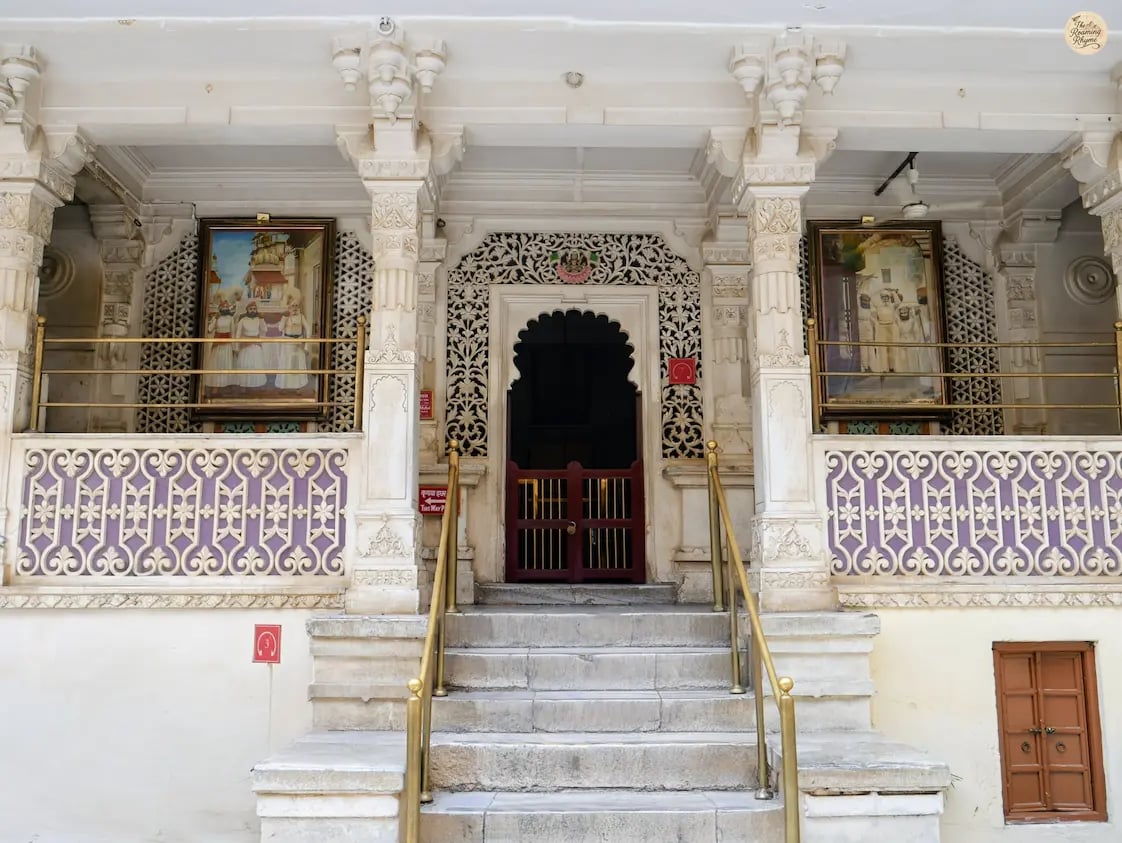
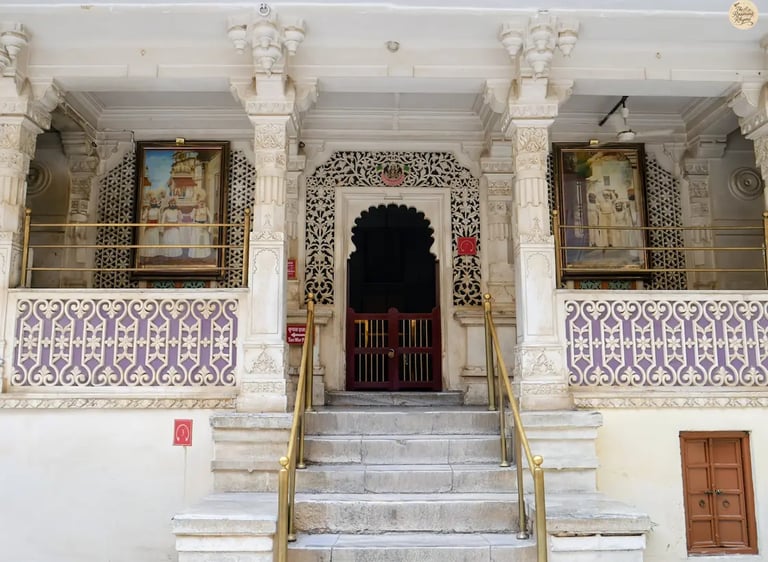
Rajya Angan, the coronation courtyard, where Mewar met its destiny.
Badi Mahal
The Garden Palace sits on natural rock and surprises you with tall carved pillars, bright tilework, and a room filled with pigeon-message cages — the royal way of sending news across the kingdom.
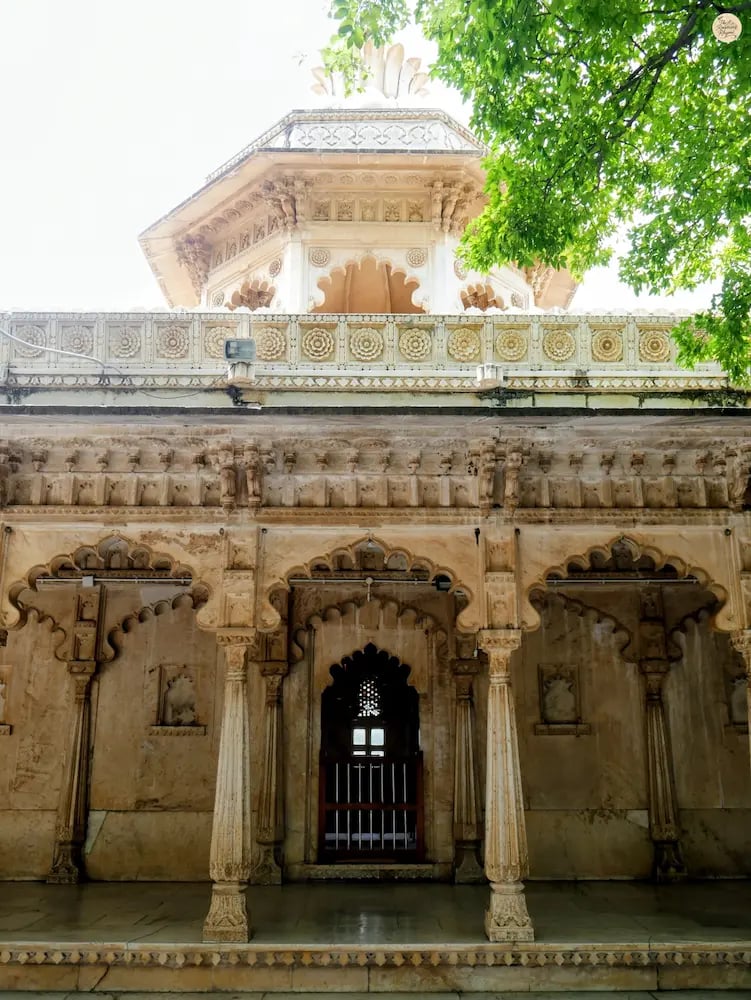
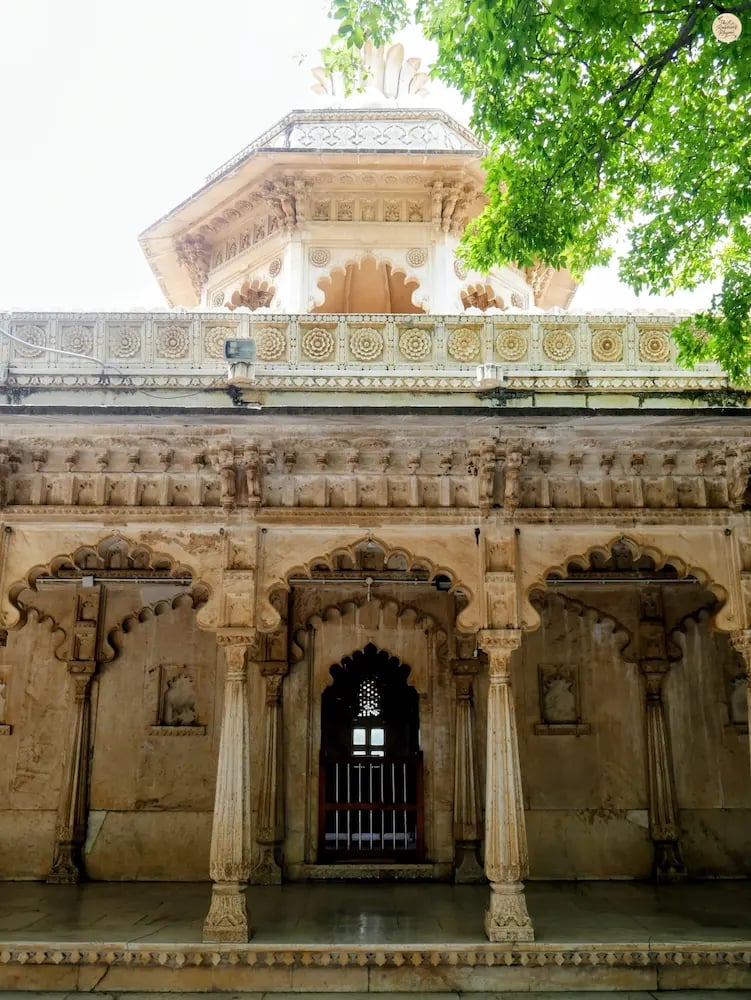
Marble arches whisper old-world grace.
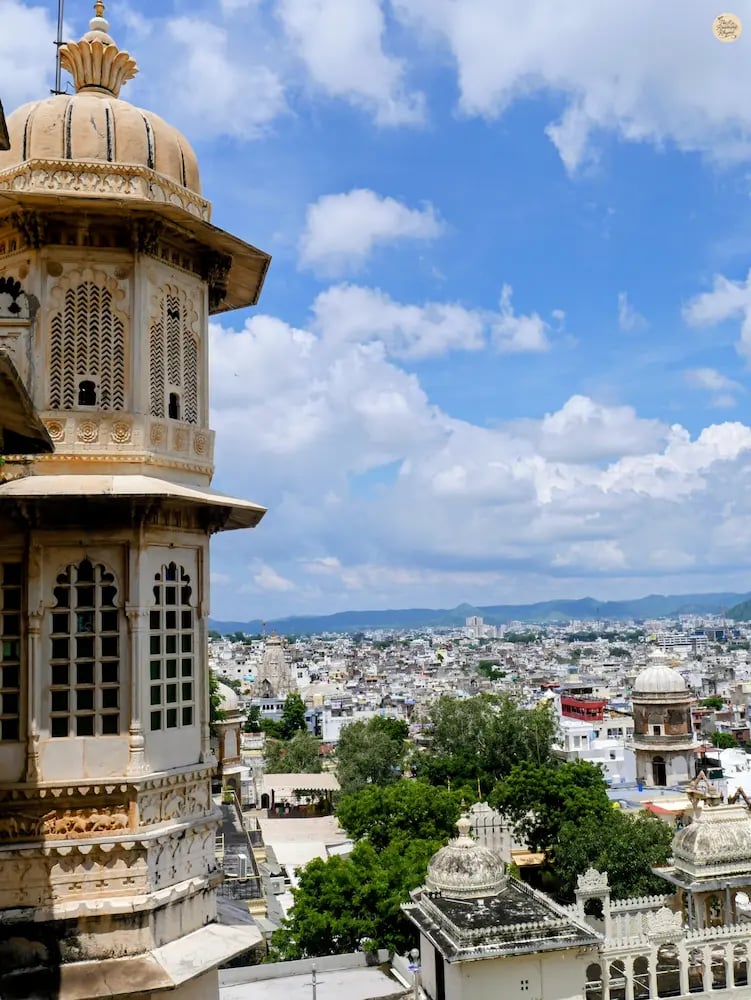
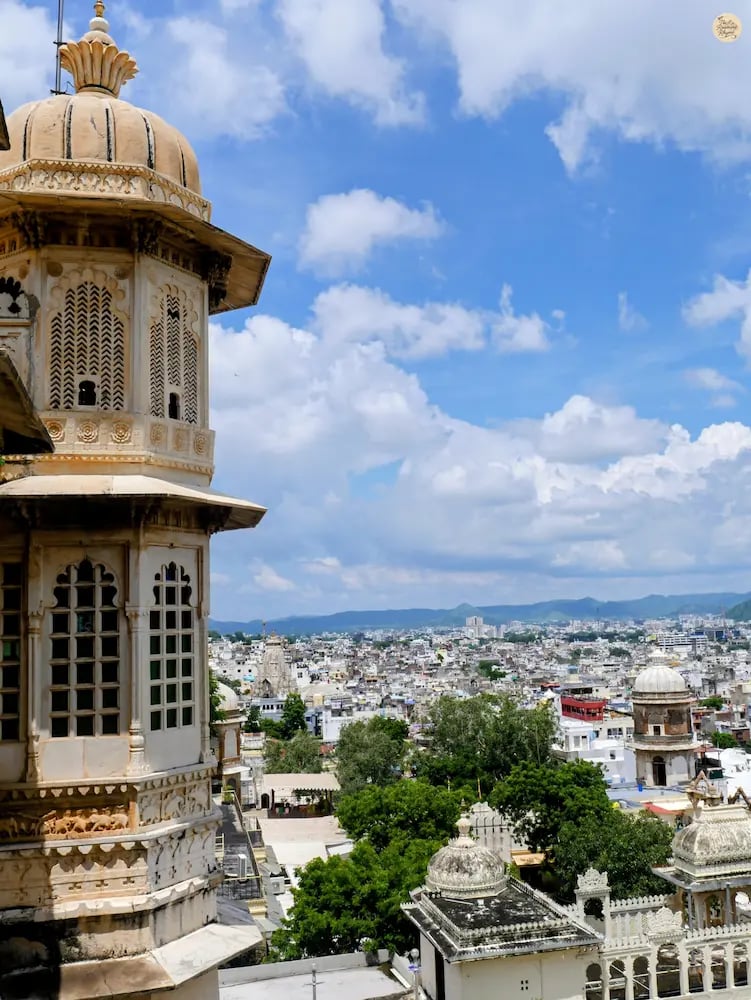
From Badi Mahal, Udaipur feels endless and calm.
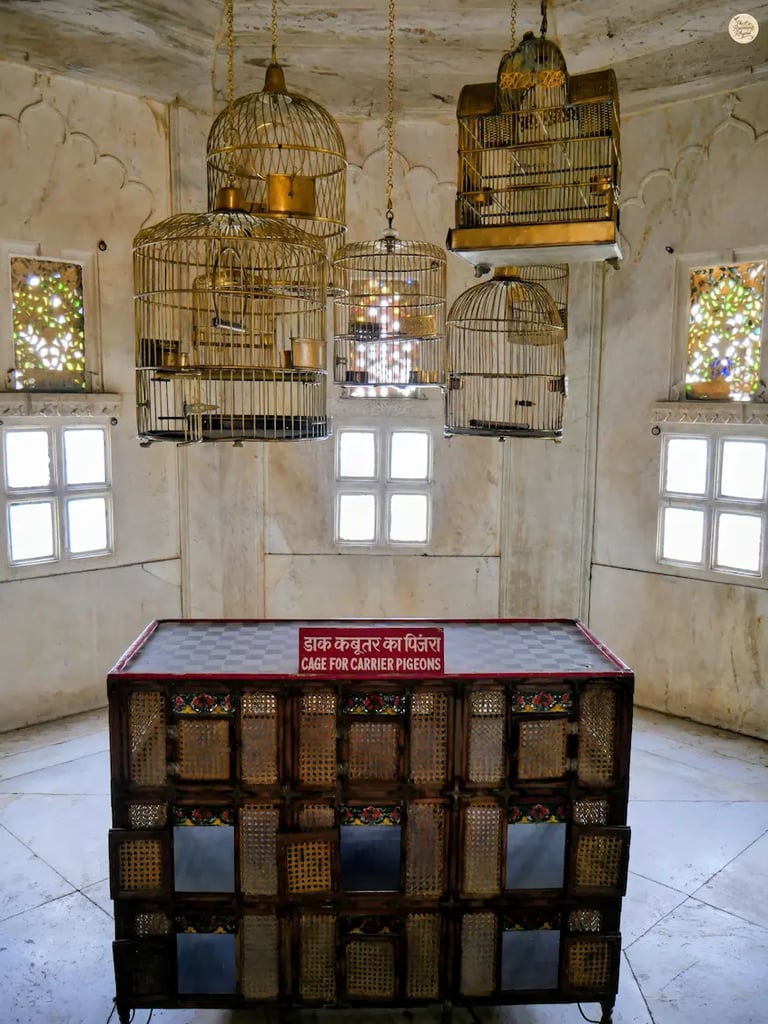
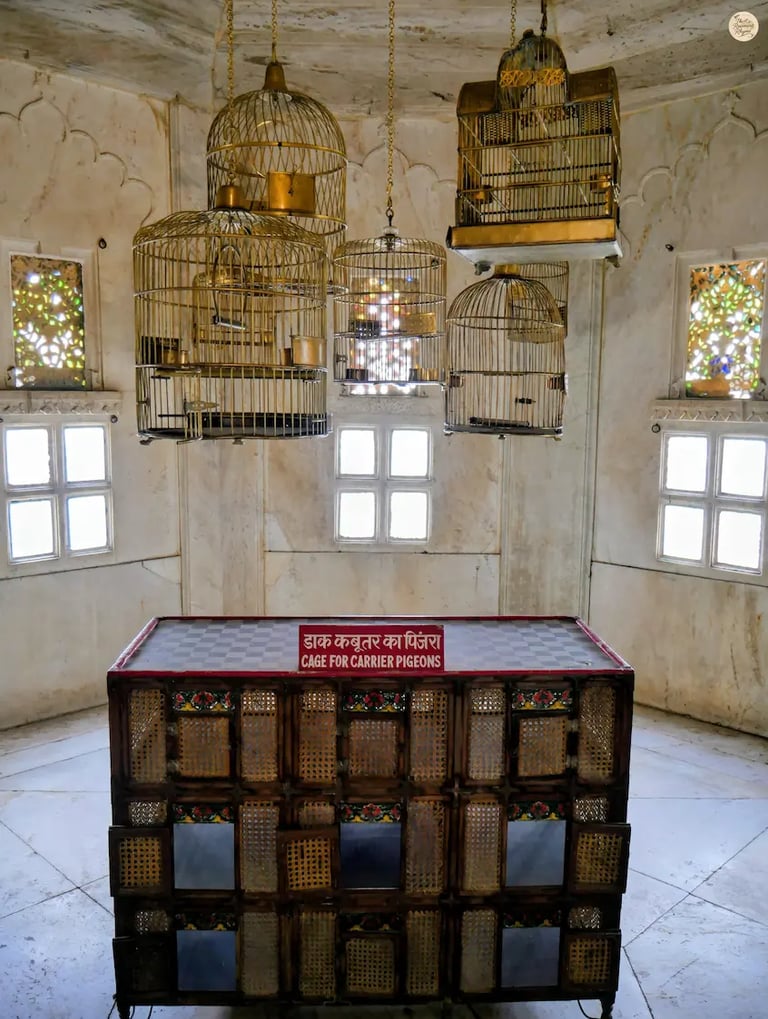
When pigeons were the postmen of kings.
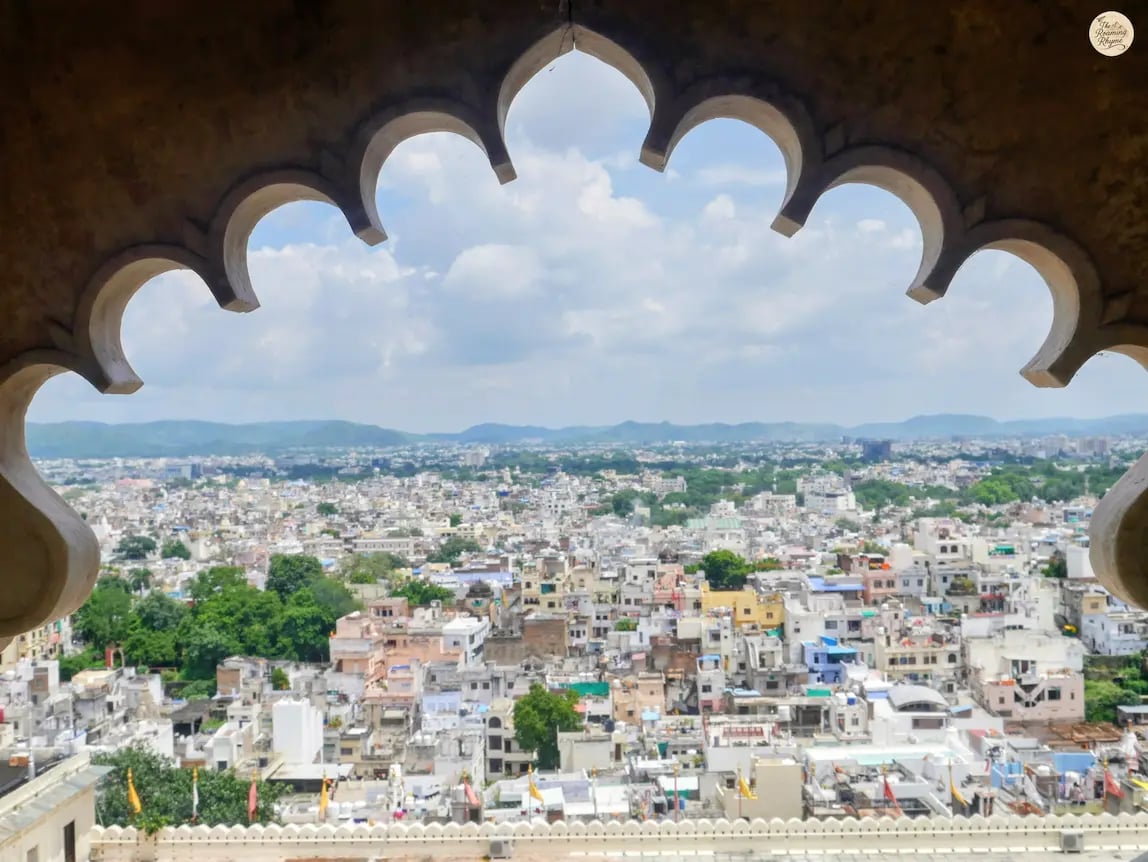
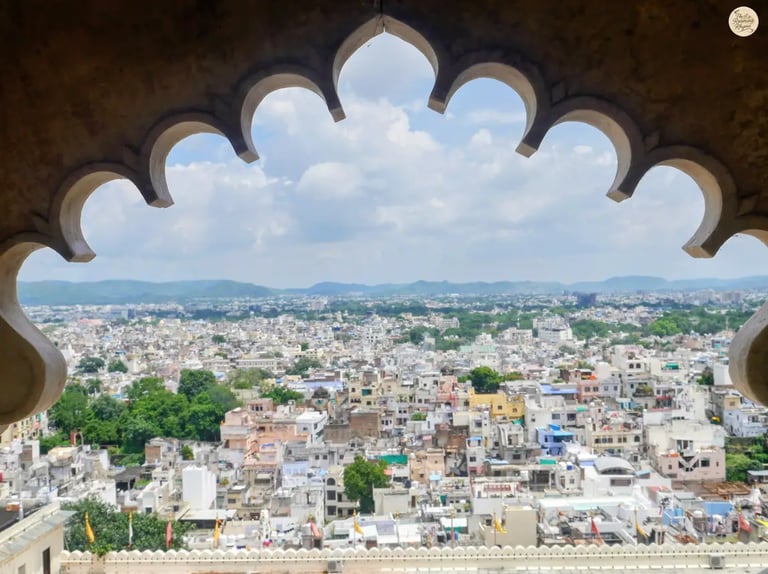
Udaipur unfolding like a painted dream.
Kanch ki Burj
A glowing 17th-century glass pavilion, famous as Rajasthan’s only Sheesh Mahal with a mirror-covered floor. Light reflects beautifully, and the old ivory doors still stand strong.
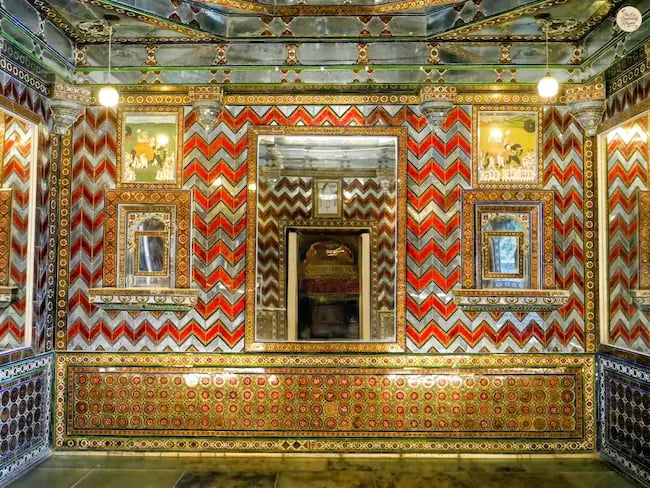
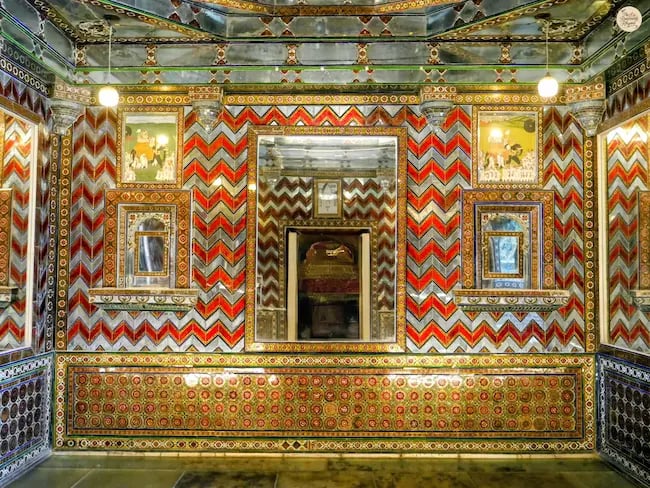
Where light dances on glass.
Badal Mahal
As you climb through narrow passages, frescoes of royal life and golden celebrations follow you. At the top, Badal Mahal opens to sweeping views of Udaipur, the Aravallis, and the sparkling Lake Palace — perfect for a dreamy pause.
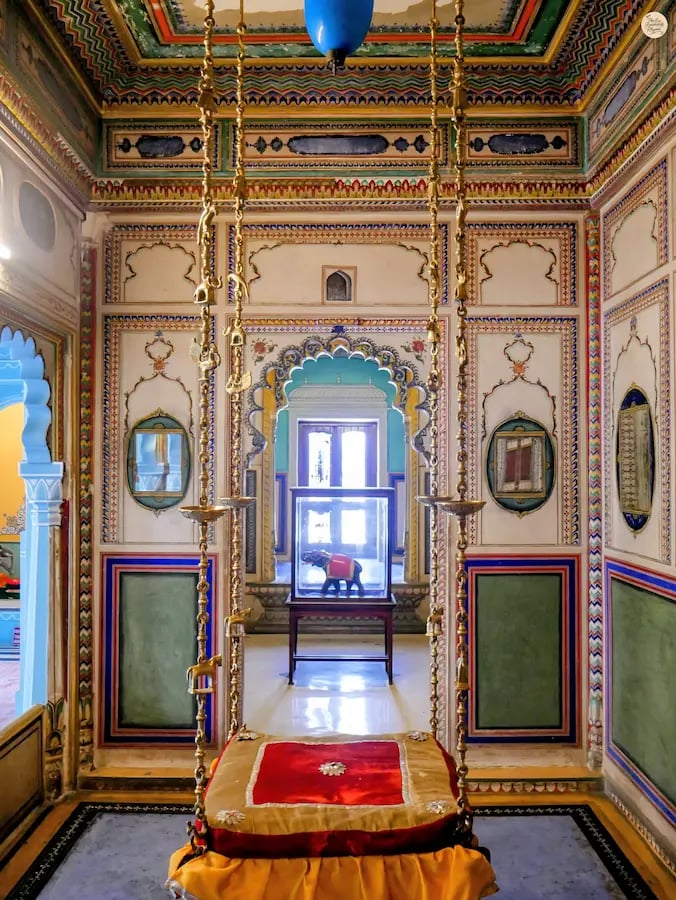
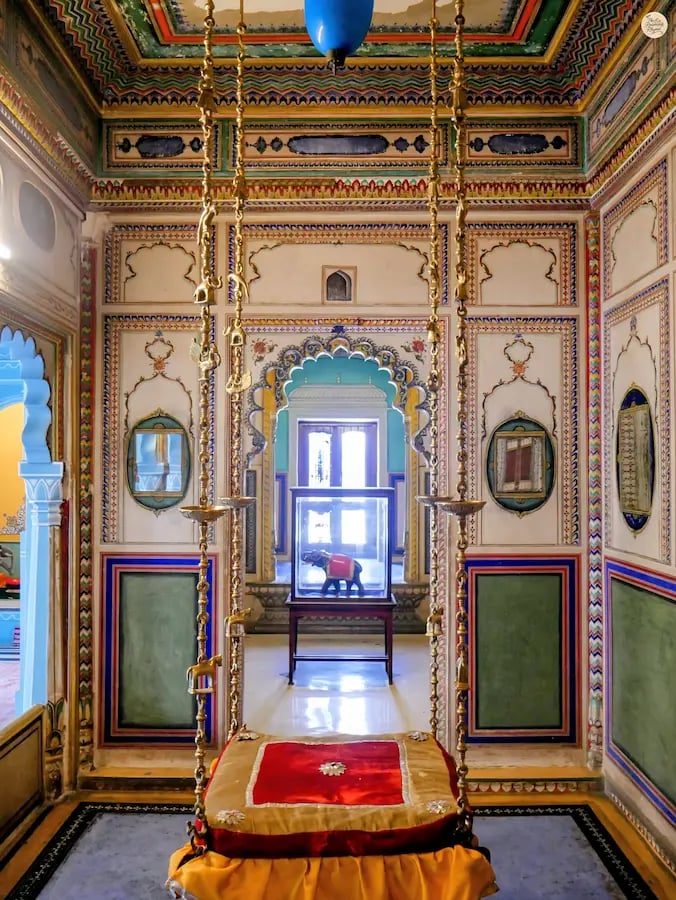
Bhim Vilas – murals, mirrors, and royal whispers.
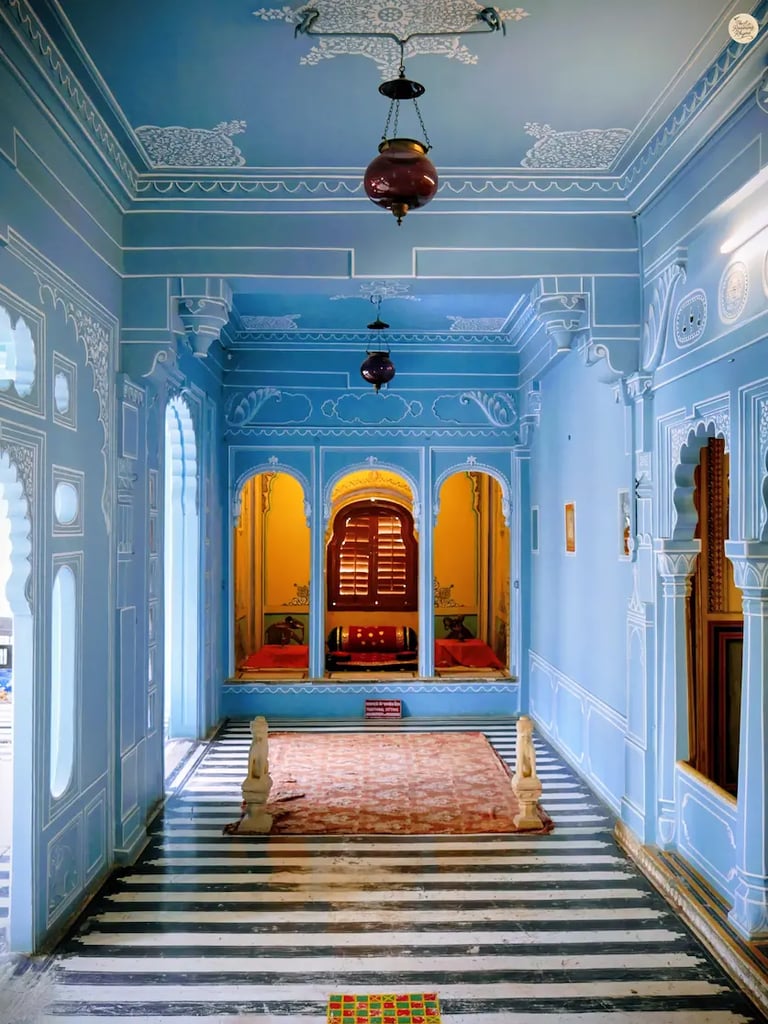
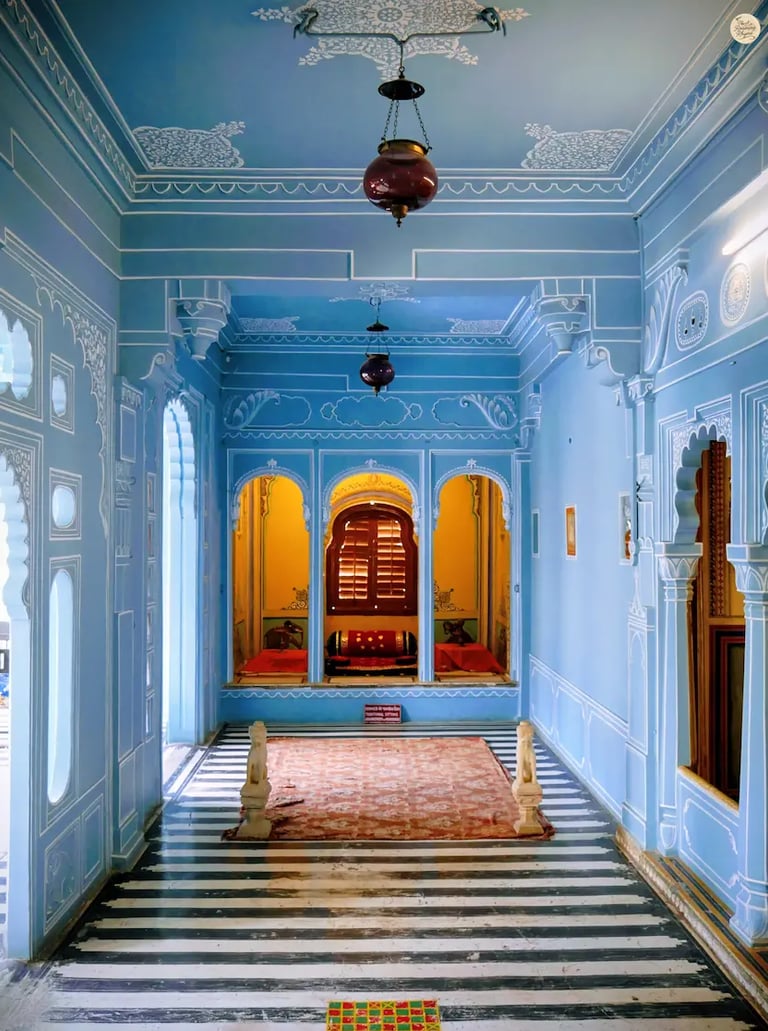
Bhim Vilas – calm in gentle blue.
Moti Mahal
Descending again, you enter this soft, elegant hall with delicate glasswork and jharokhas. From here, royal women once watched festivals and ceremonies below.
Mor Chowk
The showstopper — five bright peacocks made from over 5,000 pieces of glass and tile. Once the Diwan-e-Khas, it was a private space for royal dances and celebrations.
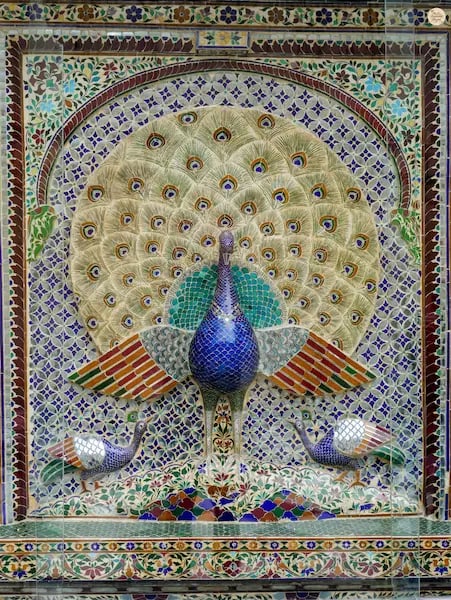
Peacock glimmers in glass and tile.
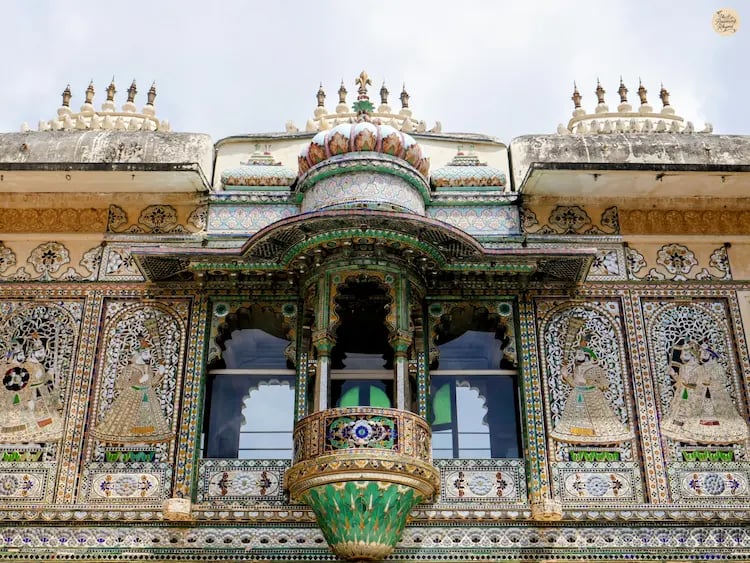
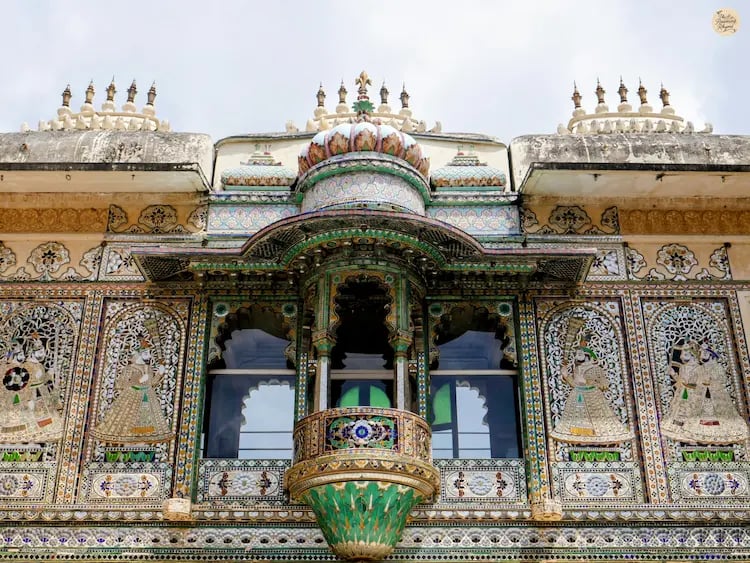
Mor Chowk: A mosaic of royal art.
Zenana Mahal
The women’s quarters reveal restored frescoes, swings, and tiny windows overlooking the courtyards. It gives a gentle glimpse of everyday palace life.
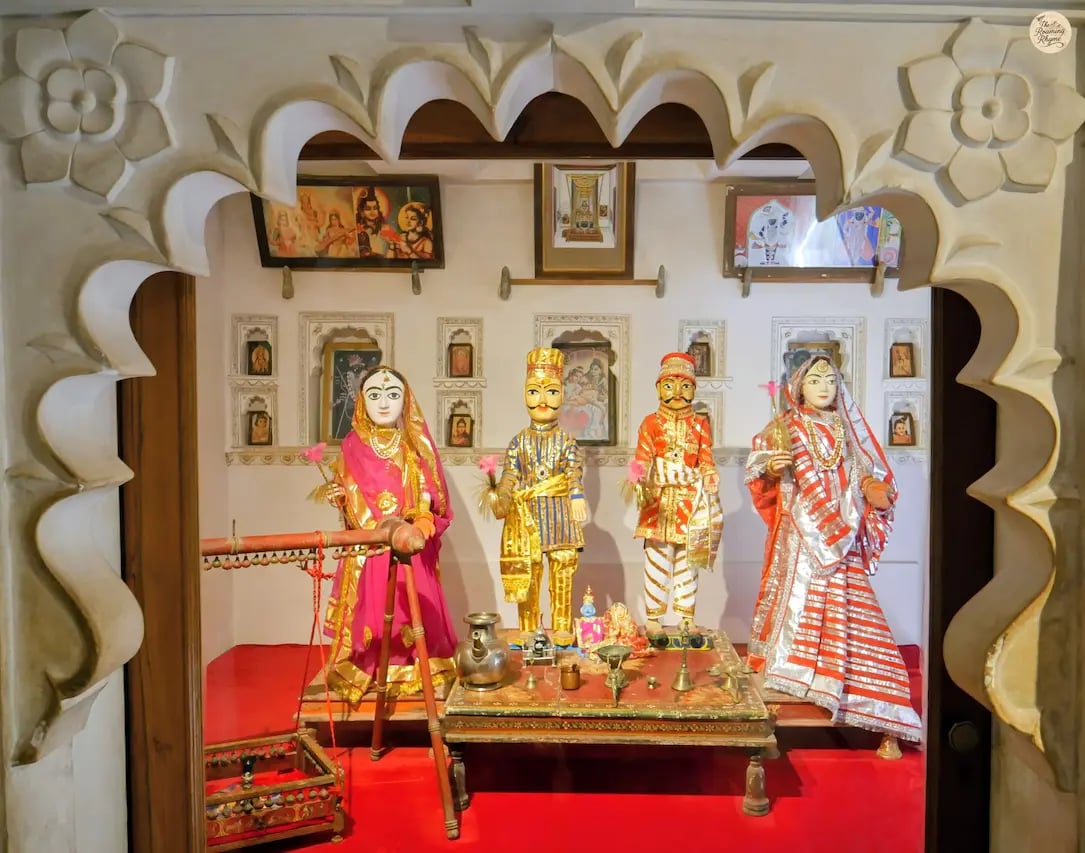
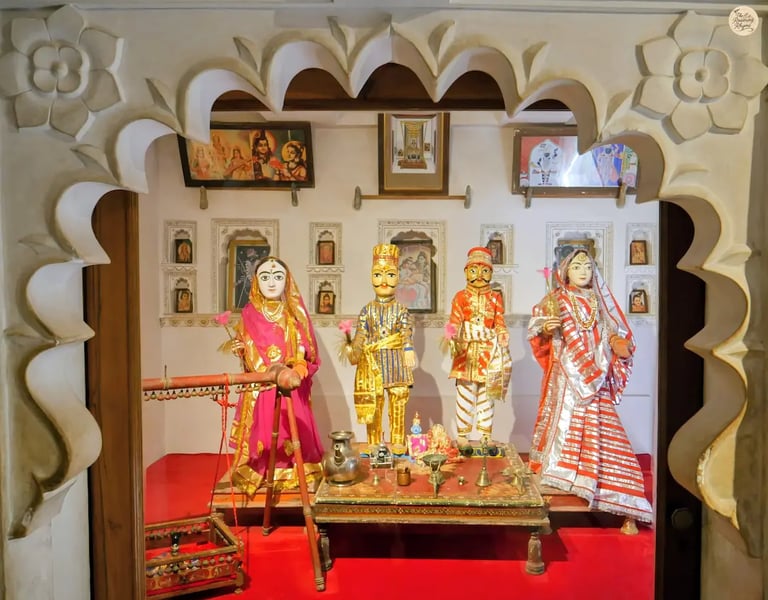
Gangaur idols whisper stories of old traditions.
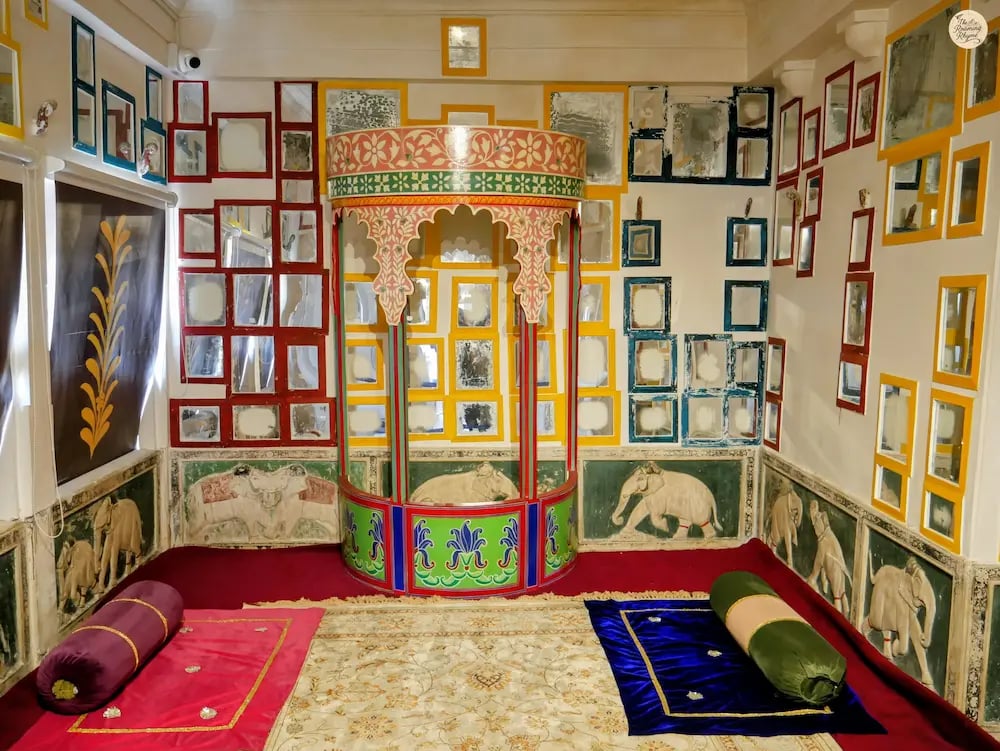
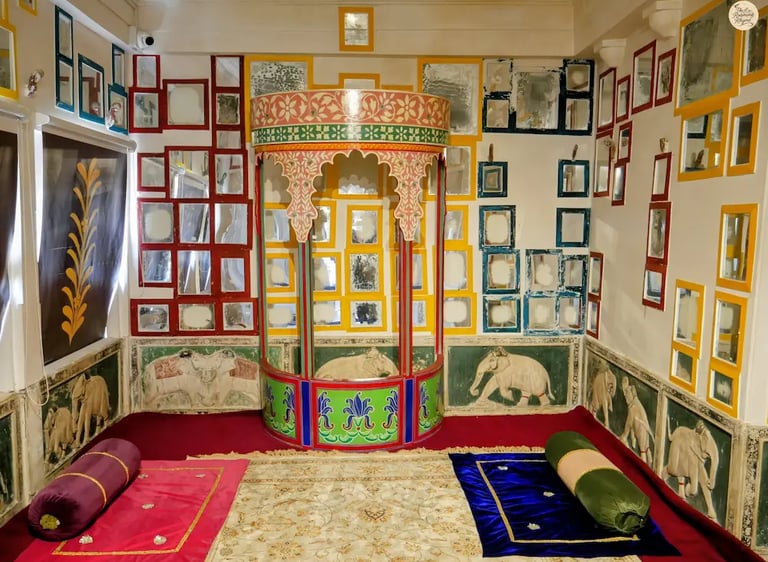
Mirrors and memories in Zenana Mahal.
Sculpture Gallery
A collection of temple carvings from the 7th–17th centuries, each piece carrying a slice of ancient art.
Musical Instruments Gallery
Instruments once played in royal courts — drums, strings, flutes — filling the space with a quiet memory of music.
Jas Prakash
A gallery that shows how the palace expanded over centuries through models, drawings, and visual stories.
Bhagwat Prakash Gallery
A display of Mewar School paintings — colorful, detailed, and full of stories of court life and devotion.
Textile & Palanquin Galleries
Royal clothes, embroidered fabrics, and ornate palanquins once used to carry kings and queens through the city.
Silver Gallery
A shining finale — silver items used in royal ceremonies, adding a final touch of grandeur to your museum walk.
🕒 City Palace Udaipur Timings & Entry Fee
Timings: The museum is open daily from 9:30 AM to 5:30 PM, while the palace complex remains open from 9:30 AM to 7:30 PM.
Entry Fee: Museum entry costs ₹300 per adult and ₹100 for children (5–12 years) and students with valid ID; palace complex entry is ₹30 per adult and ₹15 per child, with additional charges of ₹250 for photography and ₹500 for videography.
Boat Ride on Lake Pichola – Drifting Toward the Magical Jagmandir Palace
Stepping out of the City Palace, a small walkway gently leads you to the boating point — as if the palace nudges you toward the water. Lake Pichola, born in 1362, opens like a silver mirror holding the soul of the city. As your shared boat drifts forward, the lake becomes its own Udaipur sightseeing story — palaces floating like dreams, old ghats humming with life, havelis watching centuries pass in soft silence.
The hour-long ride is slow, soothing, and perfect for travelers seeking the calmer side of Udaipur activities. In the clear daylight, domes glow, white facades shimmer, and the water glints under the open sky. Nothing rushed, nothing loud — just the city unfolding at its own gentle pace. For couples, it’s one of the best things to do in Udaipur for a romantic moment; for families, it’s a quiet, memorable break from the crowds.
🕒 Boat Ride on lake Pichola Timings & Fee
Timings: Daily 10:00 AM – 6:00 PM.
Fee: Boat rides cost ₹400 for adults and ₹200 for children, while sunset boat rides are priced at ₹700 for adults and ₹400 for children.
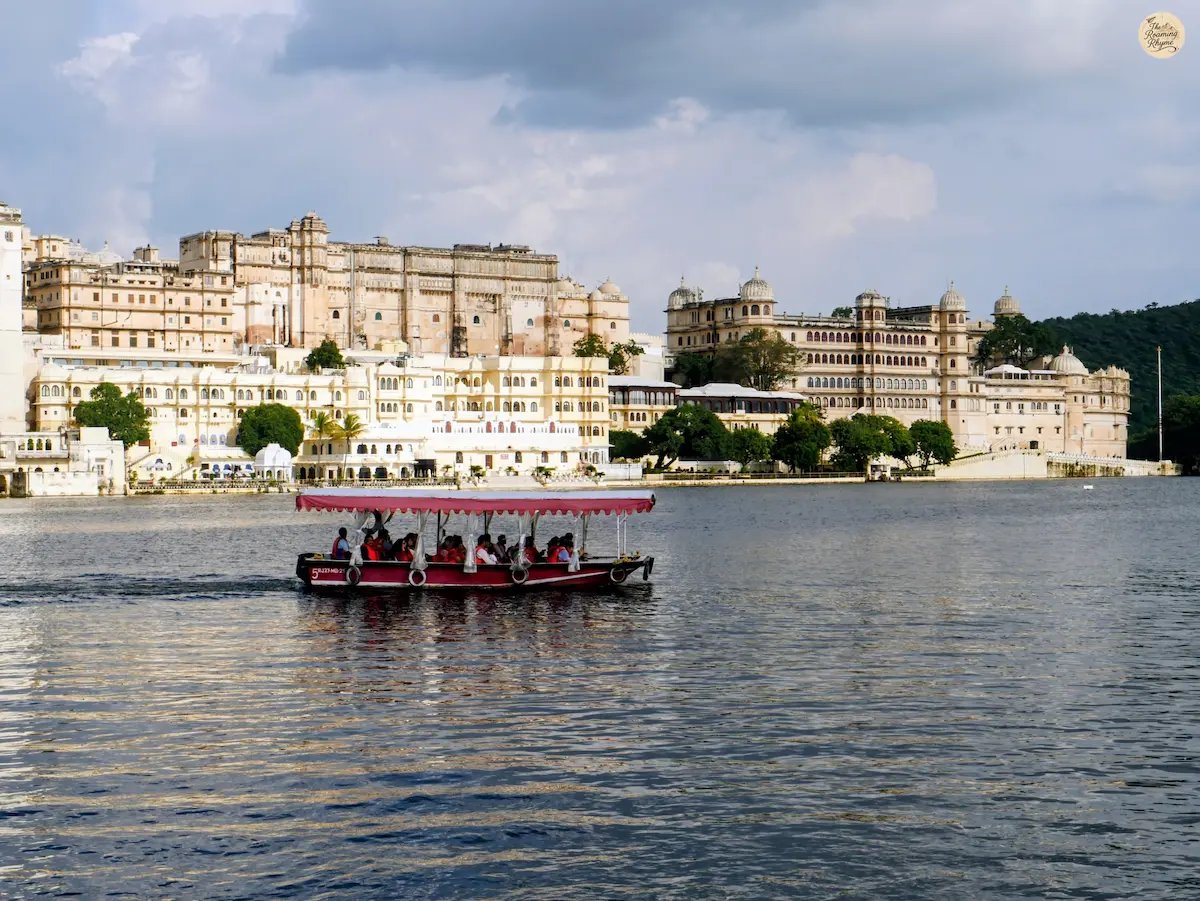
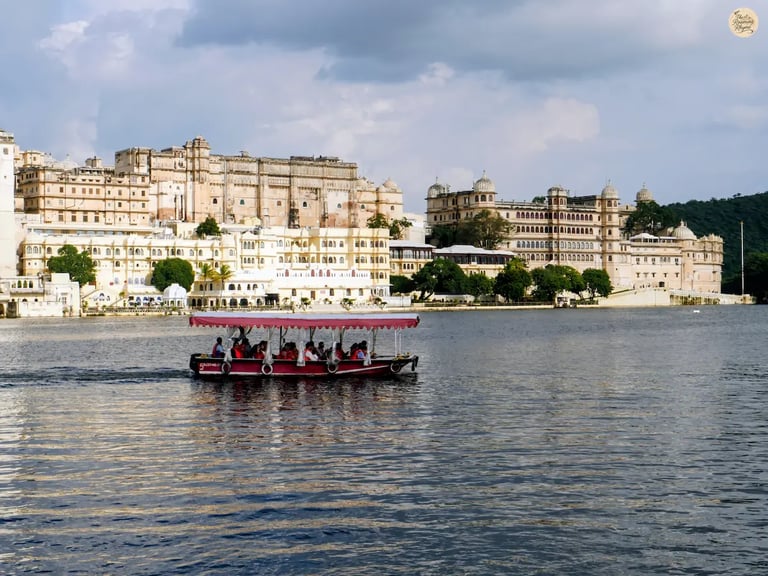
Glide through calm waters with palace views.
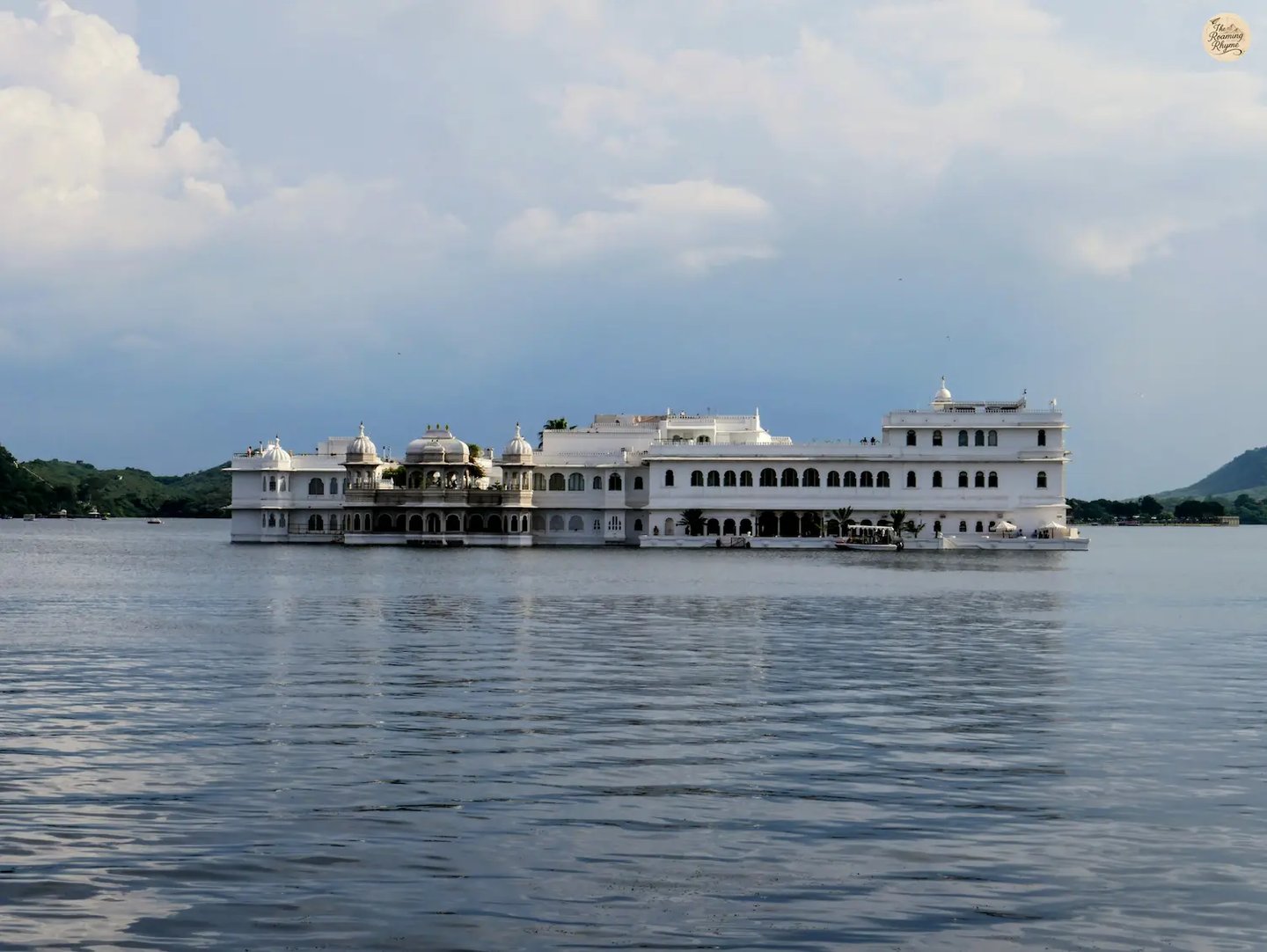
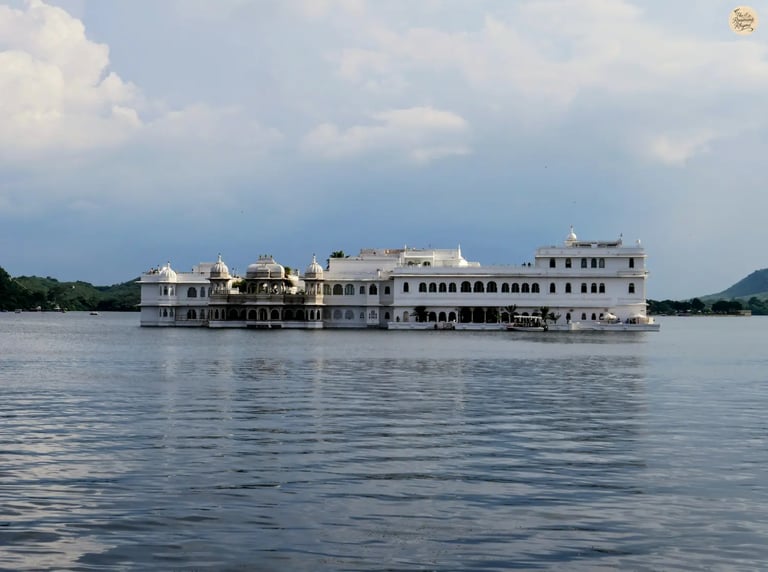
Taj Lake Palace - Lake Pichhola cradles a royal jewel.
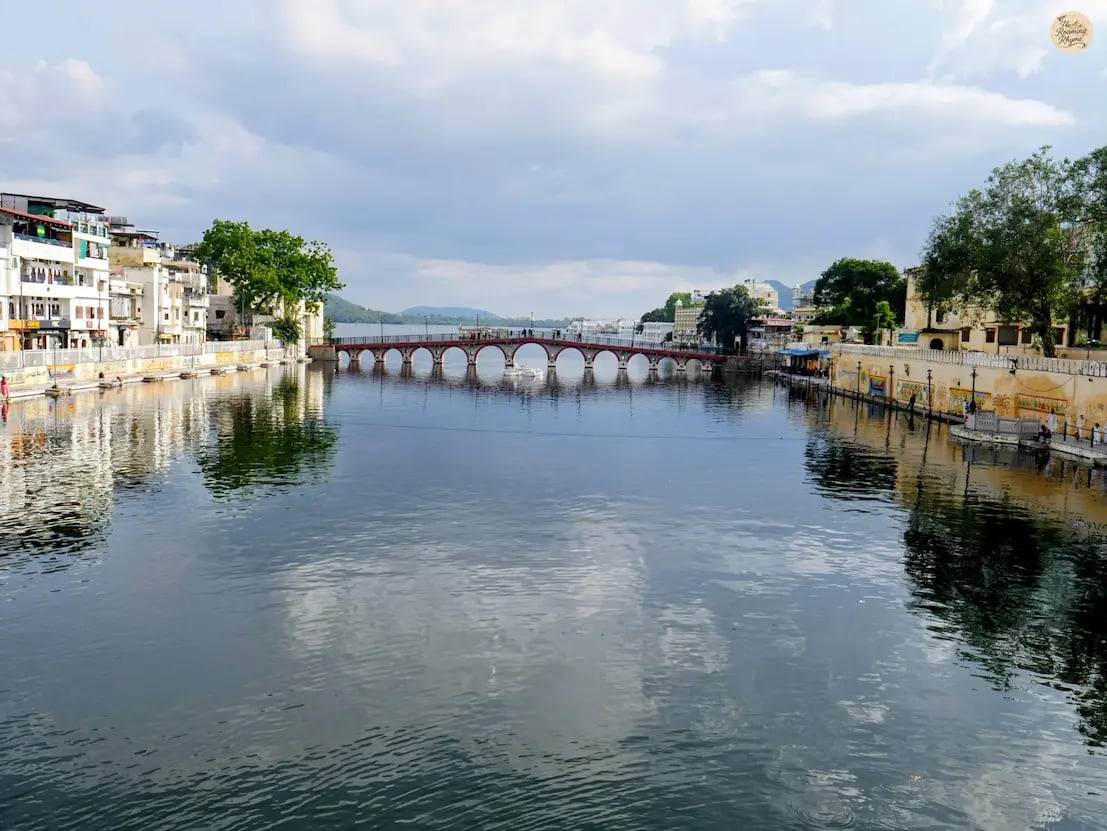
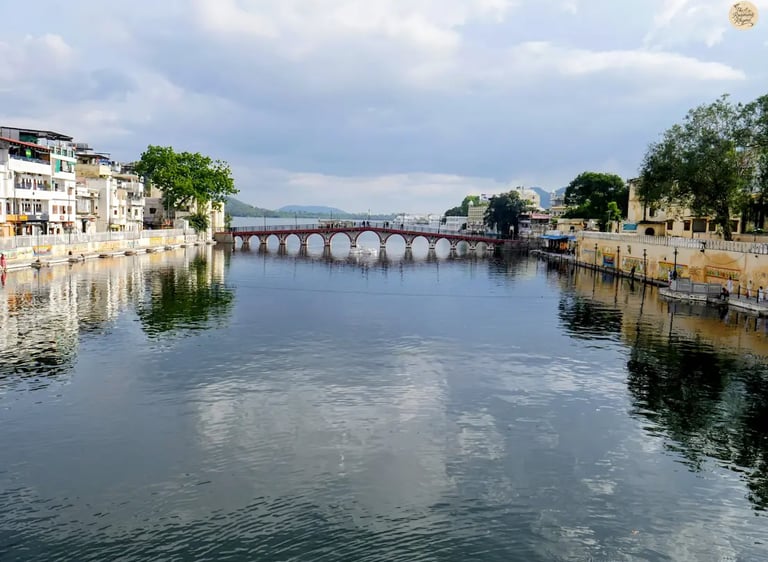
Stone arches floating above calm lake waters.
Arrival at Jag Mandir Island Palace
Your boat glides to Jag Mandir, a 17th-century island palace rising from the lake in marble and honey-colored sandstone. Elephant statues stand guard at the entrance, frozen in timeless welcome. Inside, grand halls, shaded courtyards, and breezy pavilions whisper stories of royal secrets and Mughal refuge — including the time Shah Jahan↗ found shelter here, a moment that later inspired the Taj Mahal↗.
Though Jag Mandir now functions as a Heritage Hotel↗, visitors are free to wander for about an hour — exploring sculpted arches, serene gardens, and verandas overlooking Lake Pichola. The blend of Rajasthani charm and imperial elegance makes it one of the loveliest places to visit in Udaipur, especially for photography lovers and slow travelers.
Your guide-cum-boatman adds warmth to the journey, sharing legends, anecdotes, and bits of Mewar history that bring each corner of the island to life. By the time you sail back, Lake Pichola feels less like water and more like a living chapter of Udaipur heritage sites — a soft, shimmering memory of your Udaipur tour.
Ambrai Ghat — Where Udaipur Slows Down
After the grand halls and winding stairways of the City Palace, your senses will crave a little calm — and Ambrai Ghat is the perfect place to settle into it. Resting quietly along Lake Pichola, this once-humble Manjhi Ghat has grown into a beloved escape, especially for the younger crowd of Udaipur who come seeking breezes, stillness, and that soft Old City charm no Udaipur travel guide can truly capture.
Reaching Ambrai feels like stepping into a gentler world. You move through narrow lanes, tiny shops, and footpaths only rickshaws dare to navigate — until suddenly the city opens up to the lake. Here, the wind skims across the water, pigeons wheel overhead, and little waves tap the old stone steps in a soothing, unhurried rhythm.
The views from Ambrai are pure magic —
the Lake Palace glowing like a floating pearl,
Jag Mandir drifting like marble poetry,
and the City Palace rising in royal silhouette.
It’s the kind of frame photographers chase and travelers tuck into memory forever. No list of Udaipur attractions feels complete without this place.
Sitting on the tip of a quiet peninsula, Ambrai is breezy, peaceful, and perfect for simply doing nothing — one of the best things to do in Udaipur at a relaxed pace. Let the lake cool the air around you, watch the colors shift across the water, and slow down to the gentle hum of everyday life. Ambrai isn’t just another spot on the map; it’s a pause button in your Udaipur tour, a moment where the city whispers instead of dazzles.
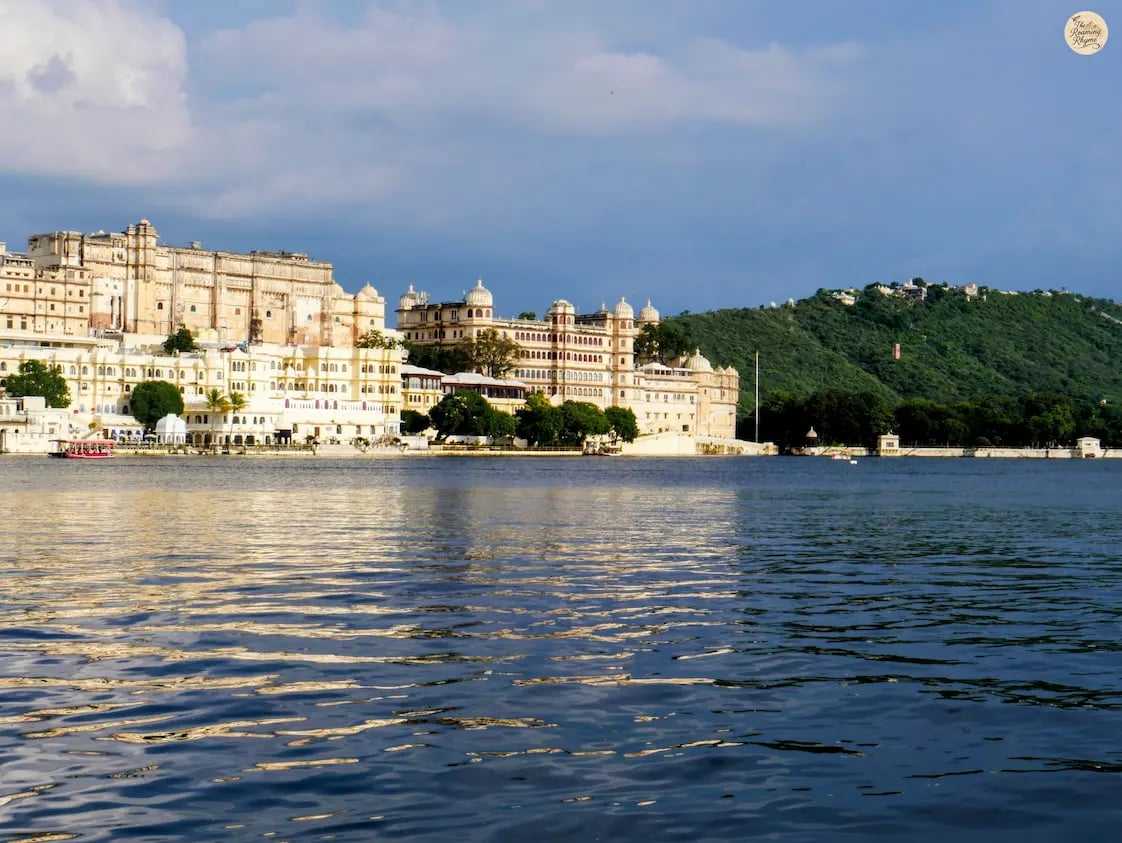
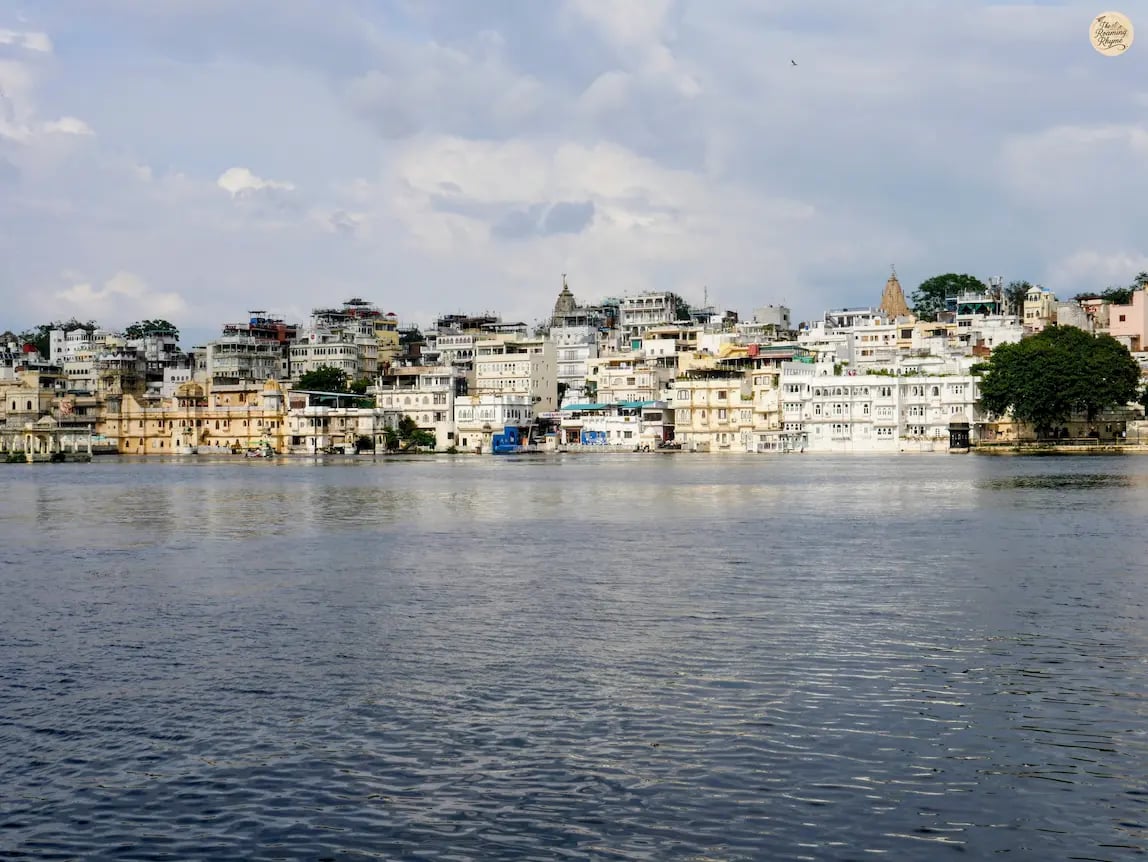
City Palace shimmers softly across Lake Pichhola.
Ambrai views of Udaipur’s timeless lakeside charm.
Gangaur Ghat — The Beating Heart of Old Udaipur
From Ambrai, wander toward Gangaur Ghat, a lakeside corner where the culture, color, and pulse of Old Udaipur come together in one soft sweep. Set right in the Old City’s core, the ghat opens into carved stone steps dipping into Lake Pichola↗, surrounded by temples, vintage havelis, and the historic Bagore ki Haveli↗ standing guard beside it. The vibe is simple, steady, and soulful — locals lounging on the steps, travelers soaking in the calm, and the lake mirroring the slow rhythm of everyday Udaipur.
Most days, the ghat is peaceful. But during festivals — Gangaur↗, Holi↗, Navratri↗, Ganesh Chaturthi↗ — the whole space transforms into a vibrant cultural arena. Drums, rituals, processions, and idol immersions turn the steps into a living stage. It’s no wonder the spot appears in films like Yeh Jawaani Hai Deewani↗ and Ram Leela↗ — its charm feels instantly cinematic.
Come in the late afternoon for the softest light. The golden sun settles over the water, making it one of the best places to visit in Udaipur for a serene sunset. As dusk slips in and lamps glow across the lake, just walk a few steps to Bagore ki Haveli for the evening show. Watching the sunset at Gangaur Ghat and then drifting into music, dance, and puppet performances at the Haveli creates the perfect arc — from calm to celebration, and a beautiful end to your Old City trail.
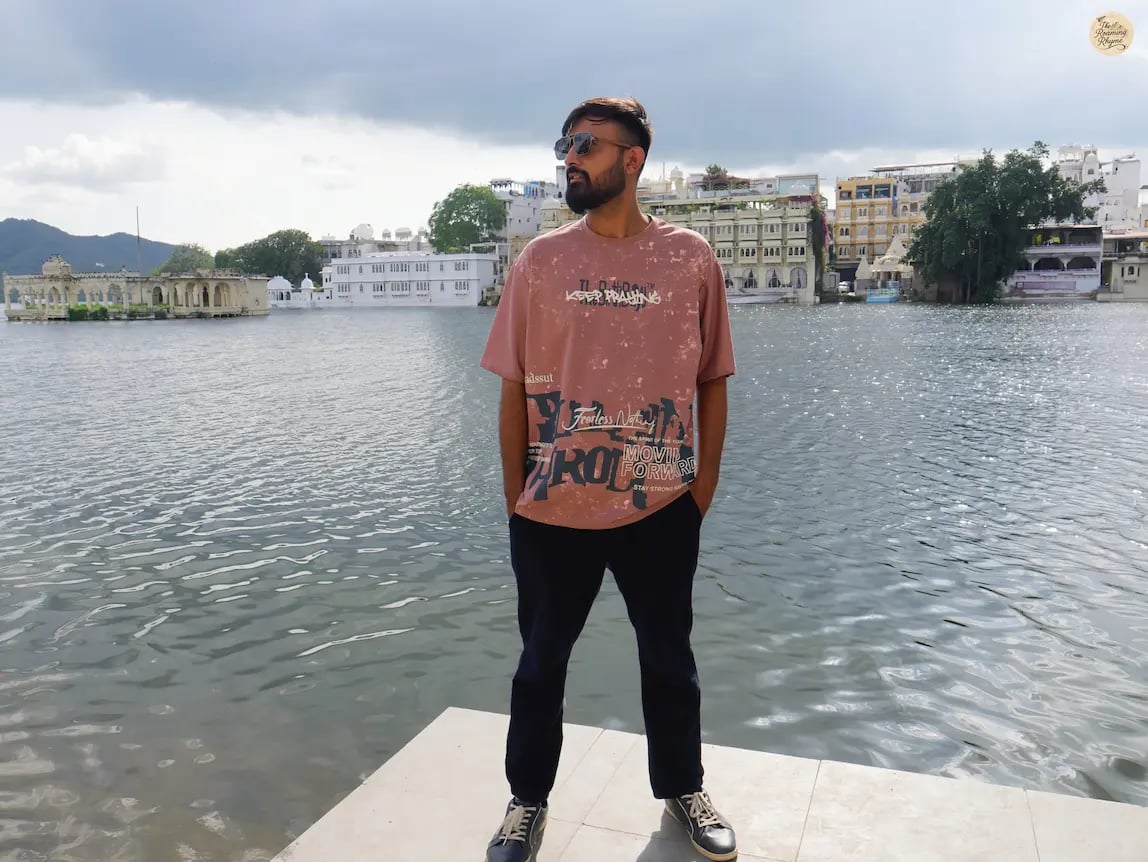
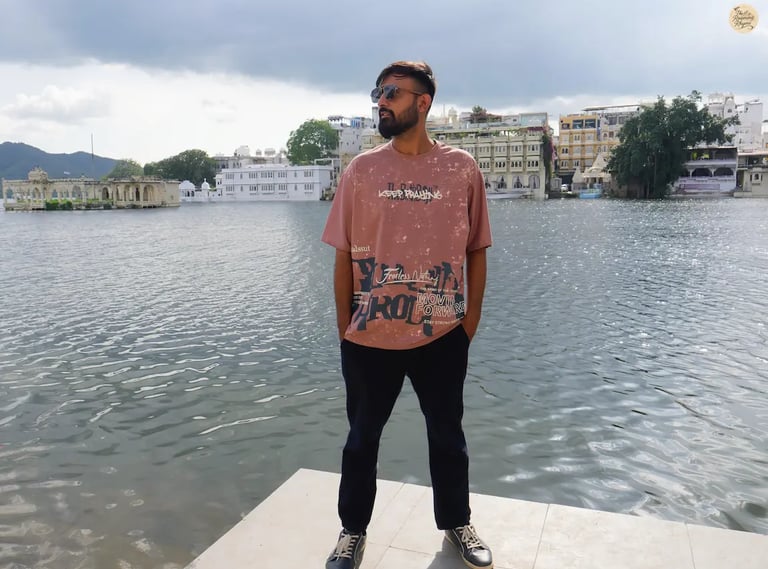
Soft skies, gentle waves, timeless Udaipur charm.
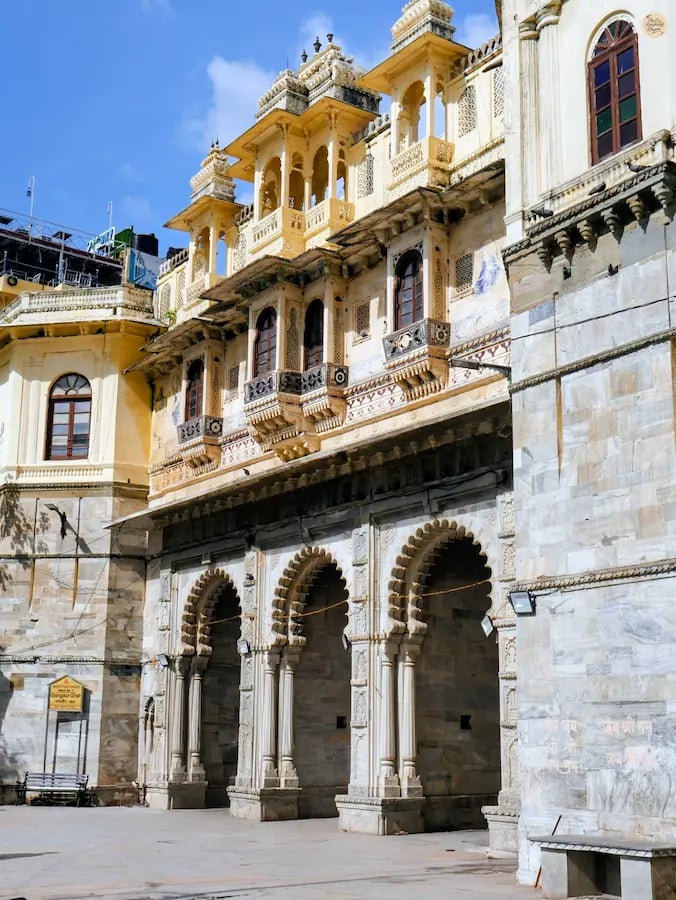
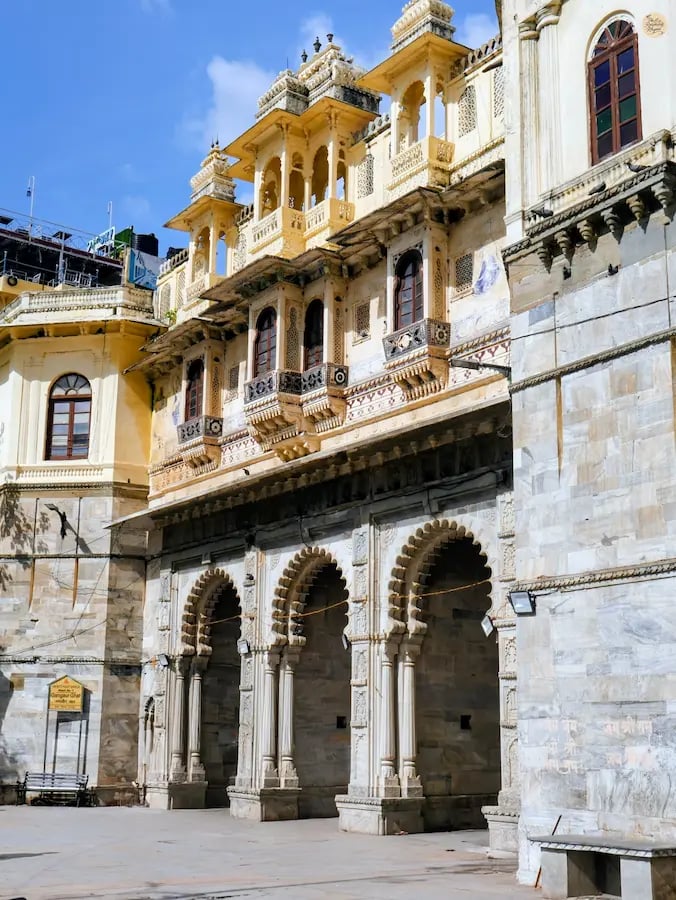
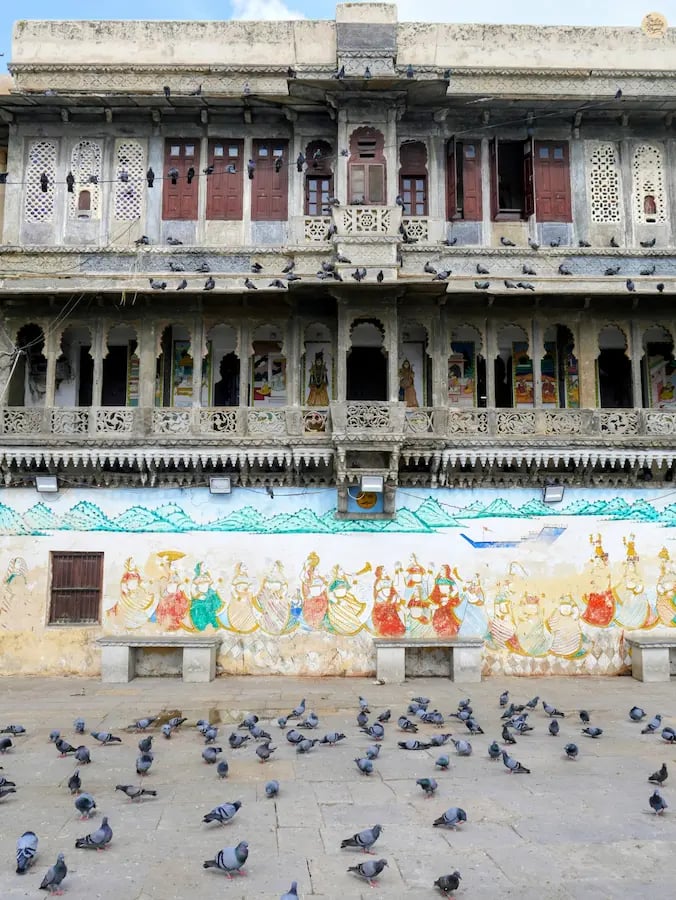
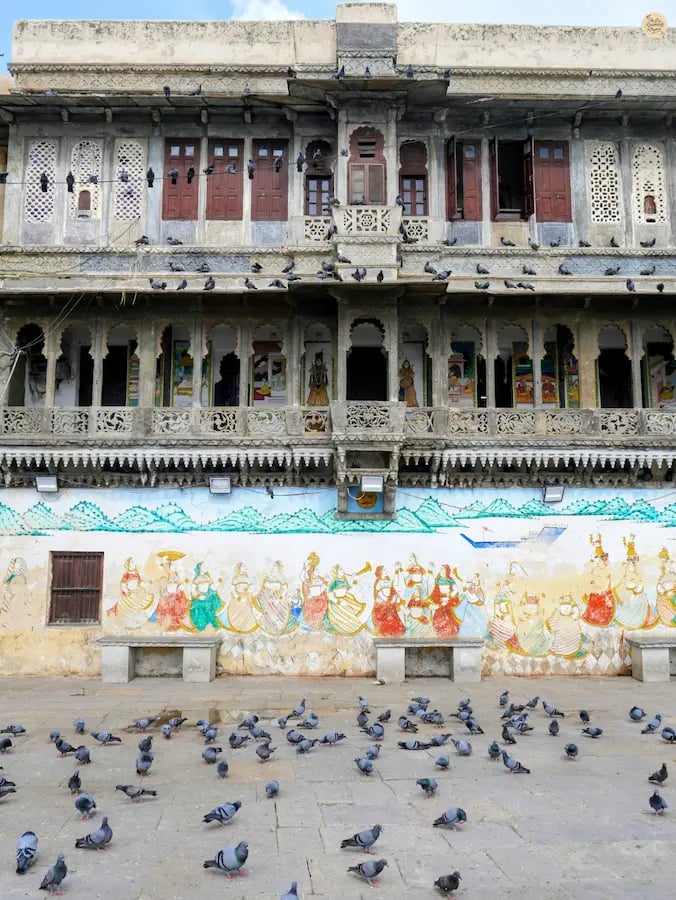
Udaipur’s heart beats quietly at Gangaur Ghat.
Old havelis watch as wings take flight.
Bagore Ki Haveli – An Evening of Rajasthani Magic
After soaking in the quiet charm of Gangaur Ghat, step next door into Bagore Ki Haveli, an 18th-century lakeside mansion that lights up every evening with the colours and sounds of Rajasthan. Built by Amar Chand Badwa, the prime minister of Mewar, and later expanded by Maharaj Shakti Singh of Bagore, the haveli still glows with its royal past — carved archways, ornate jharokhas, airy courtyards, and over a hundred rooms filled with traditional costumes, jewellery, paintings, manuscripts, and everyday treasures from another era.
But when the sun dips, Bagore Ki Haveli becomes more than a museum. Its central courtyard turns into a warm, open-air amphitheatre for the Dharohar Dance Show↗ — one of the most popular cultural experiences recommended in any Udaipur travel guide. The atmosphere feels both electric and intimate as musicians tune their instruments and performers in sparkling ghagras prepare to weave stories through rhythm and motion.
The show brings Rajasthan’s soul to life:
• The graceful Ghoomar↗, spinning like desert wind.
• The hypnotic Kalbeliya↗, performed by the traditional snake-charmer community.
• The stunning Bhavai↗, where dancers balance stacked pots with impossible poise.
• The glowing Chari Dance↗, lit with flaming pots.
• And the lively Terah Taali↗, with cymbals ringing on every limb.
There’s also a charming puppet performance — playful, expressive, and packed with the storytelling spirit Rajasthan is loved for. Together, the dances recreate festivals, rituals, royal celebrations, and folk traditions that have shaped the state for generations.
Bagore Ki Haveli isn’t just another stop on your Udaipur tour — it’s an experience that pulls you straight into Rajasthan’s artistic heartbeat. From its historic architecture to the vibrant nightly performances, it’s the perfect way to end your day with colour, music, and magic that linger long after the final drumbeat.
🕒 Bagore Ki Haveli Udaipur Timings & Entry Fee
Timings: The Museum is open daily from 9:30 am to 5:30 pm, while the Dharohar Dance Show takes place from 7:00 pm to 8:00 pm, with show tickets available at the ticket counter starting from 6:15 pm.
Entry Fee: The Museum entry fee is ₹60 per person for domestic adults, ₹30 for domestic children (aged 5–12), ₹100 for foreign adults, ₹50 for foreign children, and ₹50 for camera or video use. The Dharohar Dance Show entry fee is ₹90 per person for Indians, ₹45 for children, ₹150 for foreign adults, ₹75 for foreign children, and ₹150 for any camera.
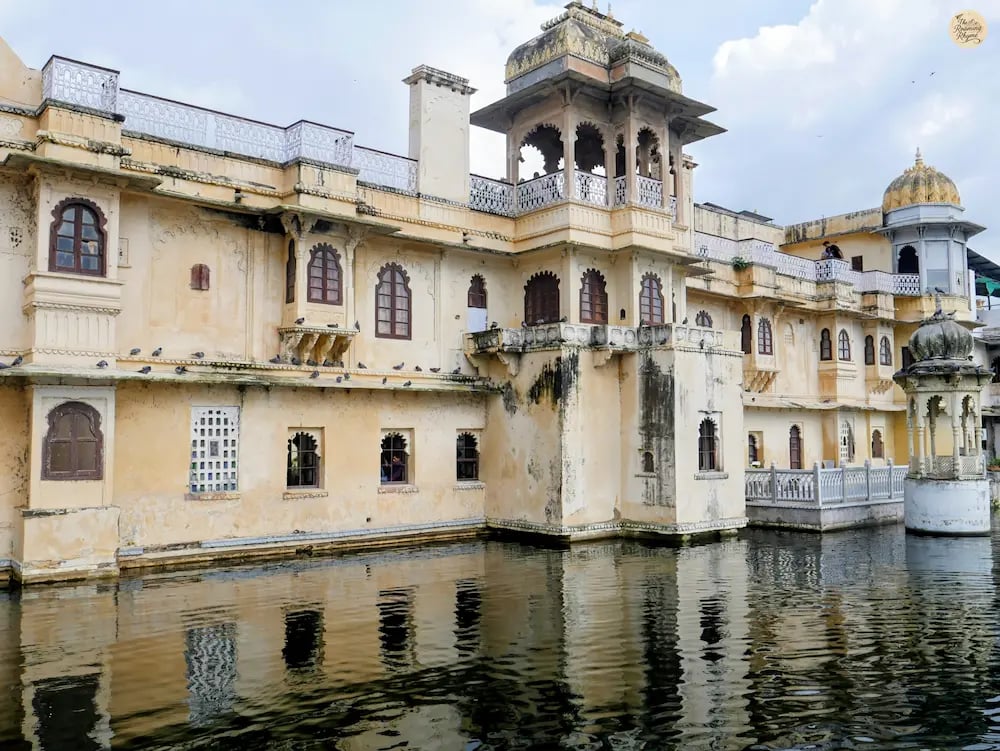
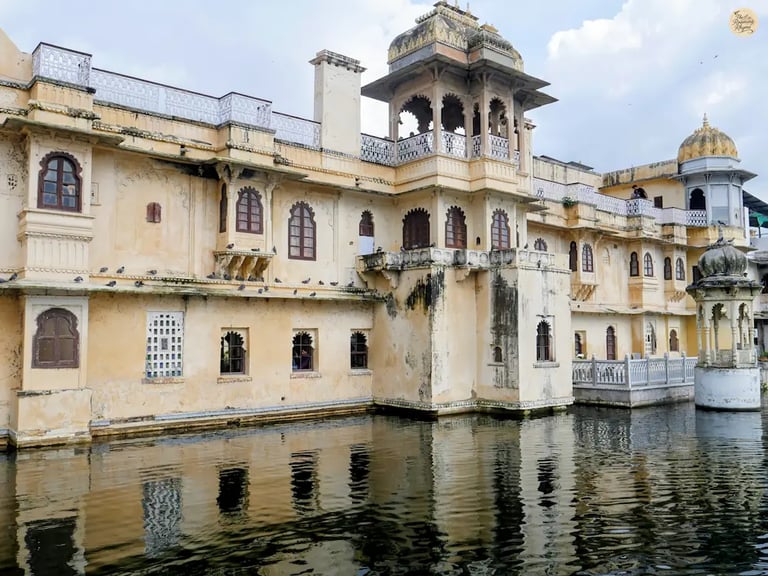
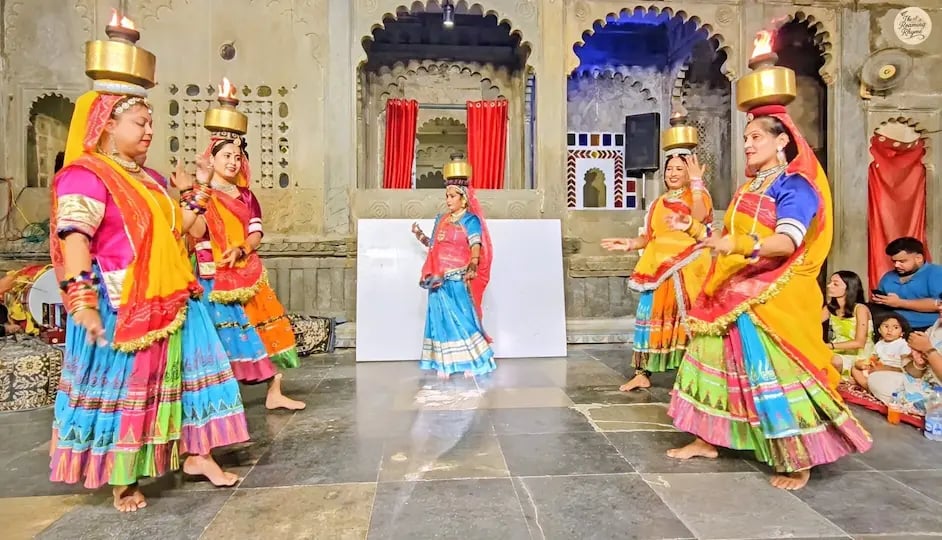
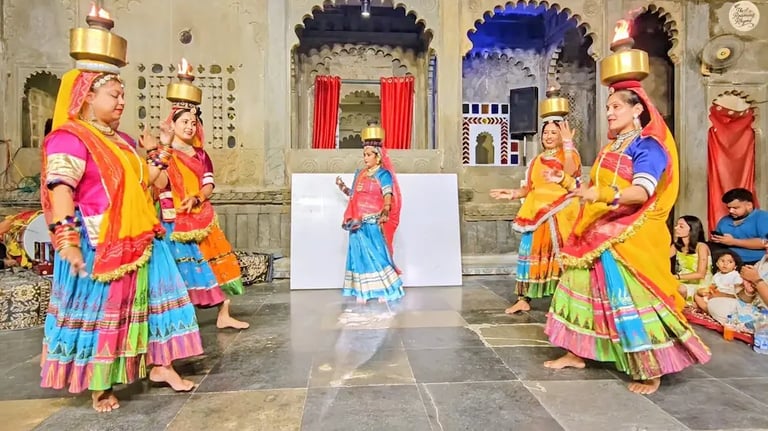
Bagore Ki Haveli — history resting by the rippling blue.
Chari dance — firelight, rhythm, and royal grace.
Late Evening Stroll in Udaipur’s Old City
After the vibrant cultural show at Bagore Ki Haveli, drift into the Old City of Udaipur for a slow, soothing night walk. The narrow lanes glow softly, old havelis stand in quiet pride, and the gentle hum of local life fills the air. Take your time wandering through tiny shops selling wooden artefacts, colourful puppets, Bandhani Sarees↗, leather bags, Miniature Paintings↗, fridge magnets, and Rajasthan-inspired souvenirs — the kind of finds every Udaipur travel guide loves to hint at.
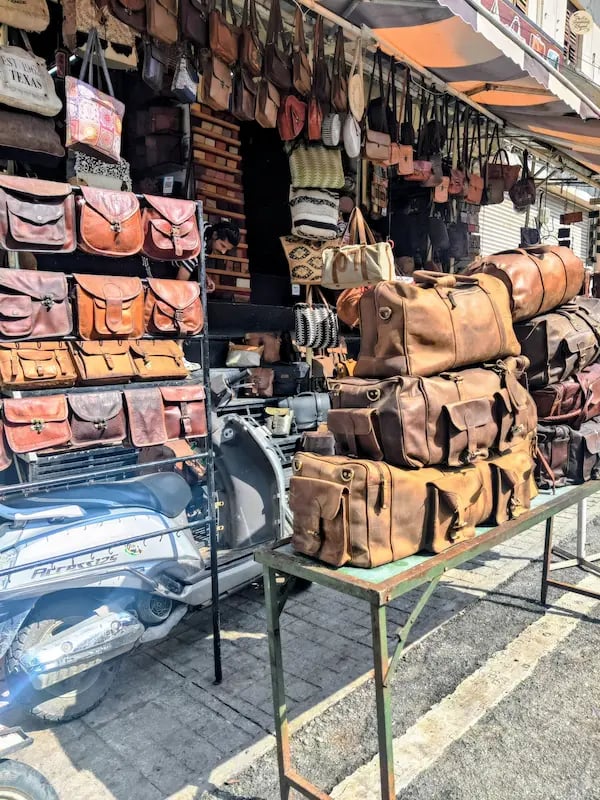
Handmade leather treasures glowing in a quiet market lane.
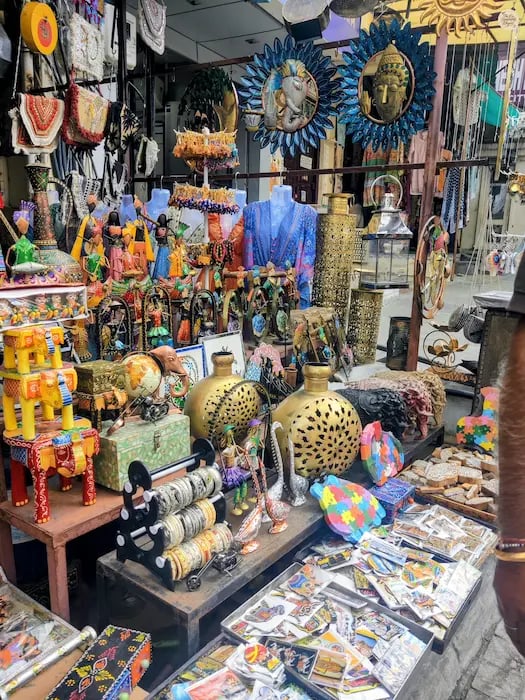
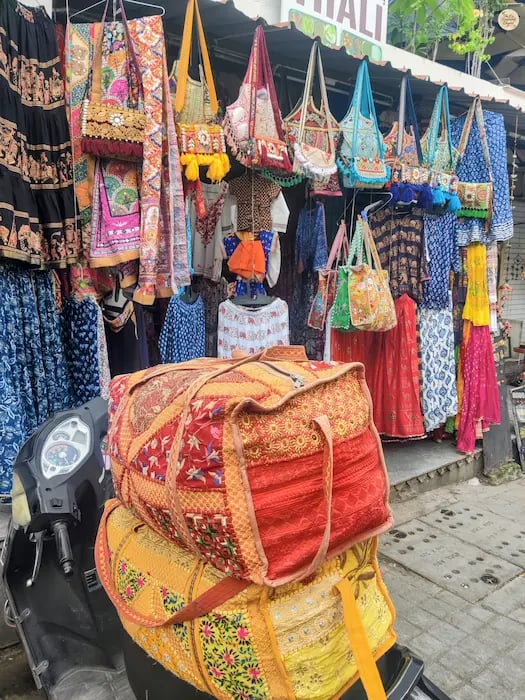
Souvenir corners where Udaipur’s stories wait to be taken home.
Bandhej and leheriya — Udaipur’s waves of color in cloth.
As hunger sets in, climb up to one of the many Rooftop Restaurants↗ overlooking Lake Pichola. With the City Palace shimmering across the water and the lake catching every glint of light, dinner here feels like dining inside a postcard. It’s the perfect way to unwind after an evening of dance, music, and heritage.
Once you’re done exploring the lively lanes and lakeside rooftops, head back to your stay and rest well — another day of Udaipur attractions and hidden corners awaits you in the morning.
Day 2 — Lakes, Viewpoints & Udaipur's Breezy Side
Start your morning with a gentle ride up to Karni Mata Temple↗, where the whole of Udaipur opens beneath you — lakes, palaces, and the slow-spreading glow of a new day. Then glide down to Doodh Talai↗, a peaceful lakeside stretch perfect for a soft stroll, some early quiet, and postcard views of Lake Pichola↗.
Move next toward Fateh Sagar Lake↗, one of the city’s most loved hangout spots. Here, make your way to Moti Magri↗, where Maharana Pratap’s proud memorial stands tall, watching over the shimmering blue waters — a must-see for anyone tracing Udaipur’s heritage sites.
From there, step into the cool greenery of Saheliyon Ki Bari↗. Built for the royal maidens, this garden of fountains, lotus pools, rain-fed sounds, and crafted marble corners brings a calm pause to your Udaipur tour.
End your day at Sukhadiya Circle↗, where fountain lights shimmer, street food stalls come alive, and the cheerful local vibe wraps your evening in easy comfort — the perfect relaxed finish before heading back to rest for the adventures ahead.
Karni Mata Temple – Ropeway Ride & Panoramic View
Begin Day 2 with a sunrise climb to Karni Mata Temple, perched atop the Machla Magra Hills above Doodh Talai. Whether you take on the 1,050 steps or float up in Rajasthan’s First Ropeway, the reward stays the same — one of the most breathtaking views in all of Udaipur sightseeing. From the top, the city spreads out like a soft watercolor: Lake Pichola↗ shimmering below, the City Palace↗ glowing in early gold, whitewashed homes packed like pearls, and the green ribbon of Gulab Bagh stretching into the distance.
Built between 1620–1628 by Maharana Karan Singh, the temple once served as a protective watch over Udaipur’s expanding southern edge. After years of fading into silence, it was beautifully revived in 1997 and now welcomes visitors with scenic viewpoints, resting spots, and shaded corners along the climb.
If you choose to walk, the ascent is peaceful — lookout points, chirping birds, and glimpses of an old hunting hideout tucked into the hillside. If you opt for the ropeway, the four-minute ride in its colorful cabins gives you a thrilling bird’s-eye sweep of lakes, palaces, and the winding lanes of the Old City.
Quiet, panoramic, and washed in the first golden light — Karni Mata Temple is the perfect place to begin your Udaipur tour, setting the tone for a day filled with views, history, and soft morning magic.
🕒 Karni Mata Temple Udaipur Timings & Entry Fee
Timings: Daily 4:00 AM – 7:30 PM (with specific darshan slots).
Entry Fee: Temple entry is usually free; the ropeway (cable car) to reach it has a fee (around ₹72 for Indian adults, ₹300 for foreigners, operating separately from about 9 AM to 9 PM.
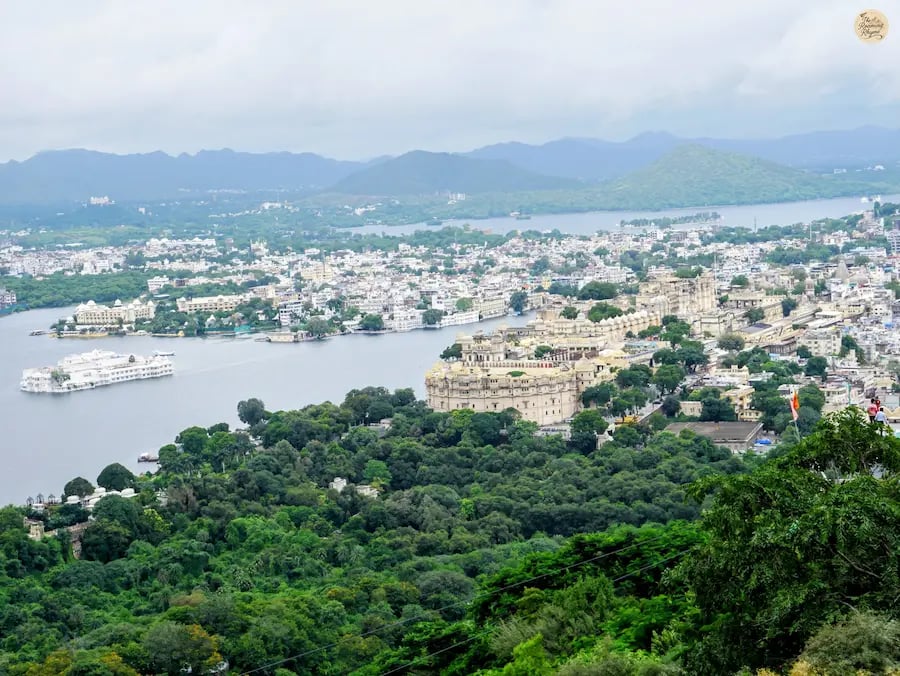
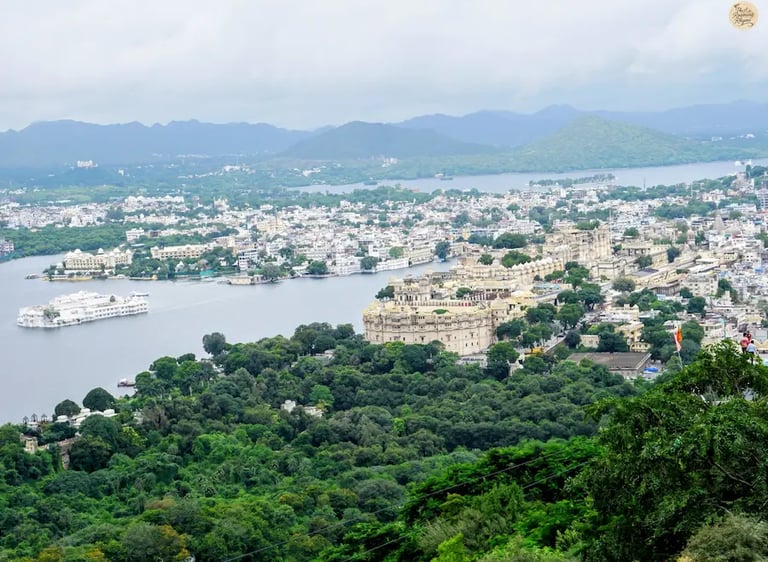
Lake Pichola, City Palace, Fateh Sagar — one perfect frame.
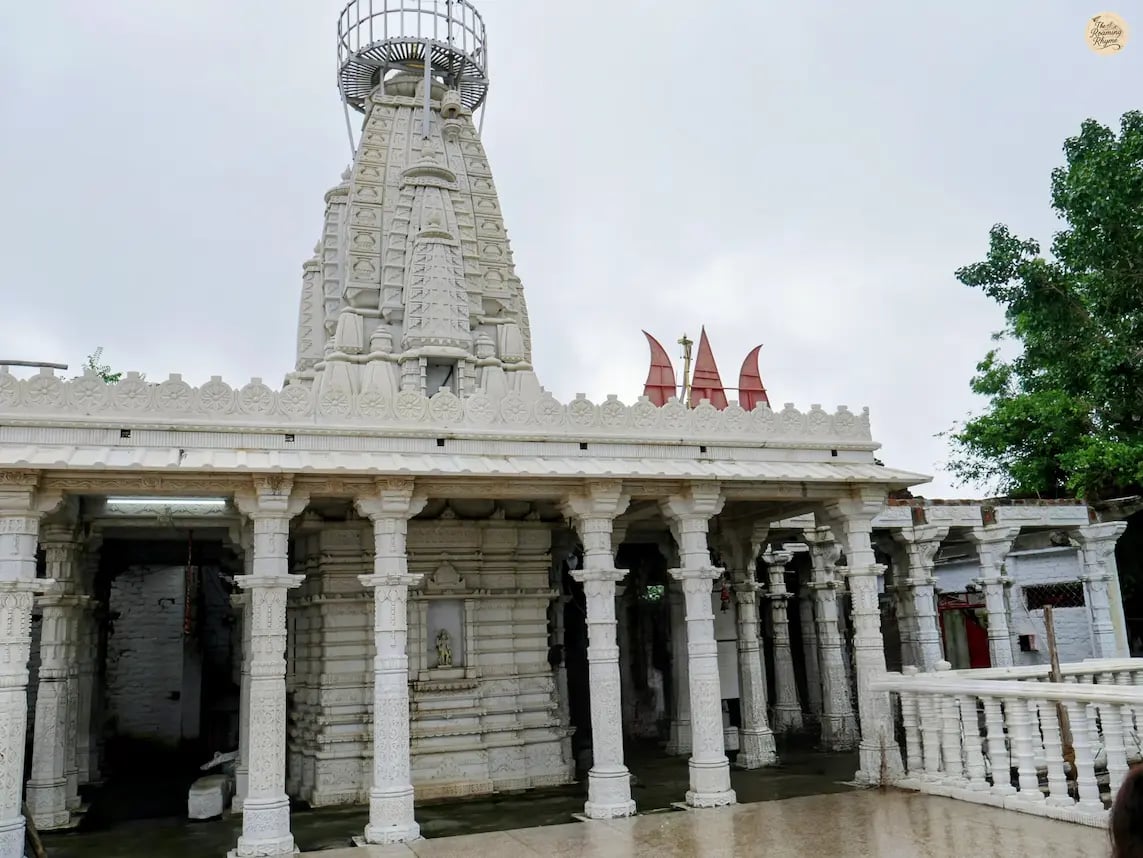
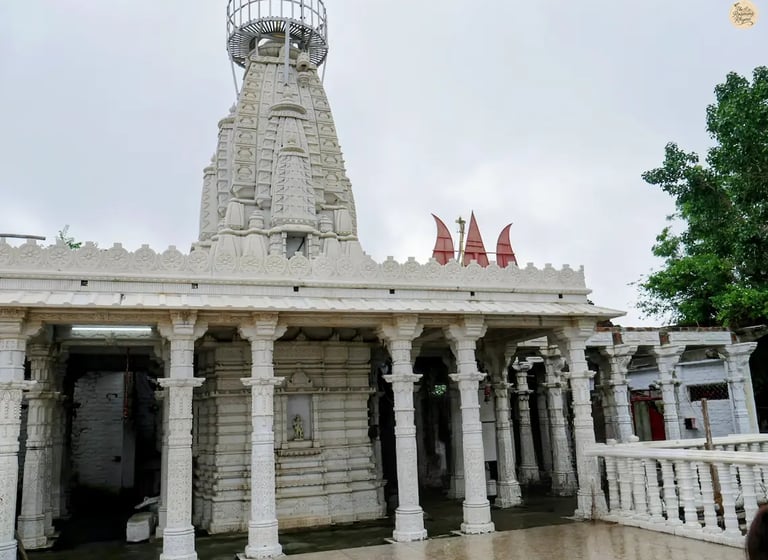
Karni Mata Temple - White marble, hilltop peace.
Doodh Talai – A Quiet Corner by Udaipur's Lakes
At the foot of Karni Mata Hill rests Doodh Talai—a petite, peaceful lake that often slips under the radar in Udaipur’s lake-rich landscape. Its name, the “Pond of Milk,” comes from a playful old folklore: a king once asked his people to fill the pond with milk, but each villager quietly thought, “One pot of water won’t matter in a lake full of milk.” By morning, the king found only water shimmering back at him. The tale stuck, and the lake has carried the name Doodh Talai ever since.
Today, the lake’s calm charm is paired with beautifully kept gardens, carved jharokhas, and quiet walkways—an ideal spot to unwind after your descent from Karni Mata Temple↗. On either side, Manikya Lal Verma Garden and Deen Dayal Upadhyay Park offer elevated views of Doodh Talai and Lake Pichola. Manikya Lal Verma Garden, opened in 1995, is loved for its sweeping panoramas, while the adjacent Deen Dayal Upadhyay park is home to Rajasthan’s First Musical Fountain, a small but delightful local attraction.
Small in size yet rich in mood, Doodh Talai blends lakeside stillness, light folklore, and scenic viewpoints—making it a refreshing pause before diving deeper into Udaipur’s major sights.
🕒 Doodh Talai Udaipur Timings & Entry Fee
Timings: Daily 9:00 AM – 10:00 PM.
Entry Fee: ₹20 per person (Indians), ₹30 per person /Foreigners) for the Garden Area
Note: Musical Fountain Timings are seasonal and generally run from around 6:30 PM/7:00 PM to 8:30 PM.
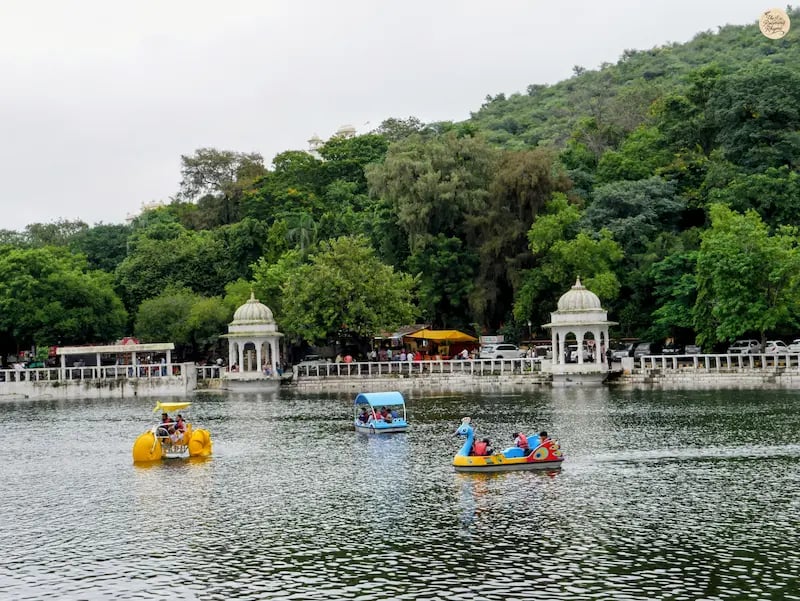
Dudh Talai - Udaipur’s little lake of fun.
Fateh Sagar Lake – Lakeside Charm & Leisurely Breeze
Your next stop is the lively, much-loved Fateh Sagar Lake—one of Udaipur’s most iconic stretches of sparkling blue. First built by Maharana Jai Singh in 1678 and later expanded by Maharana Fateh Singh, the lake once acted as a crucial water source during harsh summers. Today, it stands as Udaipur’s favourite hangout, loved equally by locals and travellers.
Fateh Sagar is best experienced unhurried. Walk along its curving promenade, breathe in the cool breeze rolling off the water, and take in the Aravalli hills↗ rising gently in the distance. The lakeside food stalls add their own flavour—from spicy snacks to the must-try Kulhad Coffee, a small ritual for anyone arriving here. Near the circuit house, a quiet green patch offers the perfect pause to sit, relax, and watch the lake shift through soft afternoon light.
For a bit of adventure, hop on a boat ride—whether the slow scenic option or the quick, thrilling motorboats. The lake is dotted with three islands: Nehru Park, the largest and most popular for families; a second island with a public park and graceful water-jet fountain; and the third, home to the Udaipur Solar Observatory, one of Asia’s finest.
With its breezy mood, scenic views, and easy mix of leisure and fun, Fateh Sagar Lake is a must-visit—one of those places that capture the youthful, fresh spirit of Udaipur.
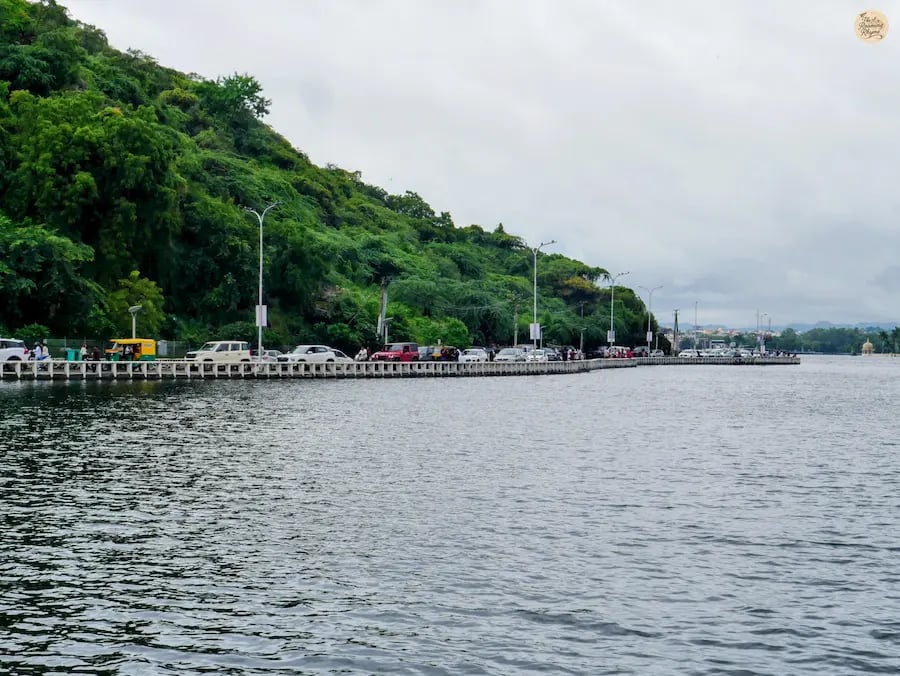
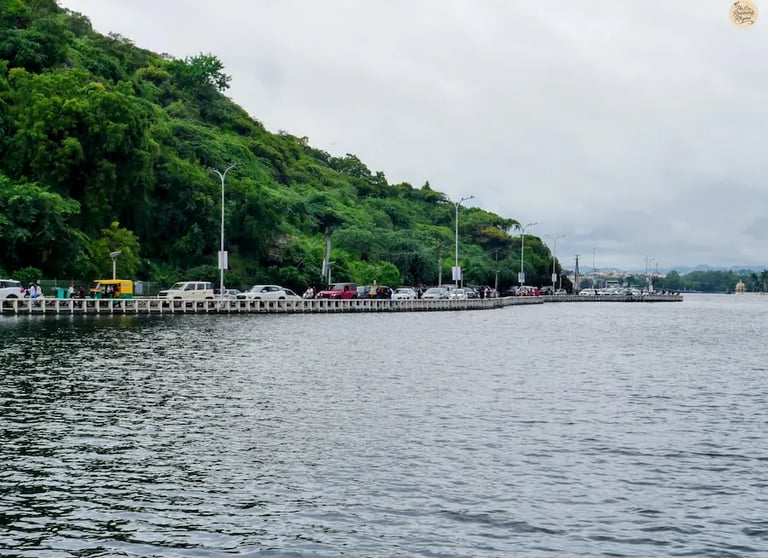
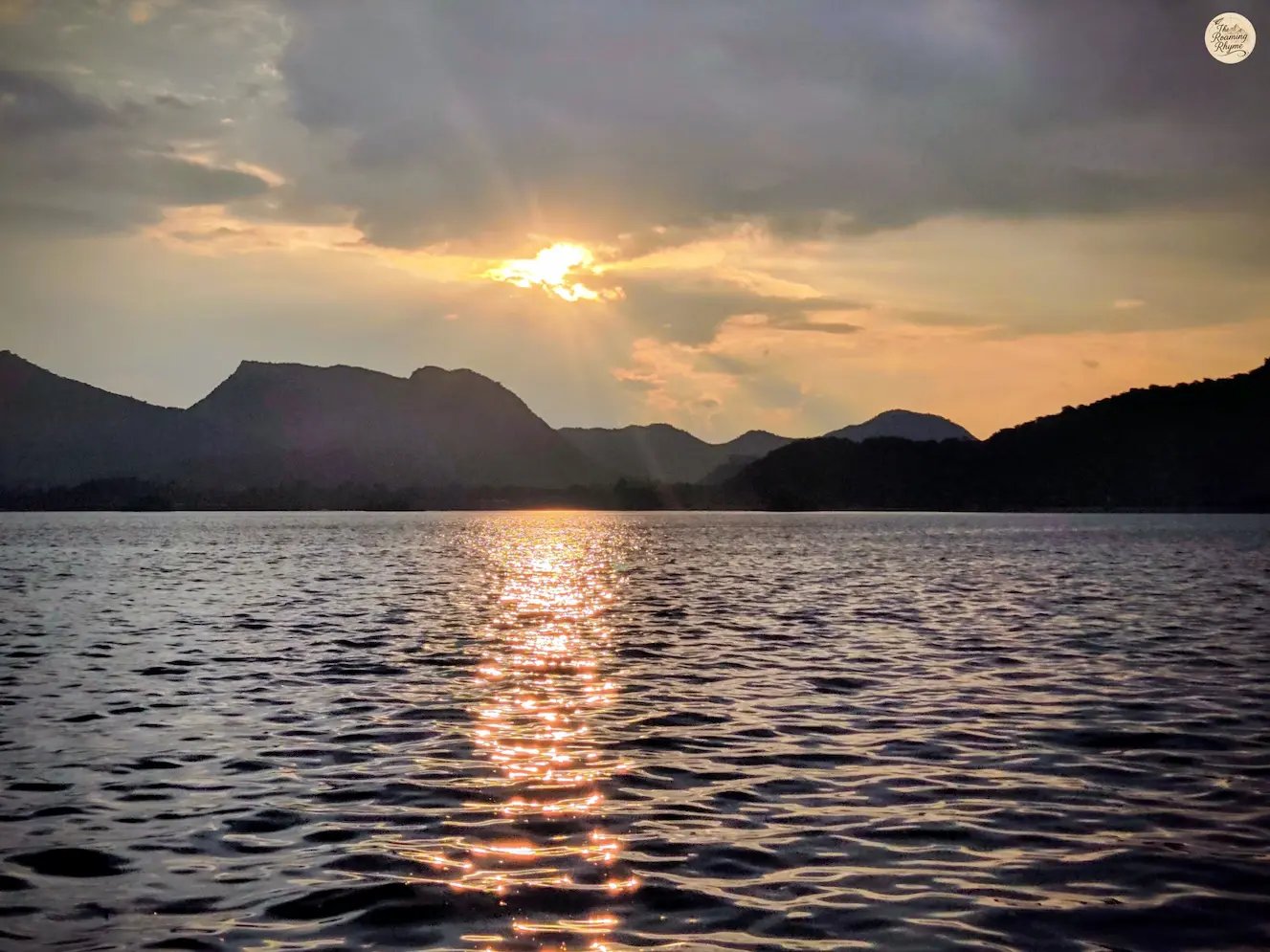
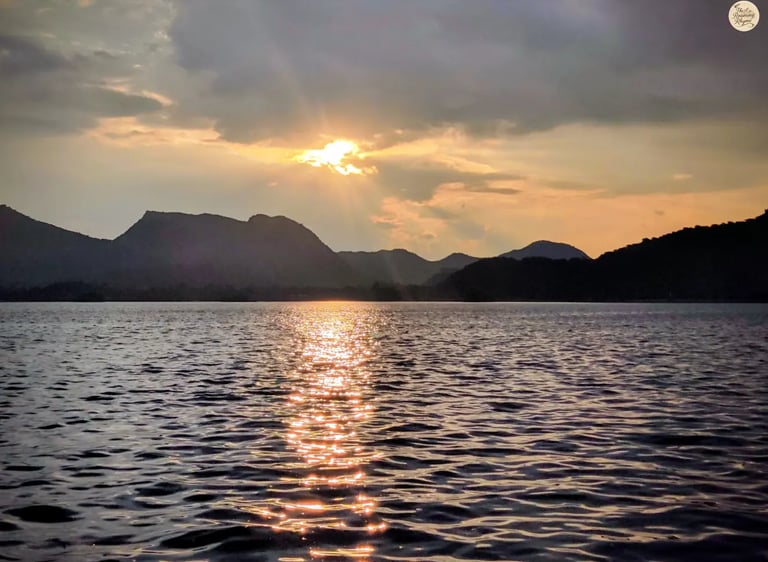
Curving lakeside walkway at Fateh Sagar Lake, lined with railings and scenic views.
Fateh Sagar Lake - Golden glow, quiet flow.
Moti Magri — A Hill of Heroes & Timeless Views
Also known as the Maharana Pratap Memorial, Moti Magri — or Pearl Hill — blends history, emotion, and scenery in a way few places in Udaipur can. Rising above the sparkling waters of Fateh Sagar Lake↗, this hilltop tribute honours the legendary Maharana Pratap↗ and his loyal horse Chetak↗ — a duo whose courage beats at the heart of Rajasthani pride.
To understand Moti Magri’s power, you need to return to the moment that defines it: the Battle of Haldighati (1576)↗. Maharana Pratap, the 13th ruler of Mewar, fought fiercely to protect his kingdom’s independence against Mughal forces. His faithful companion Chetak, wounded and exhausted, still carried him to safety before collapsing — a final act of devotion that has lived on through centuries of folklore.
At the summit, a striking bronze statue freezes this iconic scene in time: Maharana Pratap charging forward on Chetak. Standing before it feels less like viewing a monument and more like meeting a story carved in metal and memory.
Just below rests the compact yet insightful Maharana Pratap Museum↗, featuring:
Dioramas of the Battle of Haldighati
Rajput armour, swords, and shields
Portraits of the Mewar rulers
A detailed model of Chetak in full battle gear
Though small, the gallery is rich with detail, offering a vivid look into Mewar’s warrior traditions.
What elevates Moti Magri further is its sweeping view — calm, wide, and beautifully atmospheric. From the hilltop, Fateh Sagar Lake stretches like a sheet of blue silk, framed by the soft curves of the Aravalli hills. It’s a peaceful retreat and a photographer’s delight.
Visit in the evening if you can: the Light & Sound Show adds a dramatic finale with narration, music, and glowing backdrops that bring Maharana Pratap’s legacy to life.
Moti Magri is more than a viewpoint — it’s a walk through courage, history, and the timeless spirit of Mewar.
🕒 Maharana Pratap Memorial Udaipur Timings & Entry Fee
Timings: Daily 7:30 AM – 9:00 PM.
Entry Fee: The entry fee is ₹150 per person for adults and ₹100 per person for armed forces personnel, senior citizens, students, and children aged 5 to 10 years. The Light & Sound show costs ₹100 per person, with a concessional ticket available at ₹50 per person. Vehicle charges are ₹250 for buses, ₹150 for cars, and ₹50 for two- or three-wheelers.
💡 Note: The Maharana Pratap Memorial Udaipur Light & Sound show timings are Winter: 7:30 pm & Summers: 8:15 pm.
Saheliyon Ki Bari — The Garden of Maidens
A short drive from the city leads you to one of Udaipur’s most graceful retreats — Saheliyon Ki Bari, the famed "Garden of Maidens". Built by Rana Sangram Singh as a heartfelt gift for his queen and her 48 attendants, this garden is one of the few in India created exclusively for royal women — a sanctuary of leisure, laughter, and quiet companionship.
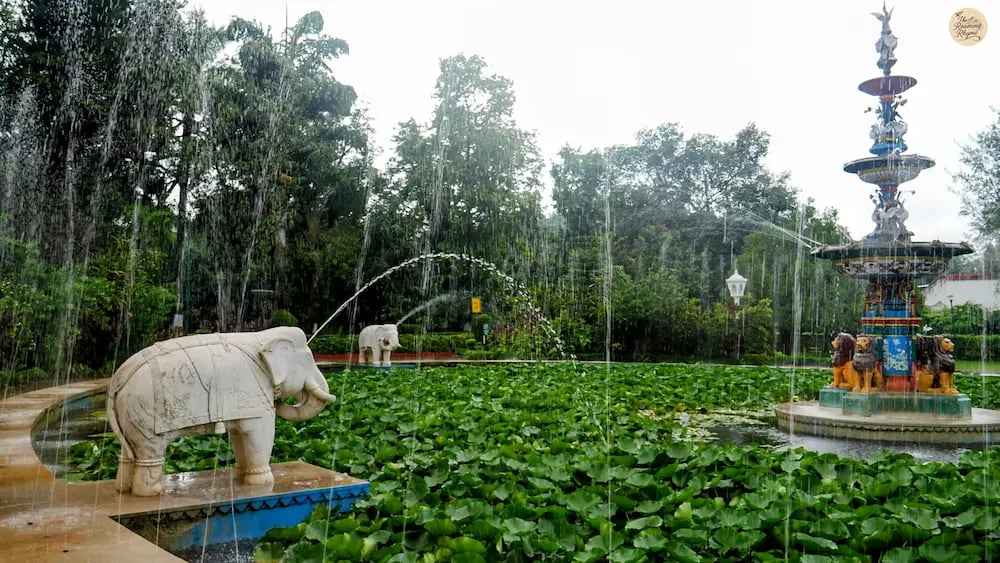
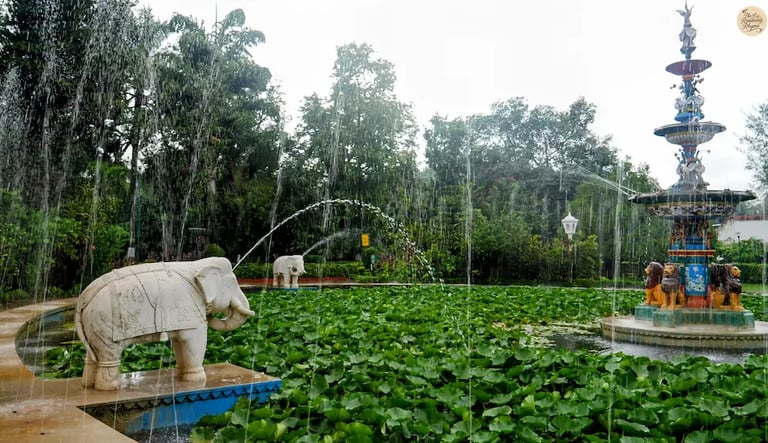
Designed with delicate precision, the garden blends nature and artistry in perfect harmony. Marble pavilions and lotus pools sit beside carved kiosks, shaded corners, and the garden’s iconic rain fountains, originally brought from England. These fountains were crafted to mimic the playful joy of maidens dancing in the rain — and even today, that mood comes alive the moment the water begins its soft, rhythmic fall.
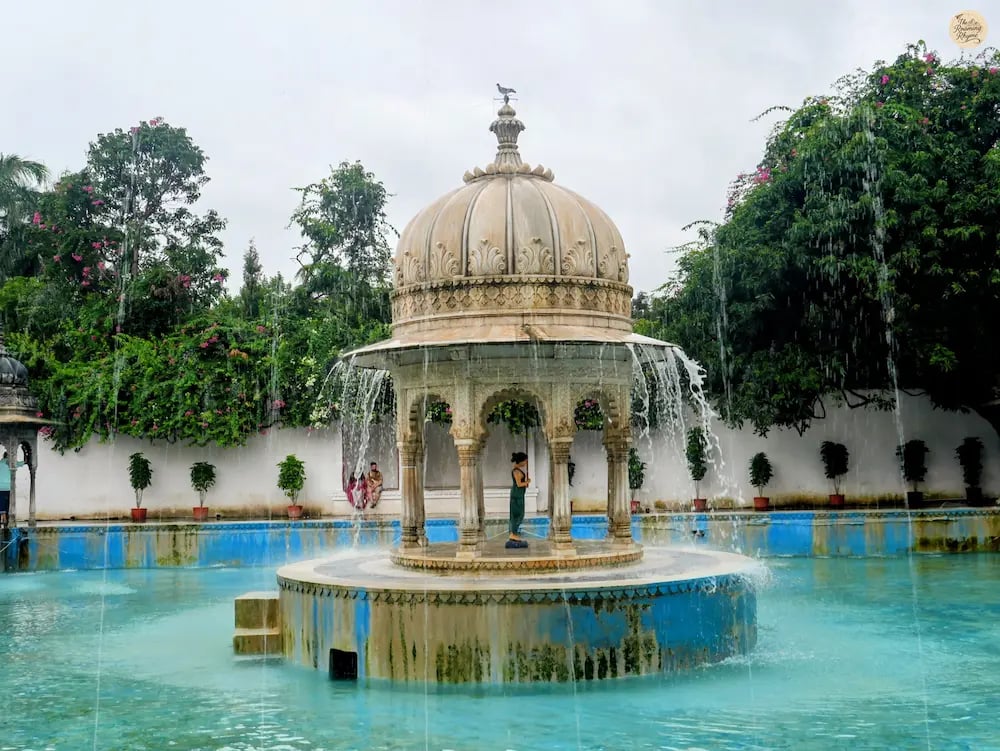
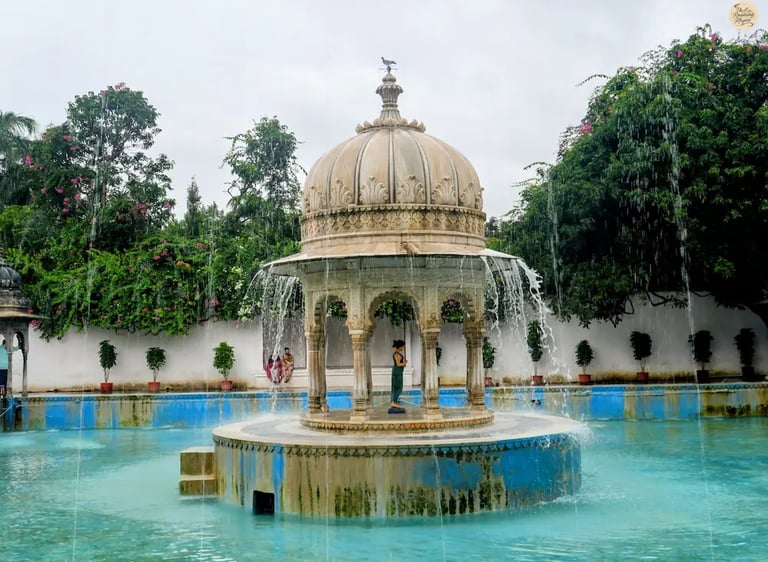
At its heart lies a serene central reservoir, bordered by a white marble kiosk and four striking black-marble kiosks crowned with elegant bird figurines. As water streams gently from the birds’ beaks, it creates a soothing, rain-like melody that follows you through the pathways.
Vibrant bougainvillea, cool stone walkways, lotus-filled ponds, and lush lawns turn the garden into a calming green oasis — a peaceful world tucked away from the bustle of Udaipur. A small on-site museum adds another layer, displaying royal artefacts and glimpses of everyday life from the Mewar era.
With its 2,000+ fountains, intricate marblework, and timeless charm, Saheliyon Ki Bari remains one of Udaipur’s most romantic legacies — a garden designed to comfort a queen, delight her companions, and offer beauty untouched by time.
🕒 Saheliyon Ki Bari Udaipur Timings & Entry Fee
Timings: Daily 9:00 AM – 7:00 PM.
Entry Fee: ₹30 per person (Indians), ₹100 per person (Foreigners).
A refreshing escape filled with lotus pools, leafy paths, and soft monsoon breezes.
Step into a garden where misty fountains and marble pavilions tell old royal stories.
Sukhadia Circle — Udaipur’s Happy Evening Hub
Spend your evening at Sukhadia Circle, one of Udaipur’s liveliest and most cheerful corners, where the day slowly melts into glowing lights, good food, and the soft buzz of local life. In a city known for its lakes and palaces, this spot brings a refreshing, everyday charm — simple joys, colourful evenings, and the irresistible pull of street flavors.
At the centre stands its signature landmark: a three-tiered white marble fountain rising 21 feet above a calm pond. Built in memory of Former Rajasthan Chief Minister Mohan Lal Sukhadia, its foundation was laid in 1968, and the space opened to the public in 1970. Today, it’s one of the most recognisable evening icons of the city.
What truly makes Sukhadia Circle special is how naturally it blends leisure with local life. Families glide across the pond in paddle boats, children race around the gardens, and food stalls fill the air with aromas of chaat, pav bhaji, kulhad coffee, and Udaipur’s favourite street snacks. Travellers come for its relaxed vibe, locals come for its comfort — and together they create a warm, joyful atmosphere that feels uniquely Udaipur.
As night settles in and the fountain lights shimmer against the sky, Sukhadia Circle becomes the perfect place to unwind. Whether you’re here for a quick bite, a gentle lakeside walk, or simply to soak in the city’s evening cheer, this lively landmark never disappoints.
🕒 Sukhadia Circle Udaipur Timings & Entry Fee
Timings: Daily 6:00 AM – 10:00 PM.
Entry Fee: No Entry Fee.
Note: There is no entry fee charged for the Sukhadia Circle Fountain, but you can enjoy boat rides. The cost of Paddleboat ride is Rs. 50 per person. The 2-seater boat and 4-seater boat ride cost Rs. 150 and Rs. 250 per person, respectively.
And when the lights finally fade behind you and the city drifts into a quieter rhythm, Day 2 comes to a close — filled with hilltop views, lakes, gardens, and the easy charm of Udaipur’s open spaces. Rest well, because Day 3 brings a refreshing change of pace: cool breezes, forested paths, and a scenic trek that shows you Udaipur from an entirely different angle.
Day 3 – Hills, Views & the Wild Breeze of Udaipur’s Outskirts
Day 3 takes you beyond the city limits, into the fresh air and open landscapes that cradle Udaipur. This is the day when the Aravallis stretch wide, the breeze turns cooler, and the city’s lakes and ridges reveal themselves from new angles.
Begin your morning at Rayta Hills↗, where sweeping valley views and quiet curves of the Aravalli range create a peaceful, wide-open start to the day. From here, head to Sajjangarh — the Monsoon Palace↗, perched dramatically above the city. Its hilltop pathways and panoramic vistas offer a breezy, cinematic look at Udaipur’s lakes, forests, and skyline.
Your journey continues to Shilpgram↗, a charming rural arts village that brings traditional Rajasthani life to the forefront. Explore mud huts, handicraft workshops, folk art stalls, and the earthy textures of village culture — a grounded, refreshing contrast to the palaces and lakes of the city.
By late afternoon, make your way to Bahubali Hills↗, one of Udaipur’s most photogenic escapes. A short, easy hike leads you to a ridge overlooking a serene junction of lakes, surrounded by rolling hills. As the sun sinks behind the Aravallis, the entire landscape glows — a perfect, calming finale to your adventure.
A peaceful, scenic close to Day 3 — and a fitting way to wrap up your Udaipur journey with views that linger long after the trip ends.
Rayta Hills, Udaipur – Panoramic Views & Scenic Trails
Begin Day 3 with the dreamy, wide-open vistas of Rayta Hills, a peaceful escape just 15 km from Udaipur’s city centre. The moment you leave the bustle behind, the landscape shifts—winding village roads slip through green fields, the Aravalli ridges rise around you, and the cool countryside breeze sets the tone for a refreshing morning outside the usual Udaipur sightseeing trail.
Rayta feels like a hidden fold of the Aravallis↗, where rolling hills, rocky edges, and misty valleys blend into a breathtaking panorama. The drive itself becomes part of the experience: calm, scenic, and increasingly dramatic as the climb gets steeper. It’s best to have a confident driver here—the final ascent is sharp and narrow, but every turn rewards you with wider, greener views.
At the top, Rayta opens like a natural balcony overlooking wave after wave of untouched mountains. No cafés, no shops, no noise—just open sky, crisp air, and the gentle hush of nature. That’s Rayta’s charm: pure landscape beauty without a single distraction. Park the car, step out, and you’ll instantly feel your shoulders drop. Take a few Insta-perfect shots, perch on a warm rock, breathe deeply, and let the stillness settle in.
A serene, scenic beginning to your final day in Udaipur — a refreshing contrast to the palaces, lakes, and heritage sites waiting further ahead.
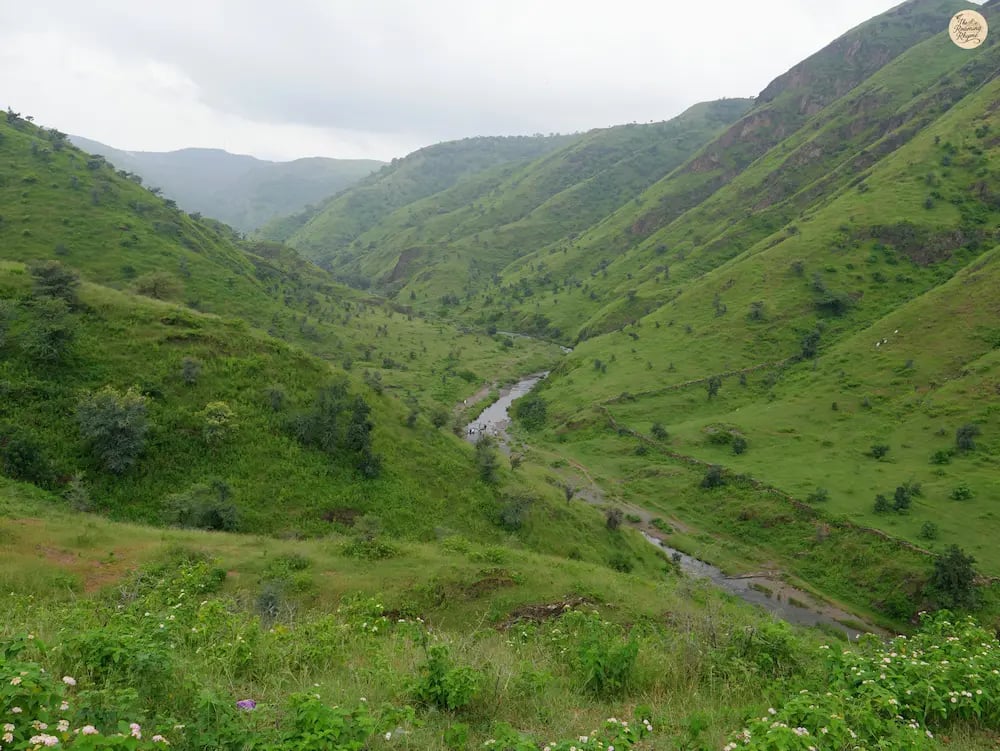
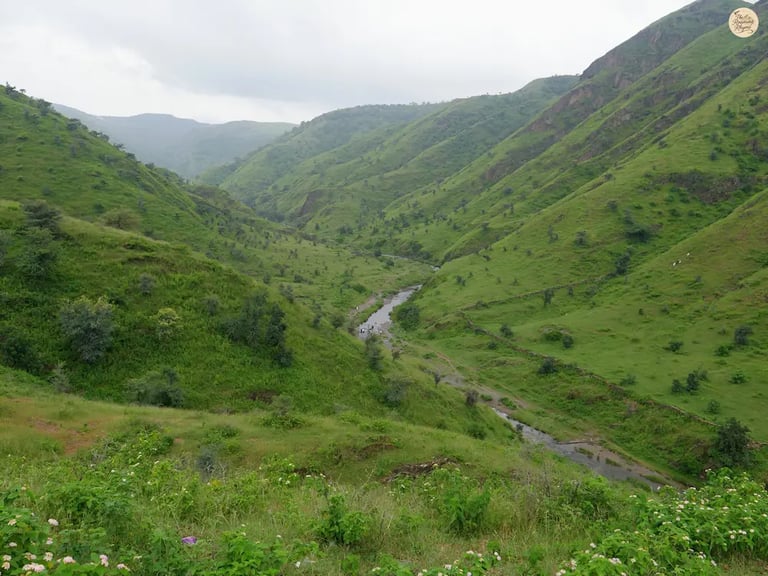
Rayta Hills—soft slopes, fresh winds, and a hint of Nagaland’s Dzukou Valley
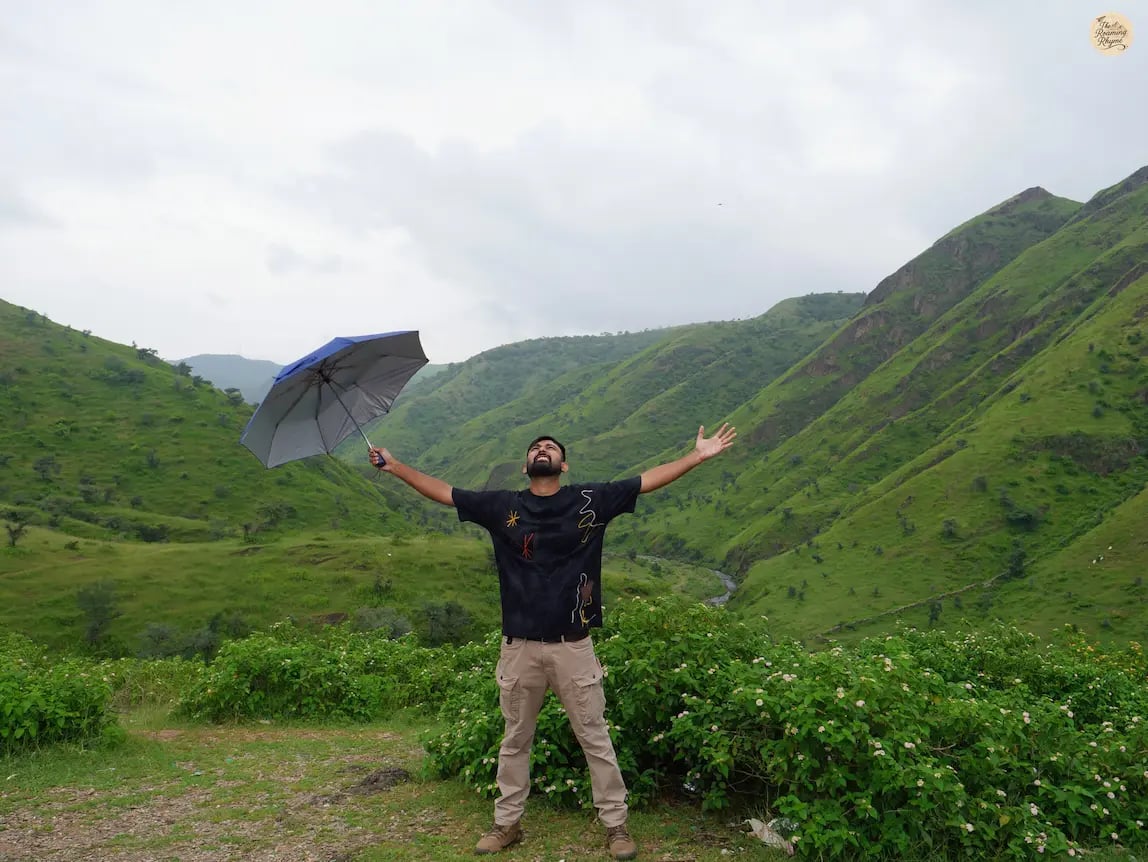
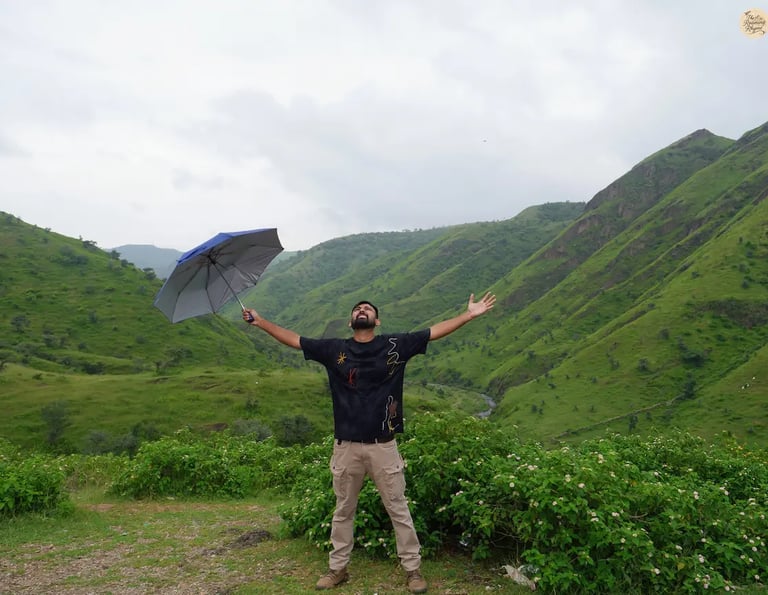
Soft ridges and serene valleys—nature’s calm just outside Udaipur.
Sajjangarh – The Monsoon Palace
From Rayta, head straight to Sajjangarh, the famed Monsoon Palace rising high above Udaipur on the Bansdara Hills. Standing like a quiet sentinel over the city, this 19th-century retreat was built by Maharana Sajjan Singh — envisioned as both a monsoon getaway and a future astronomical center, reflecting the ruler’s rare blend of romance and scientific curiosity. Though unfinished, its silhouette remains one of Udaipur’s most iconic sights.
The uphill drive sets the mood beautifully: winding mountain curves, pockets of dense greenery, and sudden glimpses of Lake Pichola↗ shimmering far below. At the summit, the palace unfolds into sweeping 360° panoramas — the kind that make Udaipur feel boundless. The Aravallis stretch endlessly, valleys melt into misty greens, and the open sky seems to float just above your head. If the City Palace↗ showcases royal elegance, Sajjangarh reveals Udaipur’s wild, untouched side.
Inside, the palace rests on marble pillars with floral carvings, lime-plastered walls, breezy courtyards, domes, jharokhas, and slender turrets that once guarded the hilltop. The architecture is simple, soulful, and cinematic enough to be featured in the James Bond film Octopussy↗.
Whether you come for the cool mountain breeze, the history, or Udaipur’s legendary sunsets, the Monsoon Palace is a must-visit — a timeless blend of nature, nostalgia, and Rajput grace.
🕒 Sajjangarh Udaipur Timings & Entry Fee
Timings: Daily 9:00 AM – 6:00 PM.
Entry Fee: ₹120 per person (Indians), ₹500 per person (Foreigners), ₹55 for 2-wheelers, and ₹338 for 4-wheelers.
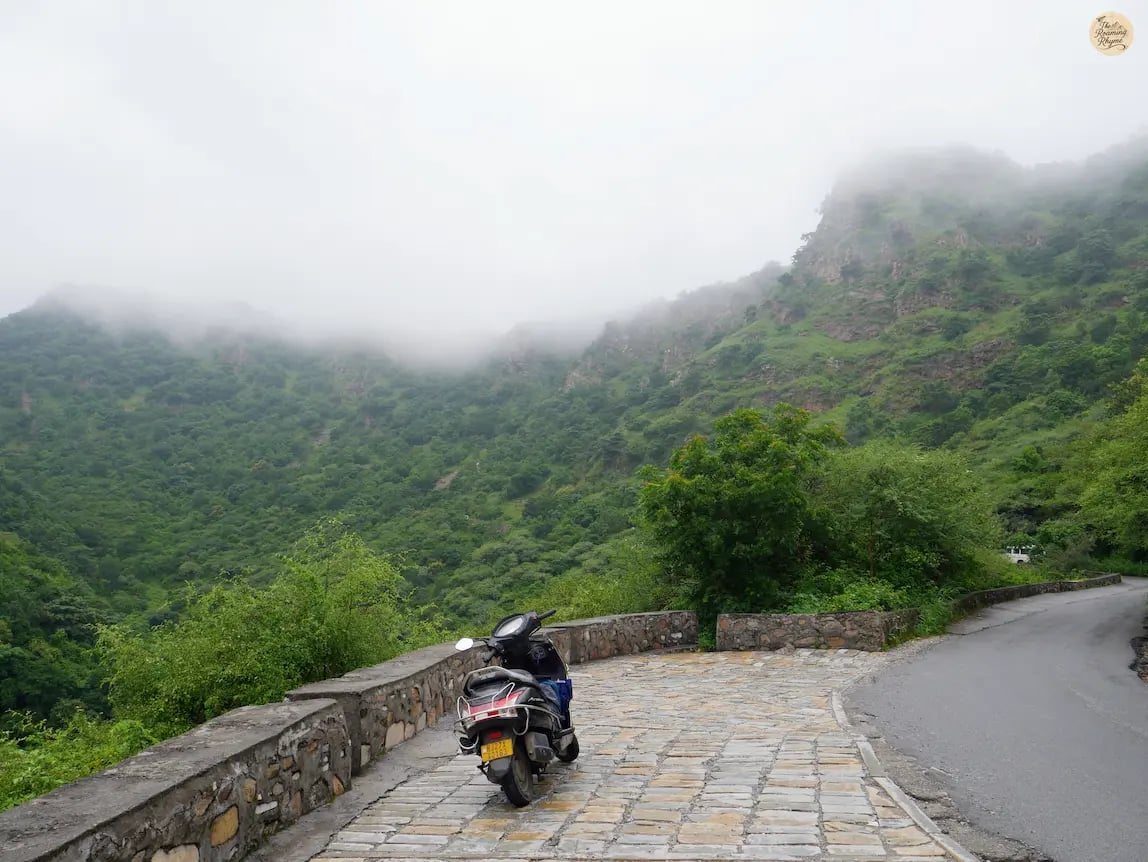
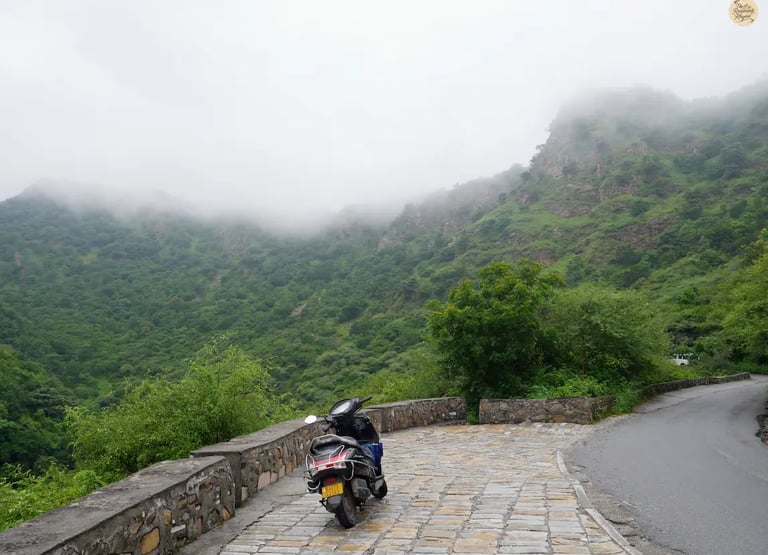
A winding forested path leading to Sajjangarh under cloudy skies.
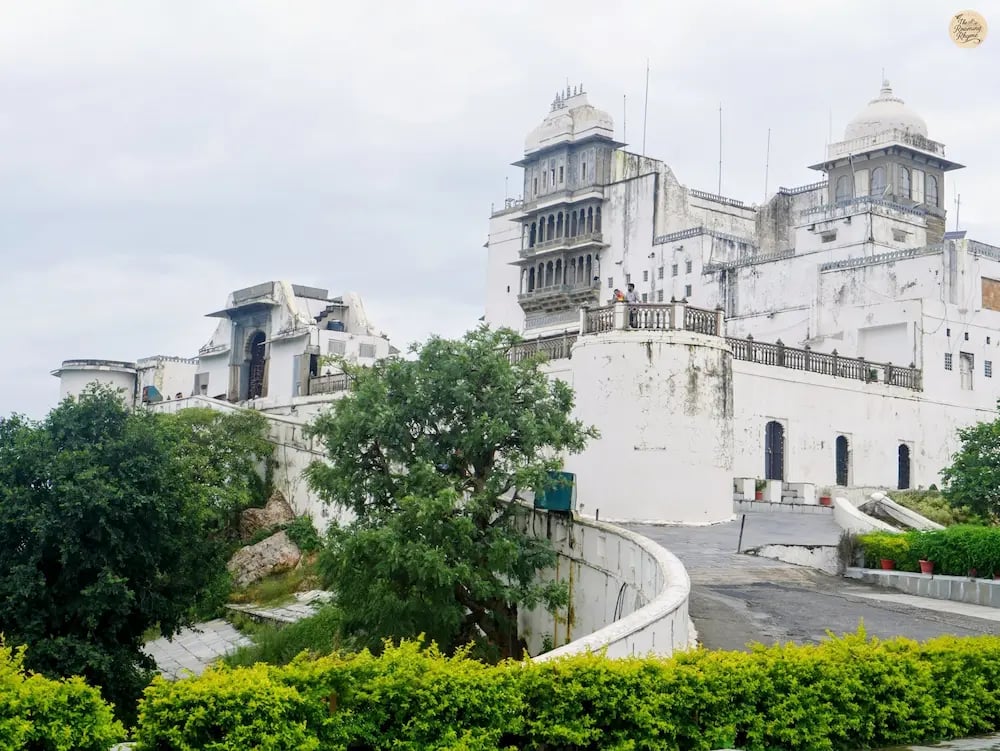
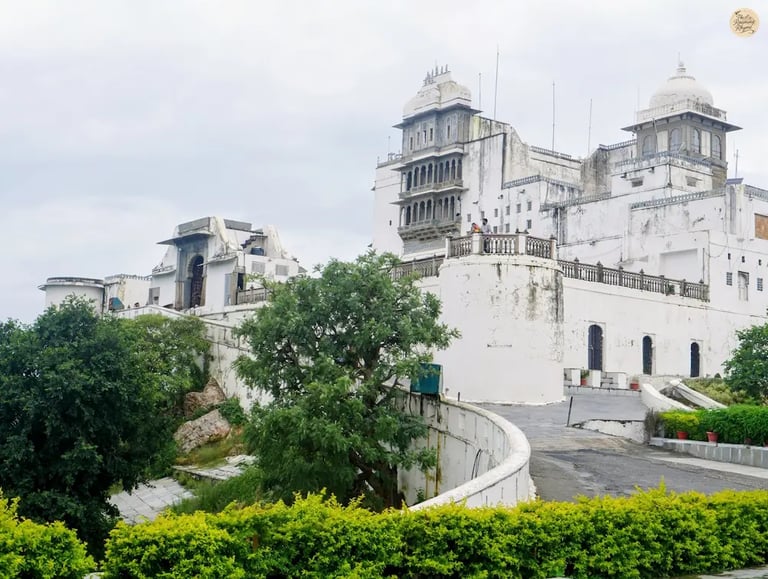
Sajjangarh - A fortress in the sky, guarding Udaipur with timeless grace.
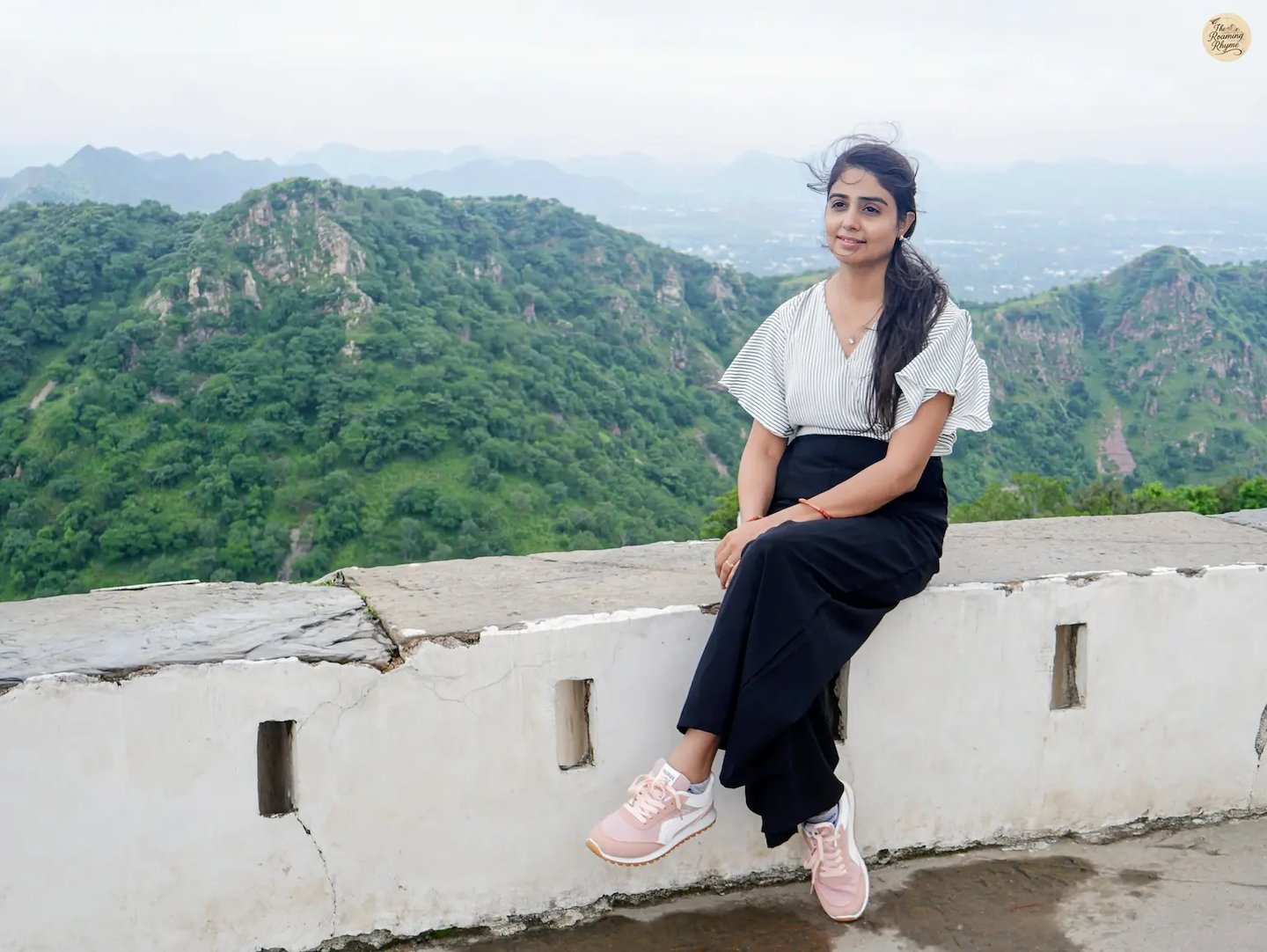
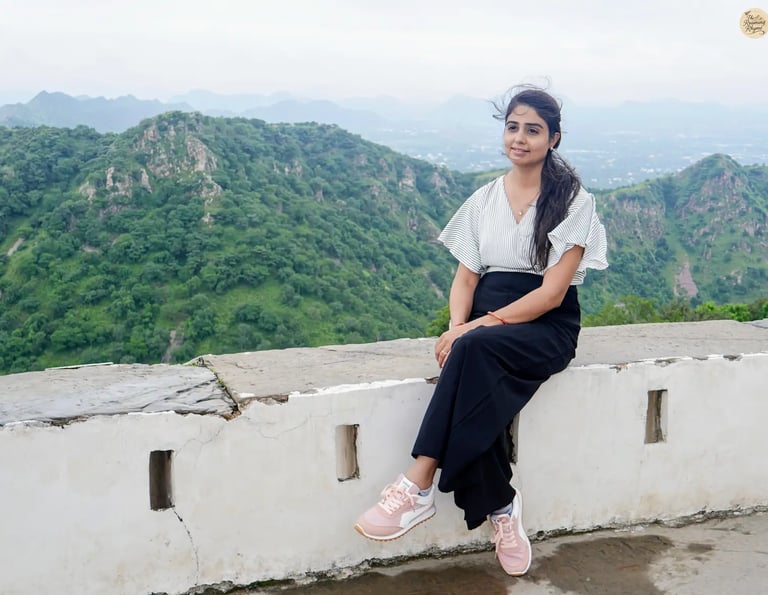
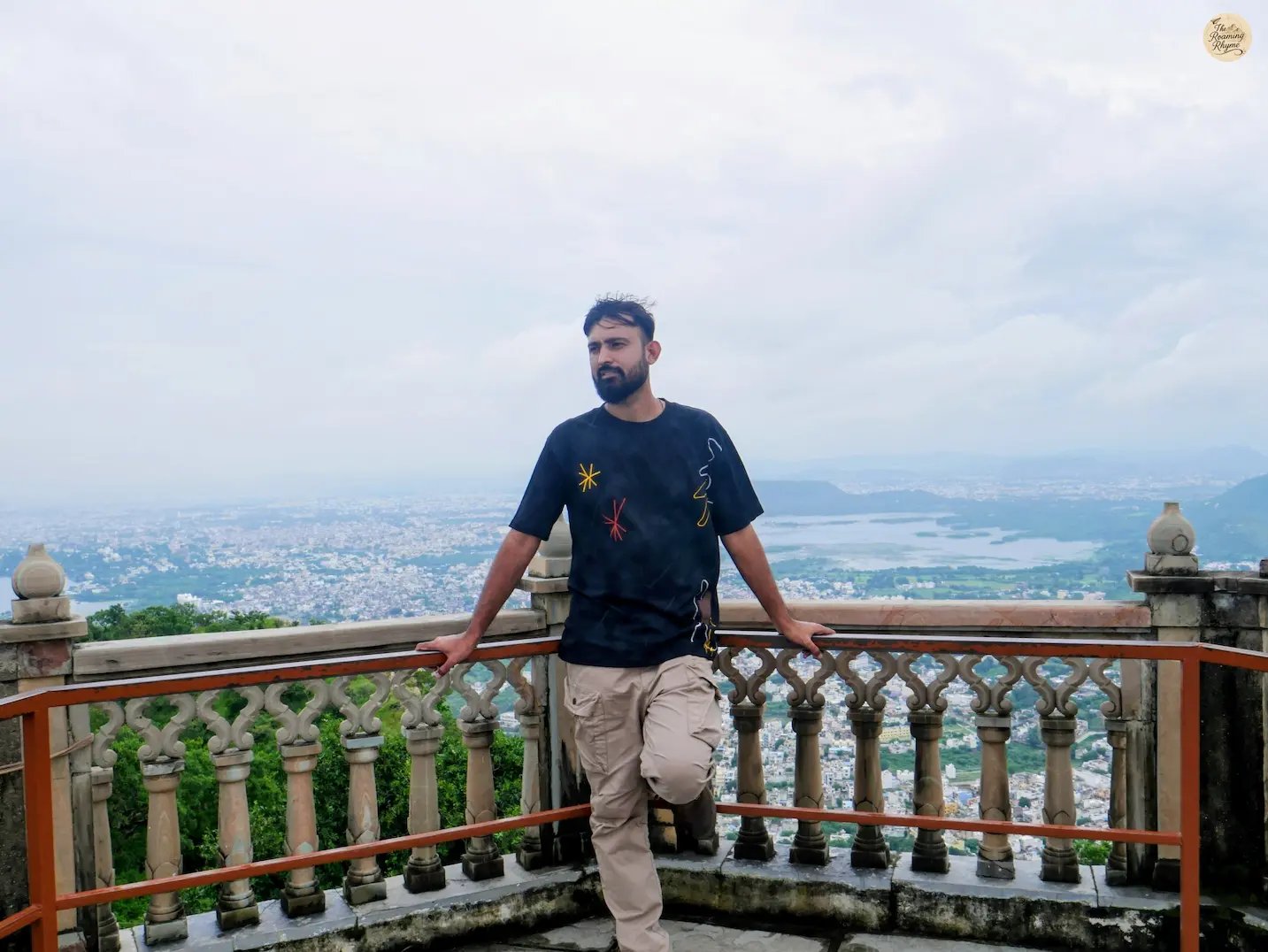
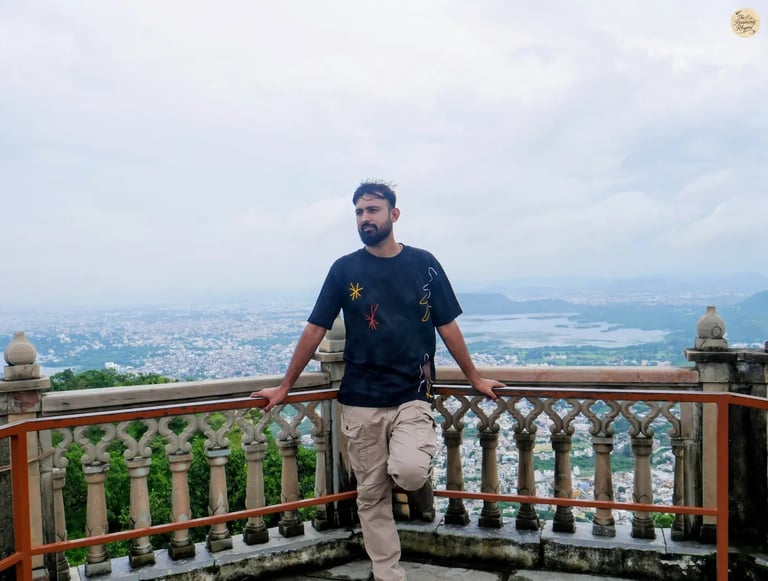
Sajjangarh views—rolling hills and lush green stretches as far as the eye can see.
Udaipur unfolds below—lakes and town shimmering from Sajjangarh heights.
Shilpgram – The Artisan’s Village
Your next stop is Shilpgram, a vibrant craft village just 3 km west of Udaipur near Havala. Spread across 70 acres at the foothills of the Aravallis, this rural arts complex works like a living ethnographic museum — a place where the everyday rhythm, traditions, and craftsmanship of West India unfold in their most natural form.
Shilpgram recreates village clusters from Rajasthan, Gujarat, Maharashtra, and Goa, each represented through traditional huts built in the authentic architectural style of the communities they portray. As you explore these clusters — from Marwar’s weavers and Mewar’s potters to Kutch’s embroidery artists, Goan metalworkers, and Maharashtrian tribal painters — you witness how craft, culture, and daily life blend seamlessly in rural India.
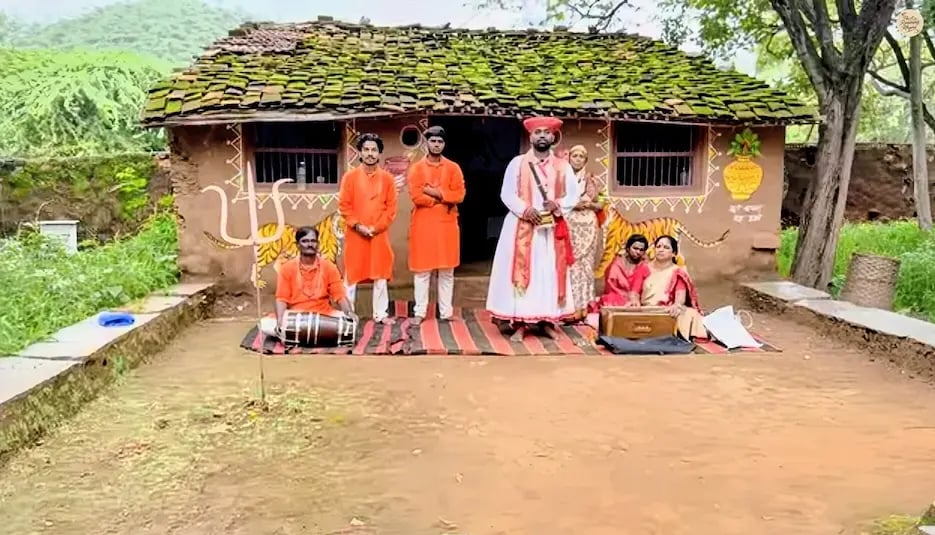
More than just browsing, Shilpgram is an experience designed to pull you in. Pottery sessions, weaving demonstrations, folk performances, and hands-on workshops take place throughout the year, inviting visitors (especially children and craft lovers) to try their hand at age-old art forms. The massive open-air amphitheatre, with space for nearly 8,000 people, often hosts cultural festivals that add music, colour, and lively energy to the village.
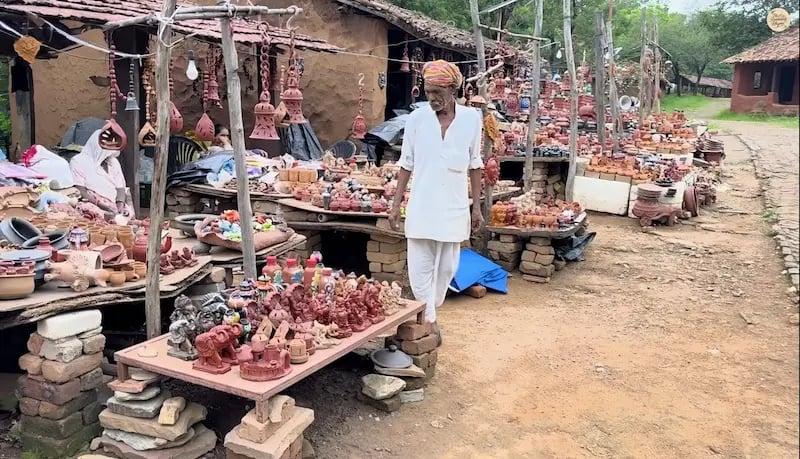
A walk through the bazaar-style market completes your visit — artisans sit with their handmade textiles, terracotta pieces, metal craft, beadwork, leather goods, and tribal décor, offering truly authentic shopping straight from the makers themselves.
Shilpgram is more than a craft village — it’s a warm, earthy celebration of India’s rich “Unity in Diversity,” a place where creativity breathes freely before you continue onward on your Udaipur journey.
🕒 Shilpgram Udaipur Timings & Entry Fee
Timings: Daily 11:00 AM – 7:00 PM.
Entry Fee: ₹30 for Indians and ₹50 for foreigners.
Note: The Popular Haat Bazaar at Shilpgram is open to the public from 12:00 pm every day.
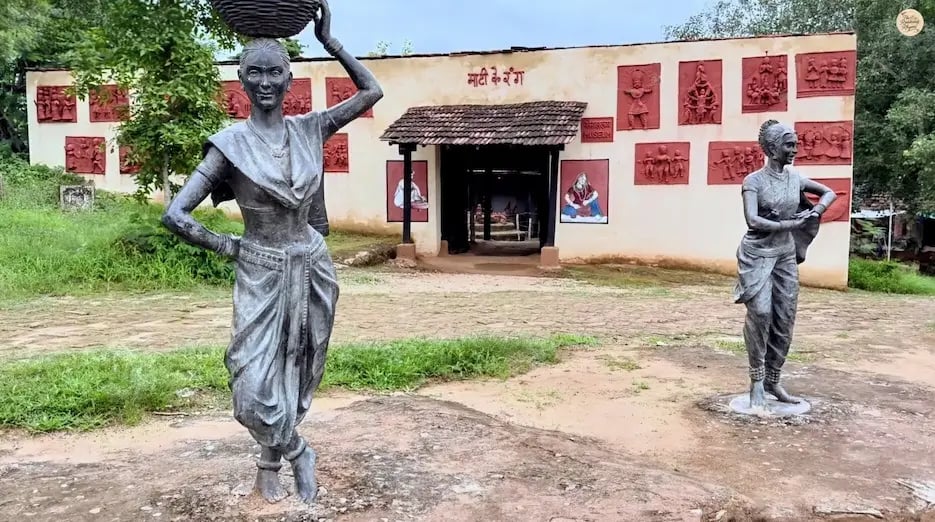
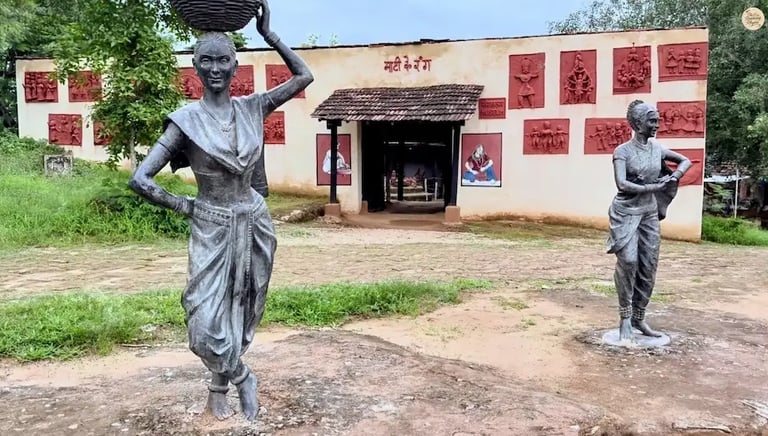
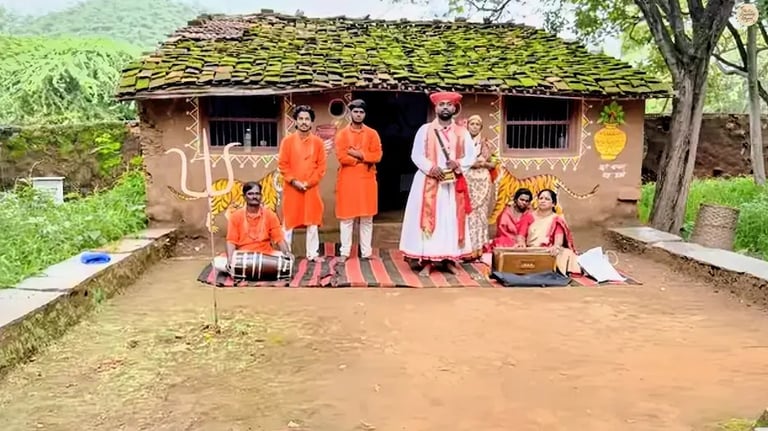
Statues depicting traditional Maharashtra dance forms at Shilpgram.
Local artisans displaying handmade terracotta handicrafts at Shilpgram.
Folk artists dressed in colorful attire before a dance show at Shilpgram craft village.
Bahubali Hills – Udaipur’s Scenic Crown
About 15 km from Udaipur’s vibrant city centre, Bahubali Hills rise gently above the quiet, glassy expanse of Badi Lake. Once a hidden gem, this viewpoint has quickly become a favourite among travellers, photographers, and couples looking for those dreamy pre-wedding frames. With uninterrupted 360° views of the lake hugged by the rugged Aravalli mountains↗, the scenery is effortlessly captivating.
The hill sits at one end of Badi Lake and can be reached through two easy approaches — the older trail from Barda village, and a newer, more accessible path near a small bridge at Nathavato Ka Guda. If you’re unsure, just ask a local; everyone around knows the way. The climb, despite often being called a “trek,” is a simple 10–20 minute walk. The path is clear, scenic, and suitable for almost everyone.
Interestingly, Bahubali Hills is a relatively new name. Locals grew up calling it Badi Hills, but its dramatic, cinematic landscapes reminded visitors of the sets of the film Bahubali↗ — and the nickname became official in spirit, if not on paper.
The terrain here is rocky and rugged, sprinkled with cactus clusters that add to its raw desert-meets-hill charm. Arrive in the late afternoon for the full magic — when golden sunlight brushes the hills and the deep blue lake creates a striking visual contrast. Time slows down here. The silence, the wind, the views — everything invites you to stay a little longer.
Bahubali Hills isn’t just a viewpoint; it’s a peaceful retreat, a photographer’s delight, and one of Udaipur’s most soulful outdoor escapes.
🕒 Bahubali Hills Udaipur Timings & Entry Fee
Timings: There are no fixed opening/closing times, as it's a natural spot.
Entry Fee: ₹10 per person.
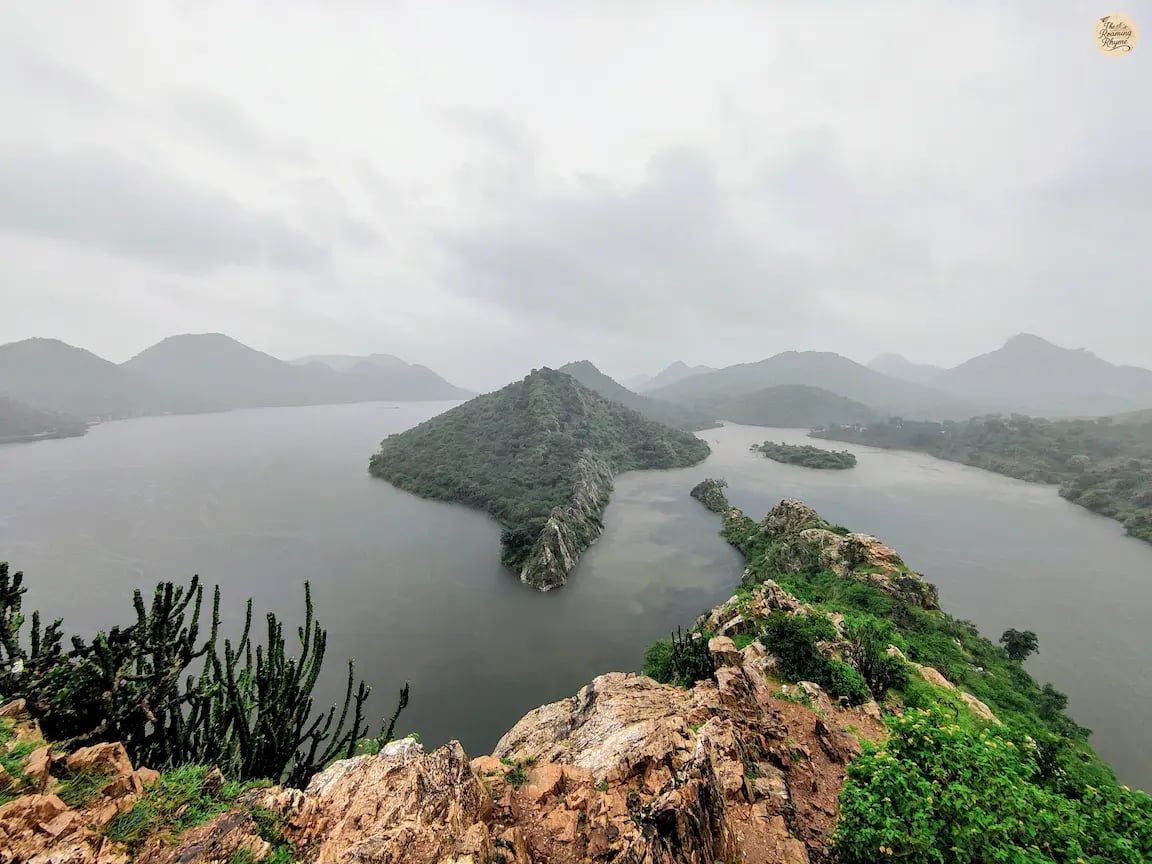
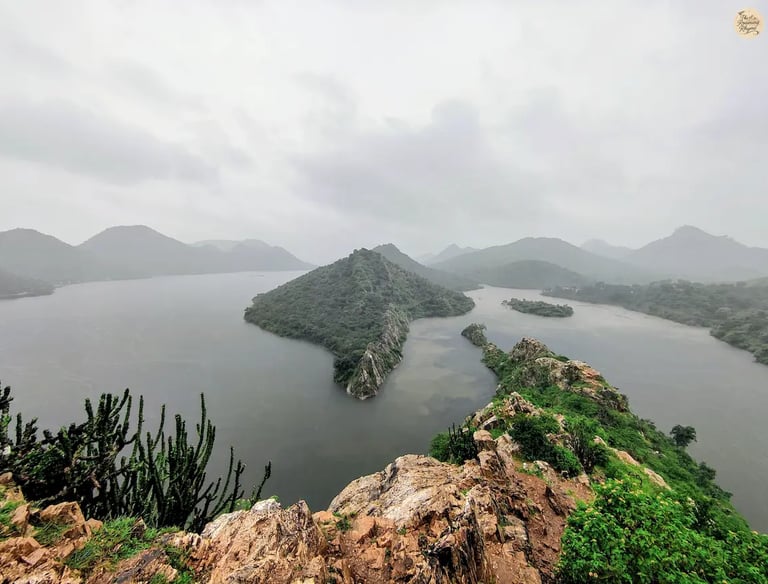
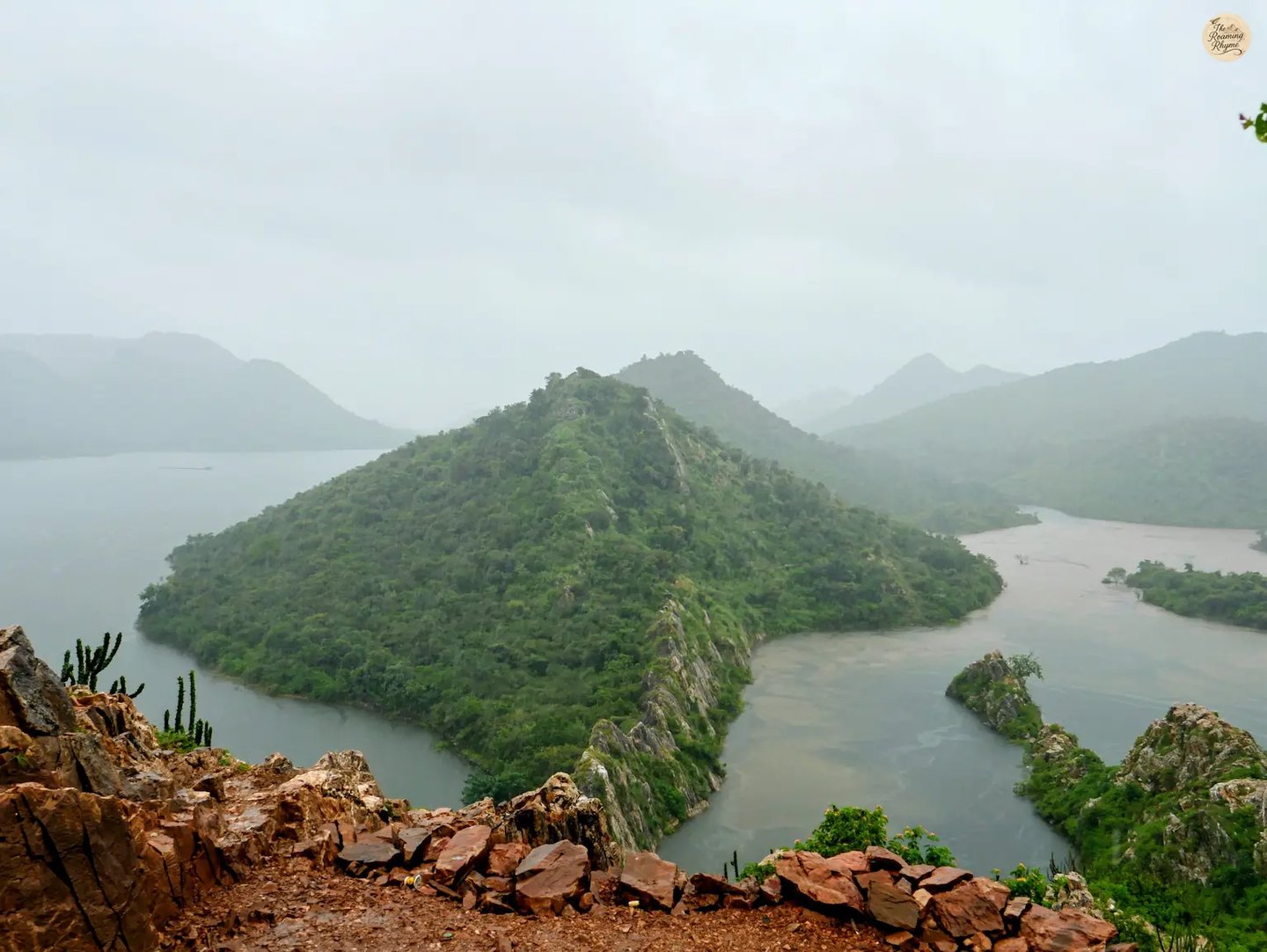
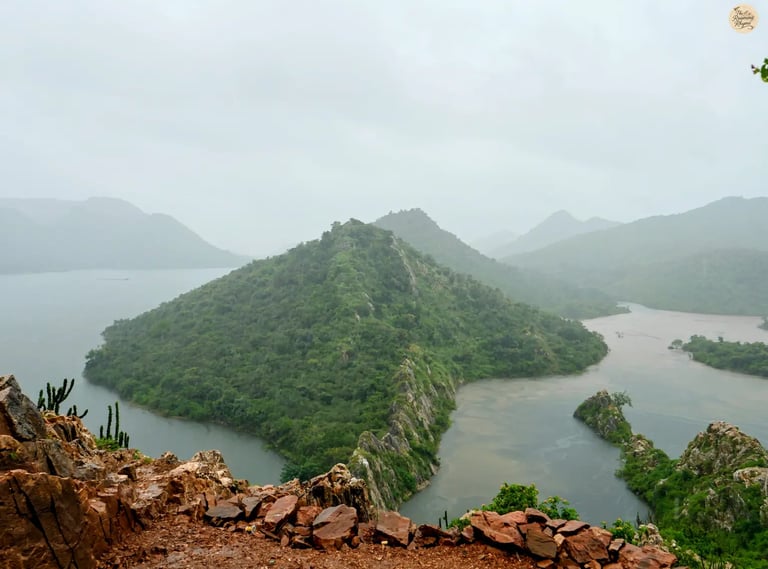
From Bahubali Hills, hills and lakes meet in a serene, sweeping panorama.
Step atop Bahubali Hills, where Udaipur spreads like a painted dream.
As the sun finally dips behind the Aravalli skyline, Day 3 draws to a serene close. With breezy hillscapes, calming lake vistas, and countryside trails that feel like nature’s lullaby, your last day in Udaipur ends on a tranquil note. Three days of lakes, palaces, sunsets, and scenic escapes — you leave with a heart full of memories, and a quiet promise from the “City of Lakes” that you’ll always be welcome here again.
Food & Best Eateries in Udaipur — Where Flavours Flow Like the Lakes
Udaipur feeds you the way it welcomes you — slowly, warmly, and with heart. Meals here aren’t rushed; they’re meant to be felt. Somewhere between palace views and quiet ghats, food becomes part of the journey, carrying the city’s calm into every bite.
For a meal with a view
Head to lakeside and rooftop cafés where plates arrive with panoramas. Places like Ambrai, Upre, Jagat Niwas, and Jheel’s Ginger Coffee Bar let you dine with Lake Pichola shimmering beside you and the City Palace glowing across the water. As the sky changes colour, even a simple dal or thali tastes richer.For local flavours and comfort food
If you want to eat like the city eats, follow the smell of ghee and spices. Natraj Dining Hall and Krishna Dal Bati Restro serve honest Rajasthani food — dal baati churma, gatte ki sabzi, and plates that feel like home. No fuss, just flavour.For café hopping and slow sips
Udaipur’s café culture is gentle and inviting. Cafe Edelweiss, Millets of Mewar, Khamma Ghani Café, and Hello Boho are perfect for lazy mornings, journaling afternoons, or a quiet coffee break between sightseeing stops.For street food cravings
Evenings belong to the streets. Try Kulhad Coffee at Fateh Sagar, pani puri near Sukhadia Circle, pav bhaji, kachoris, and soft jalebis that melt before you reach the next step. It’s messy, cheerful, and completely worth it.For a royal-style dinner
When the day feels special, dress up a little and book a heritage restaurant. Candlelit courtyards, live music, and traditional menus make dinner feel like a soft echo of royal times.
In Udaipur, food isn’t just about taste — it’s about time. Time to sit, to look around, to watch the lake breathe and the city glow. Eat slowly here. The city likes it that way.
Best Photography Spots in Udaipur — Frames That Find You
Udaipur is gentle on the lens. Light settles softly, water reflects calmly, and history waits to be framed.
City Palace & Old Lanes↗
Arches, balconies, courtyards, and street life around Jagdish Temple — rich textures, timeless shots.Lake Pichola (Boat Views)↗
Floating frames of the City Palace, Lake Palace, ghats, and reflections that feel unreal.Ambrai & Gangaur Ghats↗
Wide palace views at Ambrai; everyday life, pigeons, and steps at Gangaur.Karni Mata Temple↗
One clean panorama — lakes, palaces, rooftops, hills in quiet harmony.Fateh Sagar Lake↗
Open water, curved promenade, soft light — simple, breezy compositions.Sajjangarh (Monsoon Palace)↗
Moody roads, hill silhouettes, dramatic skies, sweeping views.Rayta Hills↗
Rolling green slopes, winding roads, open skies — raw and peaceful.
Udaipur doesn’t rush the shot.
Pause, breathe, click.
Udaipur leaves you with that rare, quiet feeling — the kind that slows your steps and softens your mind. Three days of drifting through lakes, hills, craft-filled lanes, and centuries-old stone corridors blend into one gentle memory: warm, reflective, unhurried. Somewhere between palaces that touch the sky and lakes that hold the sun, you find your own rhythm falling in sync with the city’s roaming rhyme, wandering paths unknown without ever feeling lost.
Because this is what Udaipur does best.
It doesn’t overwhelm — it invites.
It doesn’t demand — it reveals.
And when you finally step away from its shimmering waters and sunlit ridges, you realise you’re carrying more than photographs. You’re carrying the way the city made you pause, look closer, breathe deeper. Places like this don’t stay behind when you leave — they travel with you, quietly, like soft echoes waiting for your return.
Udaipur never truly says goodbye.
It lingers — between thoughts, between breaths — reminding you why some journeys refuse to fade.
Frequently Asked Questions – Udaipur Travel Guide
Q. Why is Udaipur so famous?
A. Udaipur is famous for its shimmering lakes, royal palaces, and peaceful old-city charm. It feels like a place painted with calm, where water, marble, and hills blend into a story that never stops glowing.
Q. Is 2 days enough to visit Udaipur?
A. Two days give you a sweet glimpse of the lakes and palaces, but three days let you slow down and feel the city’s rhythm. If you want both views and vibes, 3 days fit best.
Q. Is Udaipur cheap or expensive?
A. Udaipur suits every budget. From cozy guesthouses to luxury palace hotels, the city offers choices for backpackers, couples, and families. Food and travel are affordable, and you can go more upscale if you wish.
Q. What is the famous food in Udaipur?
A. Popular dishes include Dal Baati Churma, Laal Maas, Gatte ki Sabzi, Kachori, Poha, and thick, creamy lassi. For desserts, Ghevar and Malpua are local stars.
Q. What can I buy in Udaipur?
A. Shop for miniature paintings, silver jewellery, juttis, pottery, leather bags, colourful home décor, and handwoven textiles. Udaipur’s markets are full of craft, colour, and slow-lane charm.
Q. Is Udaipur safe for girls at night?
A. Yes, Udaipur is considered safe and friendly. The lakeside areas and old city stay active till late. Just follow basic travel caution — stick to lit streets and use trusted local transport.
Q. What can I wear in Udaipur?
A. Light, airy clothes for the day, comfortable footwear for walking, and modest outfits when visiting temples. Winters get chilly, so warm layers help. The city welcomes every style with ease.
Q. Which place is best for photoshoots in Udaipur?
A. Top photoshoot spots include City Palace, Gangaur Ghat, Ambrai Ghat, Bahubali Hills, Sajjangarh, and Jagmandir Island Palace. Each offers dreamy light and royal backdrops.
Q. Most Instagrammable spots in Udaipur?
A. Most Instagrammable Spots in Udaipur:
Lake Pichola boat ride
City Palace arches
Ambrai Ghat sunset
Bagore Ki Haveli
Fateh Sagar walkway
Sajjangarh viewpoints
Bahubali Hills
Blue lanes of the old city
Rooftop cafés overlooking the lake
Q. Which Hollywood movie was shot in Udaipur?
A. The James Bond film “Octopussy” (1983) was filmed across Udaipur — at City Palace, Lake Pichola, Jagmandir, and the Monsoon Palace.
Q. Who is the king of Udaipur now?
A. Udaipur has no ruling king today. The current head of the Mewar royal family is Shri Arvind Singh Mewar, the 76th custodian of the dynasty.
Q. Why is Maharana Pratap so famous?
A. Maharana Pratap is remembered for his courage, honour, and unbreakable spirit during the Battle of Haldighati. His legacy represents Rajput bravery, resilience, and deep devotion to Mewar.
Share Your Thoughts – We’d Love to Hear From You!
Every journey is better when shared.
We hope you enjoyed this travel story — now, we'd love to hear yours! Share your experience, suggestions, or feedback and help us make our travel tales even better.
Tracing poetry on paths unknown.
Join The Journey
© 2026 The Roaming Rhyme. All rights reserved.


Some links may be affiliate links. If you purchase through them, I may earn a small commission — at no extra cost to you.
Explore
Travel stories, guides, and hidden gems — delivered gently to your inbox.
Karnataka