
Valleys in Ladakh: 6 Scenic Himalayan Valleys You Must Explore
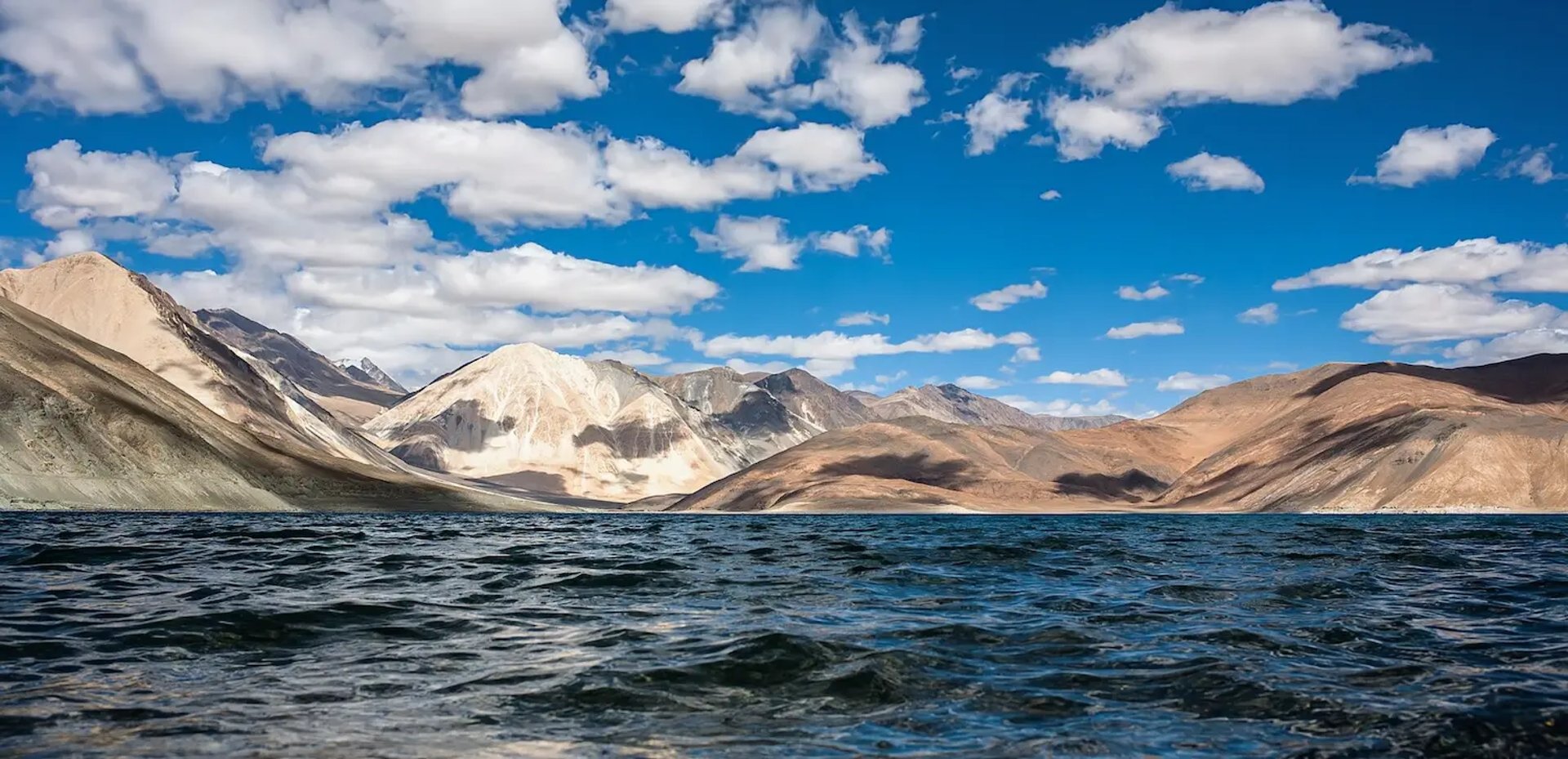
6 Scenic Valleys in Ladakh That Show the Real Beauty of the Himalayas
Explore Ladakh’s scenic valleys filled with mountains, monasteries, rivers, and epic road trips.
Valleys in Ladakh: Exploring the Most Scenic Himalayan Landscapes
Valleys in Ladakh don’t feel like the mountain places you usually see on postcards. One moment, the landscape is nothing but dust, rock, and long empty roads, and the next, there’s a green patch beside a freezing river. Tiny villages appear out of nowhere. Prayer flags flutter over old bridges. Apricot trees hide behind mud houses. You begin noticing small things here because there’s barely any noise among the most scenic valleys in Ladakh.
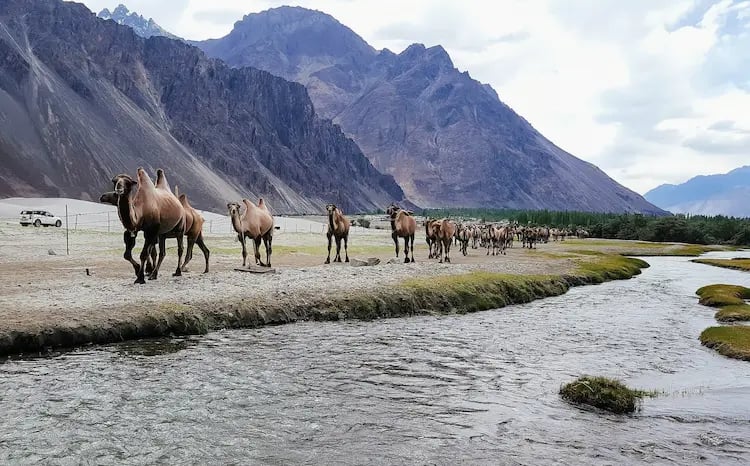
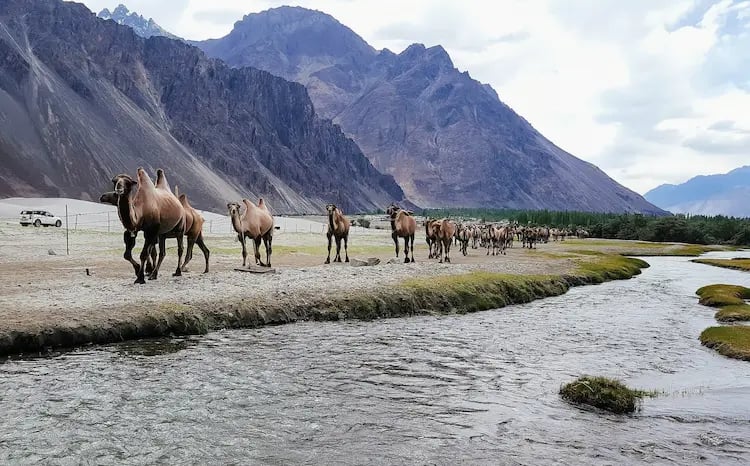
In Nubra Valley, sand dunes and double-humped camels stand against snow-covered mountains as if the contrast belongs there naturally. Zanskar Valley feels quieter and rougher, especially once the roads narrow and phone signals disappear. Then comes Markha Valley, where evenings mean tired legs, cold hands wrapped around tea cups, and trekking boots left outside homestay doors to dry overnight.
Don’t expect every part of your Leh Ladakh Trip↗ to feel comfortable. That’s exactly why people keep carrying these mountains in their minds long after they leave.
Quick Travel Snapshot
Best time to visit: May to Sept
Featured Valleys: Nubra, Zanskar, Markha, Indus, Suru & Rupshu
Best Experiences: Trekking, camping, camel rides, scenic drives
Famous For: Himalayan valleys, monasteries, lakes & road trips
Highest Altitude: Kongmaru La Pass (Approx 17.060 ft)
Travel Tip: Spend 1-2 days in Leh before visiting higher-altitude valleys for acclimatization.
Image: KennyOMG / Wikimedia Commons, (CC BY-SA 4.0)
Best Time to Visit Ladakh Valleys
May to September: Best for sightseeing, road trips, trekking, and lake visits.
June to August: Ideal for Markha Valley treks and Nubra Valley camping.
January to February: Best for the Chadar Trek and snowy winter landscapes in Zanskar Valley.
Table of Content
Where to Stay in Ladakh Valleys
Nubra Valley: Camps, riverside cottages, and guesthouses in Hunder and Diskit.
Zanskar Valley: Simple homestays and hotels in Padum.
Markha Valley: Traditional trekking homestays in mountain villages.
Indus Valley: Boutique hotels, heritage stays, and homestays near Leh and Shey.
Suru Valley: Peaceful guesthouses and eco-stays in Sankoo and Panikhar.
Tso Moriri: Basic camps and homestays in Korzok Village beside the lake.
By Air: Fly to Kushok Bakula Rimpochee Airport in Leh from Delhi, Mumbai, or Chandigarh.
By Road:
Via Manali–Leh Highway (best for adventure road trips)
Via Srinagar–Leh Highway (better for gradual acclimatization)
From Leh, you can hire taxis, bikes, or self-drive cars to explore valleys like Nubra, Zanskar, Suru, and Tso Moriri.
How to Reach Ladakh Valleys
1. Nubra Valley: The Valley of Flowers
The first thing you notice in Nubra Valley is how unreal the landscape feels, with sand dunes resting below while the Shyok River cuts through dry brown land lined with apricot trees. Sitting at around 10,000 feet, Nubra is often called the most beautiful valley in Ladakh, where patches of wildflowers and green riverbanks soften the rugged terrain. Evenings here drift slowly around Hunder dunes with camel rides, riverside camps, and monasteries quietly watching from the hilltops.
Top Attractions:
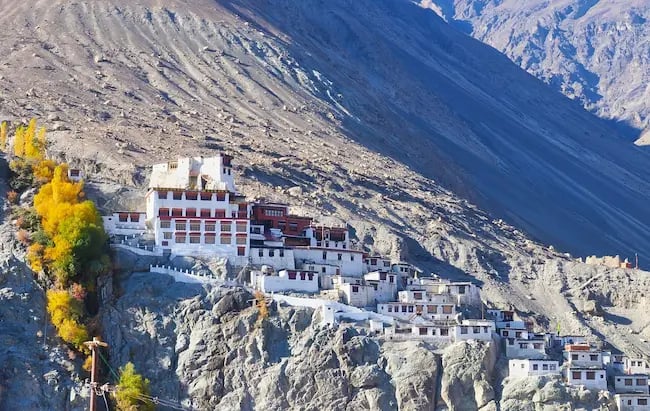
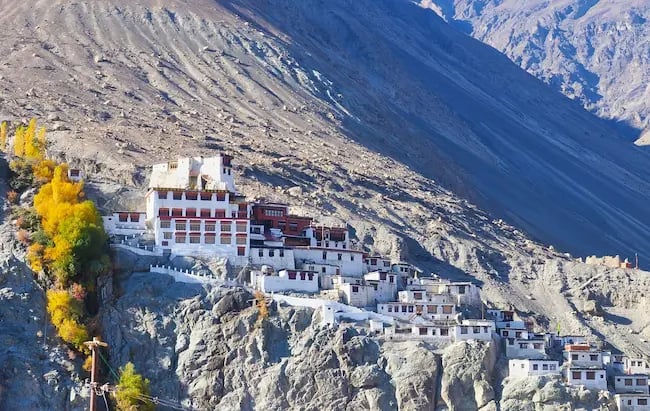
Diskit Monastery: For endless views over Diskit town and the towering Maitreya Buddha watching the valley below.
Turtuk: A small Balti village where stone houses, apricot trees, and narrow lanes slow everything down.
Panamik Hot Spring: A quiet, sulfur-rich hot spring, perfect after long mountain drives.
Yarab Tso Lake: A short uphill walk leads you to this peaceful, sacred lake in Nubra Valley.
6 Scenic Valleys in Ladakh: From Frozen Rivers to Desert Landscapes
Explore More


Tungnath Travel Guide


Dharamshala Travel Guide
Kodaikanal Travel Guide
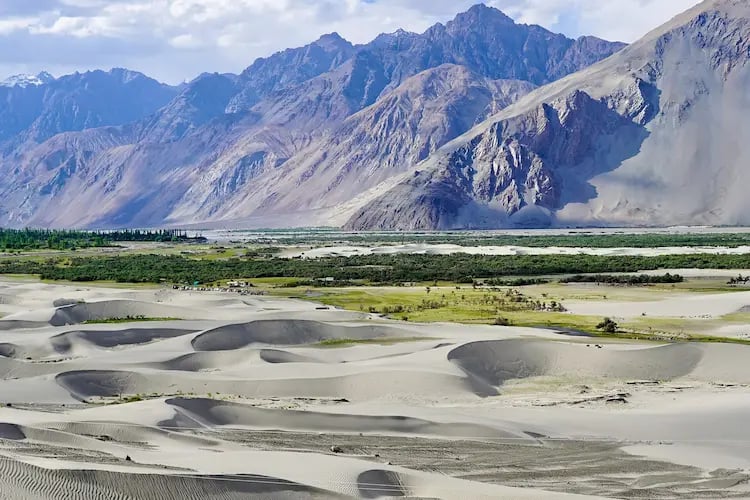
Sand dunes and poplar groves in Nubra Valley, Ladakh
Double-humped camels near Hunder village, Nubra Valley.
Diskit Monastery perched on rocky mountains in Nubra Valley.
Image: Lianglunlun / Wikimedia Commons, (CC BY 4.0)
Image: Ashwin Kumar / Wikimedia Commons, (CC BY-SA 2.0)
Image: Prof Ranga Sai/ Wikimedia Commons, (CC BY 4.0)
2. Zanskar Valley: A Paradise for Adventure Lovers
At nearly 12,000 feet, this valley remains cut off for much of the year due to heavy snowfall, making you realise how untouched it still feels compared to the rest of Ladakh. Winter becomes the best time to visit Ladakh valleys, especially Zanskar, for the famous Chadar Trek, while summer opens the doors for white-water rafting, trekking, and riverside camping. Somewhere between the adventure, quiet monasteries, and glacier views makes the whole valley feel almost unreal.
Top Attractions:
Phugtal Monastery: A 12th-century monastery built around a natural cave high on a cliffside.
Karsha Monastery: Known for whitewashed hillside architecture, ancient murals, and peaceful valley views.
Drang Drung Glacier: One of the largest glaciers in Ladakh with breathtaking panoramic views near Pensi La.
Pensi La Pass: A scenic high-altitude pass connecting Suru Valley with Zanskar.
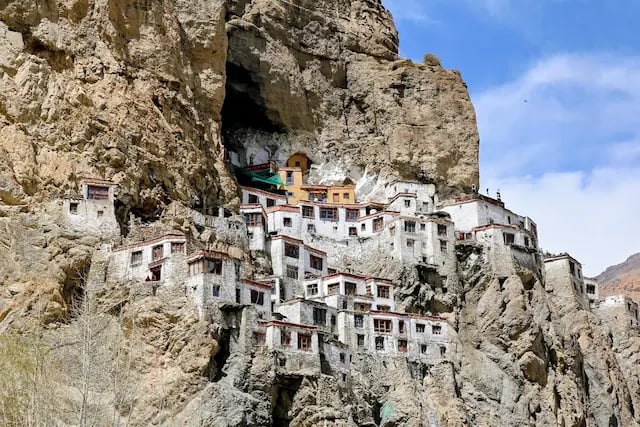
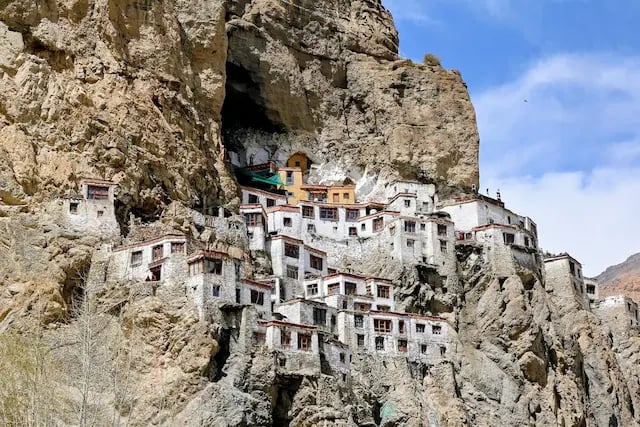
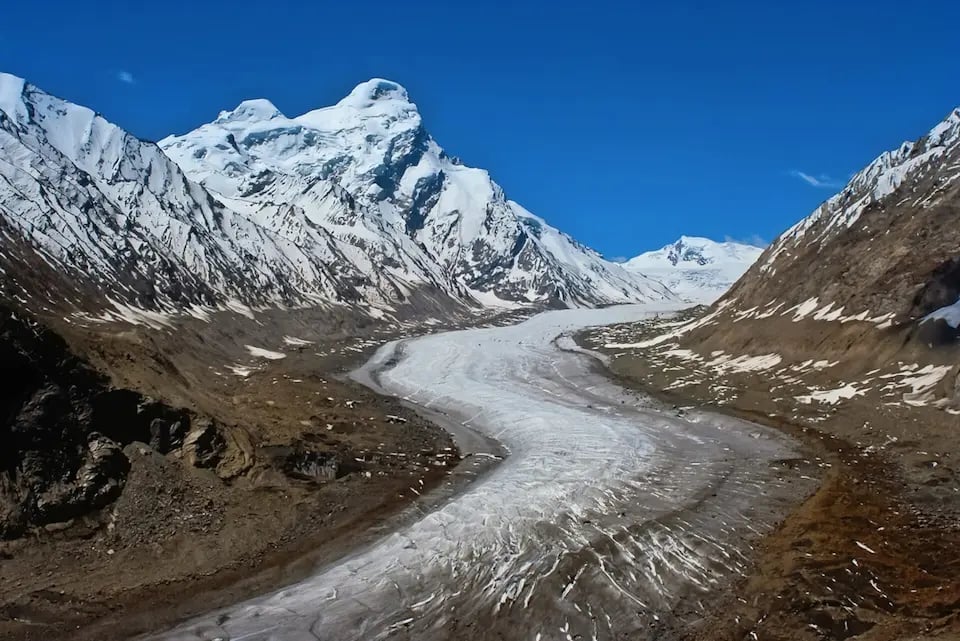
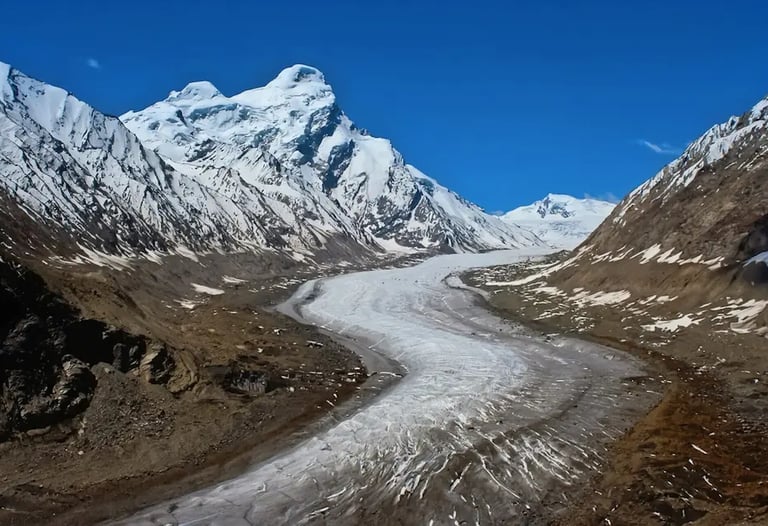
Image: Ingo Mehling / Wikimedia Commons, (CC BY-SA 4.0)
The cliffside Phuktal Monastery in Ladakh’s Zanskar region.
Image: Narender9 / Wikimedia Commons, (CC BY-SA 3.0)
The massive Drang Drung Glacier in Ladakh’s Zanskar Valley.
3. Markha Valley: A Trekker's Dream Destination
This is where you arrive with trekking boots, backpacks, and the excitement of long mountain trails ahead. Stretching through the Hemis National Park at an altitude between 12,000 and 17,000 ft, Markha Valley is one of the best places for Ladakh Valley trekking. Beyond the multi-day trails, you can wander through Markha village, experience simple mountain life, and lose yourself in dramatic river valleys and endless Himalayan landscapes.
Top Attractions:
Kongmaru La Pass: At 17,060 ft, this dramatic pass rewards trekkers with sweeping views of Kang Yatse and colourful canyon landscapes.
Hemis National Park: One of the rare places where you might spot the elusive snow leopard while trekking through Ladakh’s wild terrain.
Kang Yatse Peak: A towering 6,400-metre Himalayan peak calling adventure lovers for climbing expeditions.
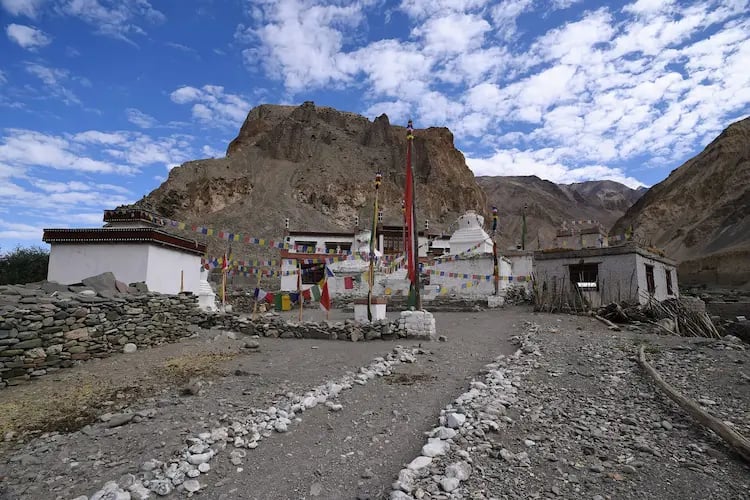
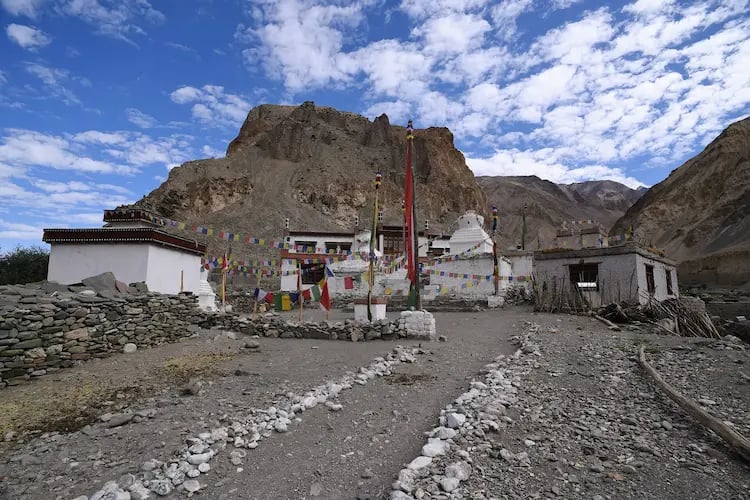
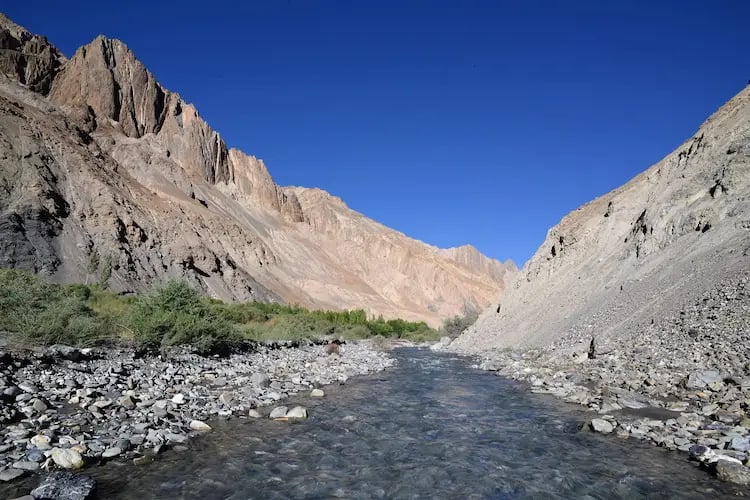
Image: Chris Hunkeler / Wikimedia Commons, (CC BY-SA 2.0)
Chorten and colorful prayer flags in Markha Valley
Image: Chris Hunkeler / Wikimedia Commons, (CC BY-SA 2.0)
The Markha River winds through the dramatic landscapes of Ladakh.
4. Indus Valley: The Cultural Heart of Ladakh
Indus Valley doesn’t try hard to impress you. Maybe it’s the river flowing quietly beside villages scattered between barren hills, or the sudden line of poplar trees breaking the endless shades of brown and grey.
At around 10,500 feet, this is one of the best valleys in Ladakh, where small details stay with you — white stupas beside the roads, narrow village lanes, and faded monastery murals carrying stories from another time.
Top Attractions:
Thiksey Monastery: Famous for its 49-foot Maitreya Buddha statue and sweeping Indus Valley views.
Hemis Monastery: Visit during the Hemis Festival for masked Cham dances, ancient relics, and rare thangkas.
Shey Palace: A peaceful palace where the massive golden Buddha overlooks the Indus plains.
Stok Palace: Explore Ladakh’s royal history through jewellery, artefacts, and old family stories.
Alchi Monastery: Known for intricate Kashmiri-style artwork and beautifully preserved murals.
Magnetic Hill: A fun road-trip stop where vehicles appear to roll uphill on their own.
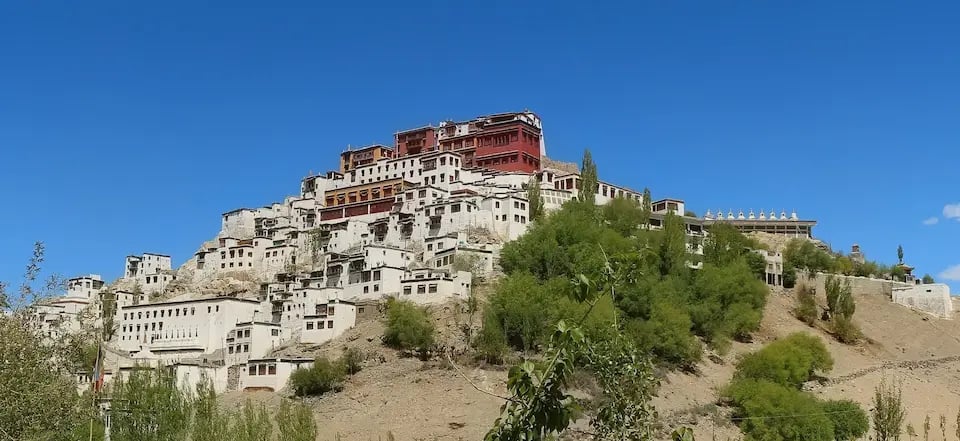
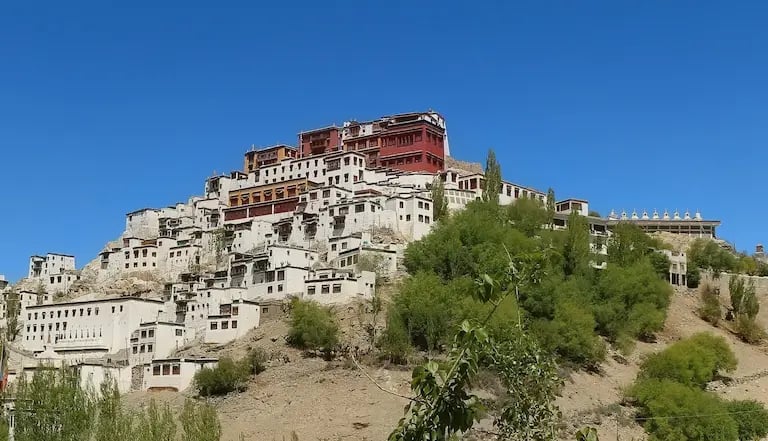
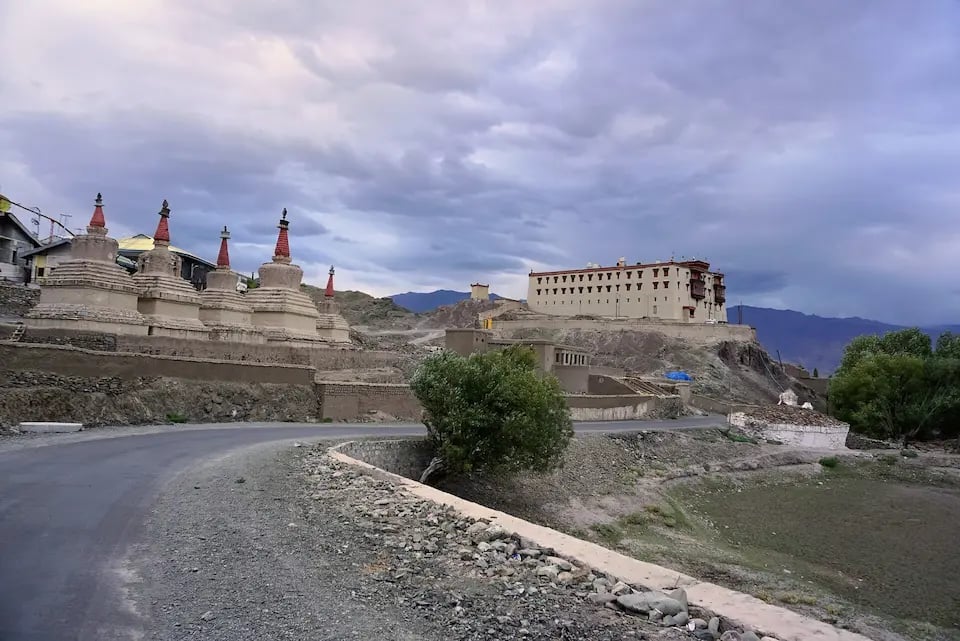
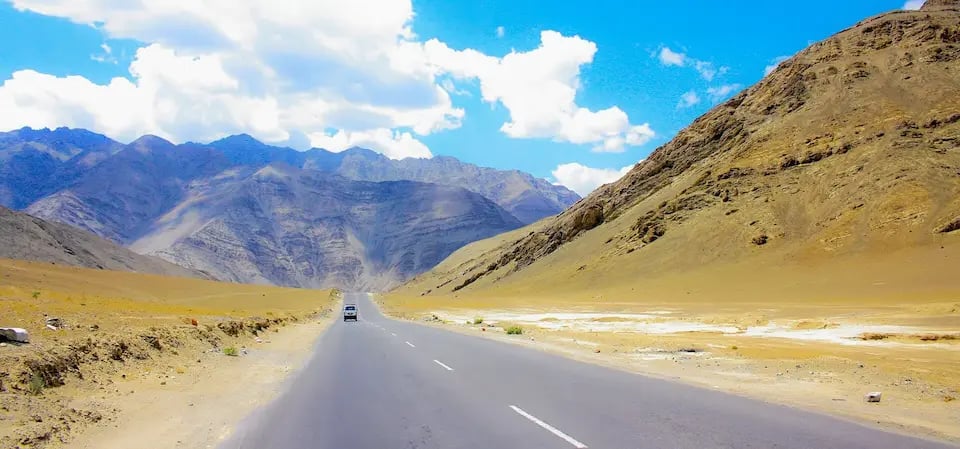
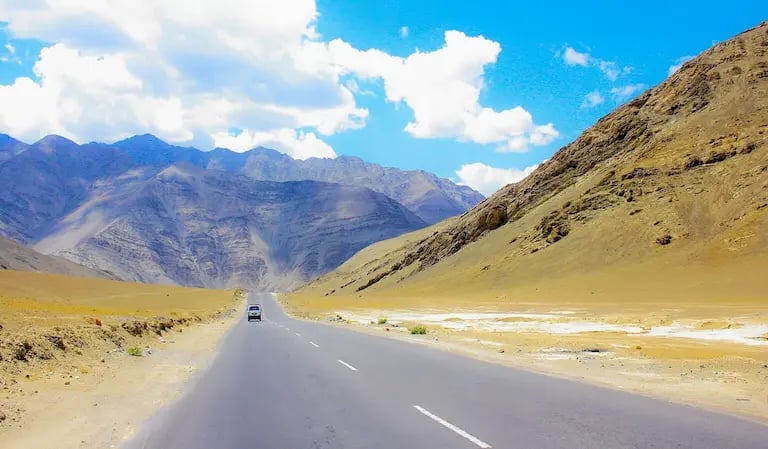
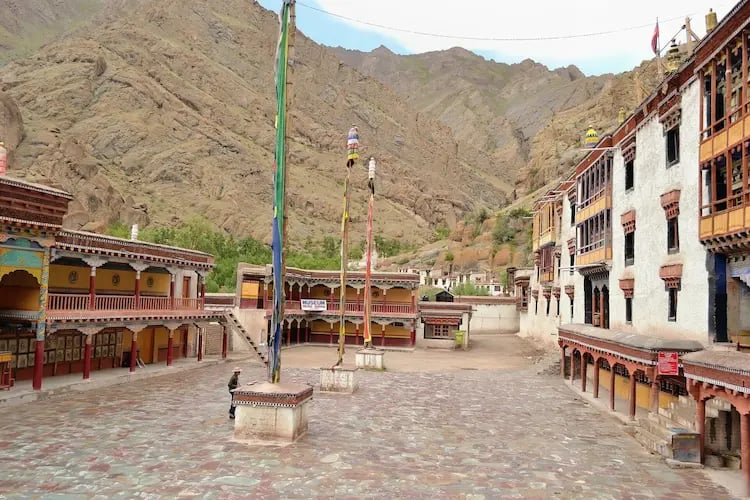
Image: Deepank Ranka / Wikimedia Commons, (CC BY-SA 4.0)
Historic Stok Palace set against the mountains of Ladakh.
Image: Bernard Gagnon / Wikimedia Commons, (CC BY-SA 4.0)
The iconic Thiksey Monastery overlooking the Indus Valley in Ladakh.
Image: Sushmita Balasubramani / Wikimedia Commons, (CC BY 2.0)
A scenic stretch of the Srinagar–Leh Highway at Magnetic Hill, Ladakh.
Image: Reach4avik/ Wikimedia Commons, (CC BY-SA 3.0)
Hemis Monastery surrounded by Ladakh’s rugged mountains.
5. Suru Valley: The Green Gem of Ladakh
One of the hidden valleys in Ladakh, Suru Valley, surprises you with greenery, barley fields, willow-lined roads, and quiet villages resting beside icy rivers. As you pass places like Panikhar, life feels slower, with children playing near the fields and prayer flags swaying gently between homes. Near Parkachik Glacier, you almost stop speaking altogether, simply standing still and staring at the mountains for a while.
Top Attractions:
Rangdum Monastery: A centuries-old hilltop monastery surrounded by peaceful mountain views.
Nun Kun Peaks: Twin snow-covered peaks rising above 7,000 metres that leave you speechless.
Sankoo: Often called the “gulzar of Ladakh,” known for apricot orchards, greenery, and beautiful mountain scenery.
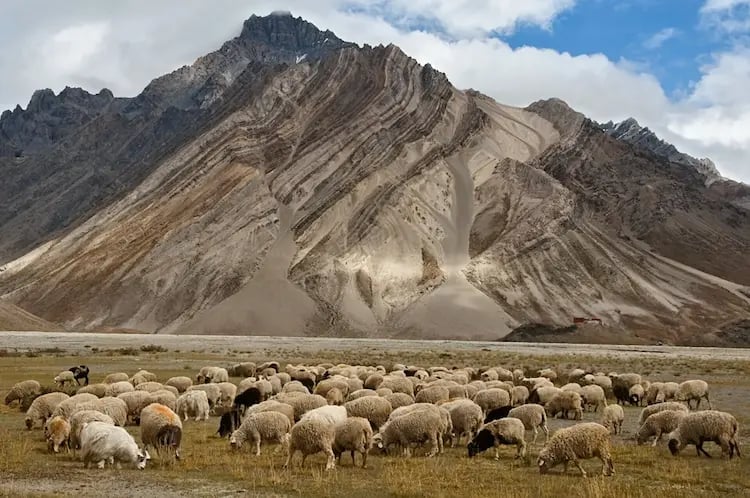
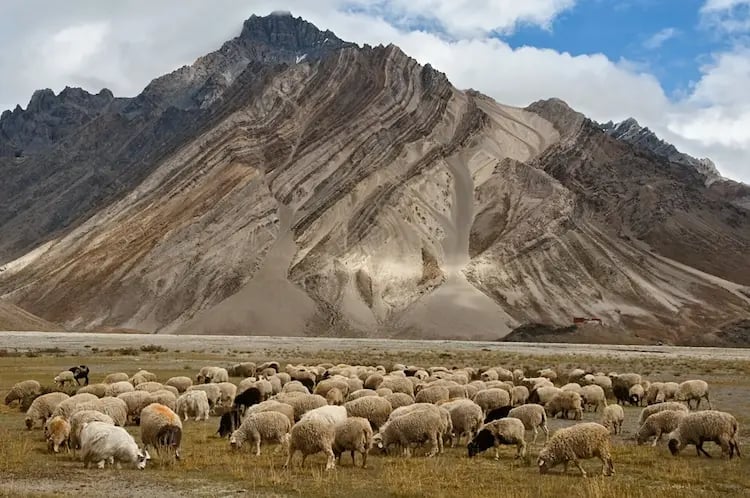
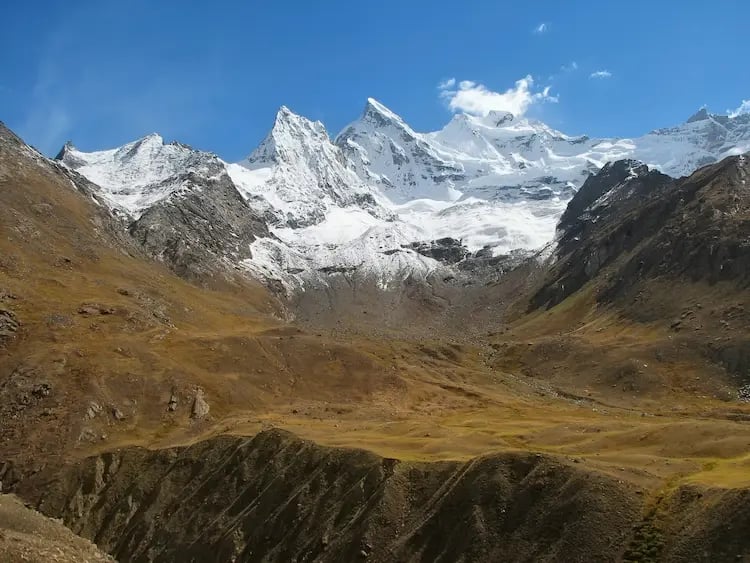
Image: Wolfgang Ott / Wikimedia Commons, (CC BY-SA 3.0)
A sheep herd near Rangdum in Ladakh’s Suru Valley.
Image: Henk Monster / Wikimedia Commons, (CC BY-SA 3.0)
The snow-covered Nun Kun peaks in Suru Valley, Ladakh.
6. Tso Moriri & Rupshu Valley: Where Silence Feels Endless
The first thing you notice near Tso Moriri is the silence. Sitting at over 15,000 feet with barely any villages or network around, it feels like one of the most hidden valleys in Ladakh. You hear only the mountain wind brushing across the lake and the occasional bird slicing through the sky while the water changes shades from deep blue to turquoise within minutes. Further into the Rupshu Plains, grazing yaks, scattered Changpa tents, and endless roads slowly disappear into the mountains ahead.
Top Attractions:
Korzok Monastery: A peaceful monastery beside Tso Moriri offering stunning lake views.
Tso Kar Lake: Perfect for birdwatching, rare wildlife, and dramatic Himalayan landscapes.
Puga Valley: A surreal geothermal landscape where bubbling earth feels almost otherworldly.
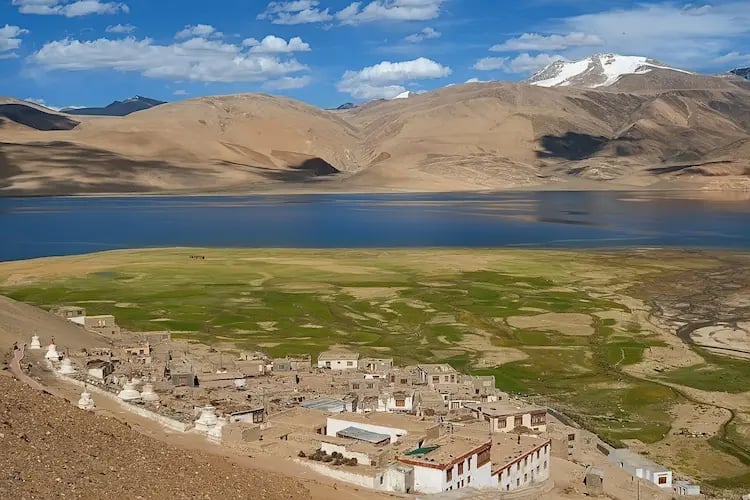
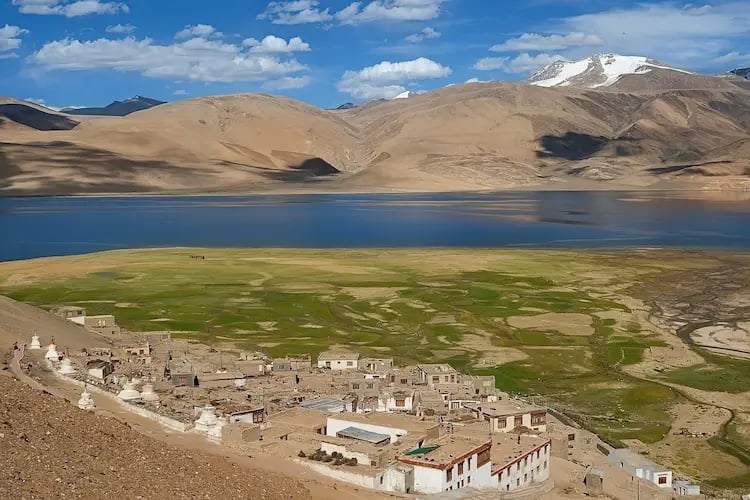
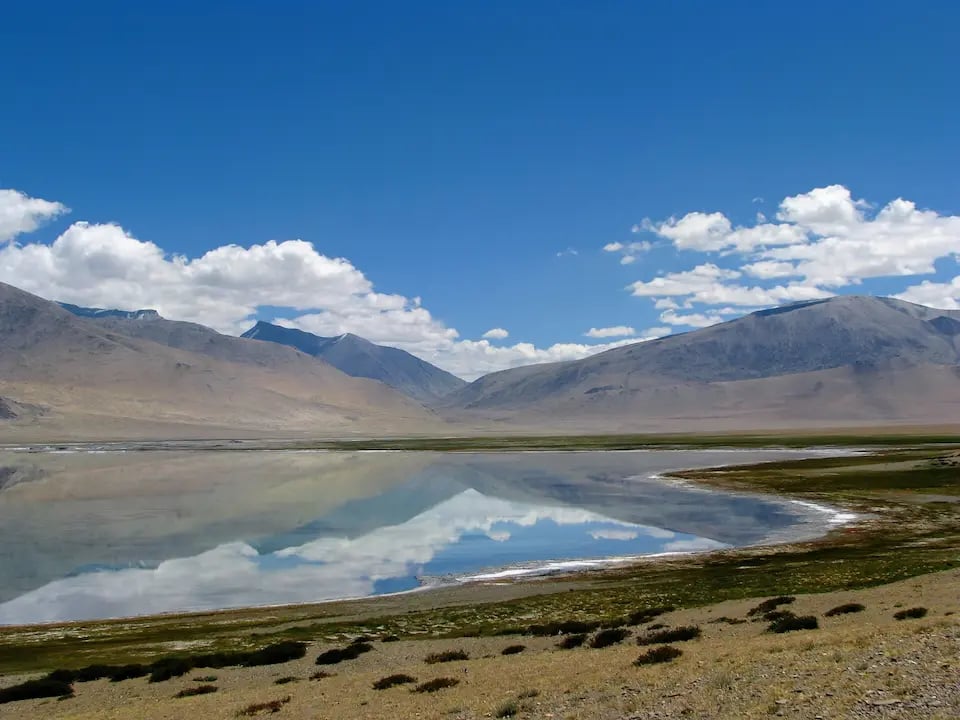
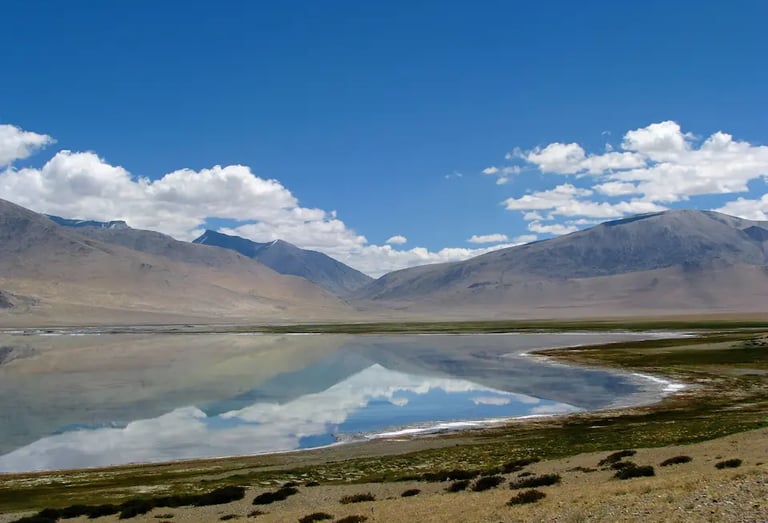
Image: Rafal Kozubek / Wikimedia Commons, (CC BY-SA 3.0)
Korzok village, overlooking the stunning Tso Moriri Lake in Ladakh.
Image: McKay Savage / Wikimedia Commons, (CC BY 2.0)
Tso Kar Lake reflecting the rugged mountains of eastern Ladakh.
Somewhere during your Ladakh Trip from Delhi↗, you slowly stop checking your phone and begin losing yourself in empty roads, cold mountain winds, and quiet lakeside moments. Then suddenly, you’re holding hot tea in freezing hands, staring at mountains in the most beautiful valley in Ladakh that no longer feel completely real.
Frequently Asked Questions – Valleys in Ladakh Guide
Q. Which is the most beautiful valley in Ladakh?
A. Nubra Valley is often called the most beautiful valley in Ladakh because of its sand dunes, snow mountains, rivers, and apricot-lined villages.
Q. What is the best time to visit the Ladakh valleys?
A. The best time to visit Ladakh valleys is from May to September when roads remain open, and the weather stays pleasant for sightseeing, trekking, and road trips.
Q. Which valley is best for trekking in Ladakh?
A. Markha Valley is one of the best places for Ladakh Valley trekking with scenic trails, mountain villages, river crossings, and stunning Himalayan views.
Q. Is Zanskar Valley open throughout the year?
A. No, Zanskar Valley remains largely cut off by road for about six months due to heavy snowfall and blockages on high-altitude passes. However, winter is famous for the Chadar Trek on the frozen Zanskar River.
Q. How many days are enough to explore the Ladakh valleys?
A. A 7–10 day trip is ideal to comfortably explore the major valleys in Ladakh, including Nubra, Zanskar, Indus, Suru, and Tso Moriri.
Q. Which valleys in Ladakh are less crowded?
A. Suru Valley and Rupshu Valley are among the hidden valleys in Ladakh known for peaceful landscapes and fewer tourists.
Q. Is acclimatisation important while visiting Ladakh?
A. Yes, since most valleys in Ladakh are located above 10,000 feet, spending a day in Leh before travelling further helps your body adjust to the altitude.
Share Your Thoughts – We’d Love to Hear From You!
Every journey is better when shared.
We hope you enjoyed this travel story — now, we'd love to hear yours! Share your experience, suggestions, or feedback and help us make our travel tales even better.
Tracing poetry on paths unknown.
Join The Journey
© 2026 The Roaming Rhyme. All rights reserved.


Some links may be affiliate links. If you purchase through them, I may earn a small commission — at no extra cost to you.
Explore
Travel stories, guides, and hidden gems — delivered gently to your inbox.
Karnataka